Deep root establishment
During the first 2–3 growing seasons, water less often but deeply to encourage a taproot and strong lateral roots that improve long-term drought tolerance when growing Chilean Belloto in dry climates.

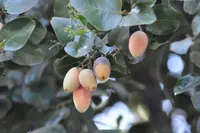
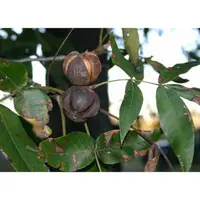
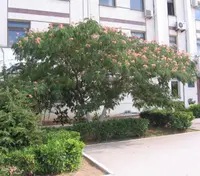
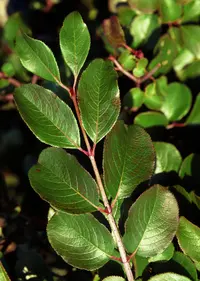
Chilean belloto, Beilschmiedia miersii, is an evergreen tree from the laurel family native to central Chile’s Mediterranean-climate woodlands. It is slow growing and long lived, eventually forming a dense, rounded crown with thick, leathery, glossy green leaves. Bark is gray-brown and somewhat furrowed on mature trees, giving it a sturdy, architectural look in the landscape. In cultivation, it prefers mild, frost-free climates, well-drained soil, and steady but not excessive moisture. It can be challenging outside its native-like conditions, so those who care for Chilean Belloto need patience and a sheltered site.

Care Difficulty
Hard Care

Light Preference
Full Sun

Water Requirements
Moderate Water

Temperature Preference
Warm Climate

Hardiness Zone
9–10

Soil Texture
Sandy, Loamy, Organic-rich

Soil pH
Slightly acidic (6.5–7.0), Neutral (7.0)

Soil Drainage
Well-drained

Fertilization
Minimal (feed rarely)
Scan your plant to receive care tips personalized for your specific plant
Available on iOS and Android
This slow-growing evergreen tree prefers bright, mild sun conditions similar to its native coastal hillsides.
This species prefers evenly moist but not saturated soil, especially while young and establishing deep roots.
This tree prefers mild, Mediterranean-type conditions with limited frost and moderate summer heat.
This species tolerates relatively dry air but grows best with moderate, stable humidity.
Beilschmiedia miersii prefers deep, well-aerated, free-draining soil that does not stay waterlogged.
This tree can be grown in containers when young or kept small, but long-term culture demands careful pot management.
This slow-growing evergreen from Chile needs only modest feeding in cultivation, especially when grown as Chilean Belloto in low-nutrient native-style plantings.
Beilschmiedia miersii needs only light, occasional pruning to maintain a stable tree structure and remove problem wood.
This species is best grown in the ground; container culture is mainly for young plants that will later be transplanted.
Propagation of Beilschmiedia miersii is possible but relatively specialized and slower than many ornamental trees.
This evergreen tree is moderately frost-sensitive and benefits from targeted winter care in colder regions.

Plant Health Check
Not sure what's wrong with your plant? Check your plant's health inside the app.
This Chilean tree is a climatic relict from ancient laurel forests and is now classified as Critically Endangered, surviving in only a few fragmented populations in central Chile.
Its natural distribution is restricted mainly to the coastal range of central Chile, especially around Valparaíso and Petorca, where it grows on dry, rocky slopes in Mediterranean-type climates.
The species produces dense, durable, and slightly aromatic wood that was historically valued locally for construction and carpentry, which contributed to overexploitation and decline of natural stands.

This species is a flagship tree for Chilean forest conservation and has been used as a symbol in campaigns to protect the last remnants of sclerophyllous (hard-leaved) forests in central Chile, highlighting the vulnerability of these unique ecosystems.
Growth is slow to moderate. Young plants may add 15–30 cm per year, then slow with age. In suitable outdoor conditions, it eventually forms a medium to large evergreen tree, often 8–15 m tall.
Keep your plants happy and healthy with plant identification, disease detection, and easy care guidance.