pecan Care (Carya illinoinensis)

Also known as: sweet pecan, softshell hickory
pecan

About pecan

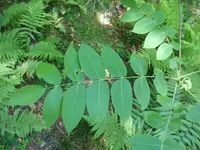
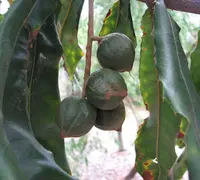
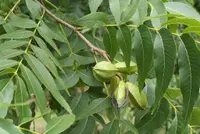
Pecan, Carya illinoinensis, is a long-lived deciduous tree in the walnut family, valued for both shade and edible nuts. It develops a tall, upright trunk with a broad, spreading crown and feather-like compound leaves.

This species is native to river valleys and bottomlands in the south-central United States and northern Mexico, where it grows in deep, fertile, well-drained soils. It prefers full sun and consistent moisture when young, which influences how easy it is to establish.

Mature trees are robust but need space, time, and suitable climate to produce quality nuts, so planning site conditions is important when learning how to care for pecan.

Main Plant Requirements

Care Difficulty

Moderate Care

Light Preference

Full Sun

Water Requirements

Regular Water

Temperature Preference

Warm Climate

Hardiness Zone

5–9

Soil Texture

Sandy, Loamy, Clay

Soil pH

Acidic (5.5–6.5), Slightly acidic (6.5–7.0)

Soil Drainage

Moist but well-drained

Fertilization

Minimal (feed rarely)

Get Personalized Care Plan

Scan your plant to receive care tips personalized for your specific plant

Available on iOS and Android

How to Care for the pecan

This tree thrives in full sun but will tolerate light shade, especially when young.

  • Provide 6–8 hours of direct sun daily; full, open exposure promotes strong growth and nut production for pecan trees.
  • Allow light or dappled shade in hot climates during late afternoon to reduce leaf scorch, especially on young or newly transplanted trees.
  • Avoid planting where buildings or taller trees will increasingly shade the canopy over time, which leads to sparse foliage and reduced yields.

Carya illinoinensis prefers evenly moist, deep soil rather than frequent shallow watering.

  • During the first 2–3 years, water when the top 5–8 cm of soil feels dry, soaking the root zone to at least 30–45 cm depth.
  • Use well-drained loam or sandy loam; prolonged puddling, sour smell, or yellowing leaves indicate overwatering and poor drainage.
  • In mature trees, reduce supplemental watering in cool or rainy seasons and increase it during prolonged heat or drought if leaves begin to curl or drop prematurely.

This species is adapted to warm summers and cold winters with a distinct dormant period.

  • Optimal growing-season temperatures are 75–90°F (24–32°C), which support active shoot growth and nut development.
  • Dormant trees tolerate winter lows around 0°F (−18°C) once established, but young saplings benefit from protection from hard freezes and drying winds.
  • In hot regions, trees handle 95–100°F (35–38°C) if soil moisture is sufficient; extended heat above this or sudden late frosts can reduce flowering and nut set.

Humidity is rarely a limiting factor for Carya illinoinensis in typical outdoor conditions.

Carya illinoinensis needs deep, structured mineral soil that holds moisture yet drains freely.

  • Use a loamy sand or sandy loam with high organic matter from composted leaves or well-rotted compost.
  • Aim for slightly acidic to neutral pH around 6.0–7.0, avoiding strongly alkaline or compacted clay soils.
  • Improve drainage and aeration by incorporating coarse sand and fine pine bark into heavier native soils.
  • Avoid waterlogged, shallow, or heavily compacted sites, which restrict deep taproot development and reduce vigor.

This species is generally unsuitable for long-term container growing and performs best planted in open ground.

This large nut tree benefits from thoughtful fertilization in poor soils but often manages well on moderately fertile ground.

  • Use a balanced granular fertilizer (for example 10-10-10) or well-rotted compost for young pecan trees on low-nutrient sites.
  • Apply fertilizer once in early spring and again in late spring during active growth, avoiding mid-summer and late-season applications.
  • Reduce or stop feeding in late fall and winter when Carya illinoinensis is dormant, as roots take up minimal nutrients.
  • Use label-directed rates; on young trees, apply at the lower end of recommendations to avoid excessive, weak shoot growth.

Pruning is mainly used to establish a strong framework and maintain safe, productive structure in Carya illinoinensis.

  • Schedule structural pruning in late winter while the tree is fully dormant to minimize sap bleeding and disease risk.
  • Remove dead, diseased, crossing, or storm-damaged branches first, using clean, sharp bypass pruners or a pruning saw.
  • Thin congested interior branches to improve light penetration and air flow, encouraging better nut production over time.
  • Develop a single central leader and well-spaced scaffold branches in young trees to support long-term strength and canopy shape.

This species is usually field-grown, so guidance focuses on transplanting young trees rather than routine repotting.

  • Transplant in late winter or very early spring before bud break, when soil is workable and root activity is just resuming.
  • Look for signs like roots circling a nursery container or stalled growth; these indicate the tree has outgrown its pot.
  • Move container plants only once or twice, into successively larger containers, because older Carya illinoinensis resents root disturbance.
  • Minimize root stress by keeping the root ball intact, planting at the same depth, watering thoroughly, and mulching 5–8 cm over the root zone.

Sexual propagation from seed is common for this species, while clonal methods are more specialized.

  • Use fresh, fully mature nuts collected in fall, then cold stratify at 34–41°F for about 90–120 days to break dormancy.
  • Sow stratified seeds in deep containers or nursery beds in early spring, 3–5 cm deep, in well-drained, slightly acidic soil.
  • Provide consistent moisture, full sun, and protection from rodents during germination and early seedling growth.
  • Understand that commercial orchards often graft selected cultivars onto seedling rootstocks, a task best done by experienced grafters.

Established trees are cold hardy in much of their range and generally need minimal winter care.

  • Young or newly planted trees benefit from 5–8 cm of organic mulch over the root zone, kept away from the trunk.
  • In colder areas, shield the lower trunk of saplings with a breathable tree guard to limit frost cracks and animal damage.
  • Container-grown specimens in marginal climates should be moved into an unheated but frost-free space or heavily insulated outdoors.

Care Tips

Establish Strong Leader

During the first 3–5 years, select one straight central leader and remove competing upright shoots in late winter so the tree develops a strong, storm‑resistant framework for heavy nut crops.

Train Early Scaffold Branches

Choose 4–6 well‑spaced primary branches starting 1.5–2.1 m above ground and prune or head back lower or steeply upright branches to create wide crotch angles that better support crop weight.

Install Long-Term Support

Stake young trees only if wind‑exposed, but in windy regions consider a short, sturdy post on the windward side for the first 2–3 years to reduce trunk flexing and prevent root rocking.

Manage Alternate Bearing

Thin excess nuts early in the season on heavily loaded branches and maintain consistent nutrition from year to year to reduce the severity of on‑and‑off crop cycles when growing pecan in home orchards.

Prevent Trunk Sunscald

On young trees with thin bark, wrap the southwest side of the trunk with a breathable tree guard or use white tree paint from late autumn to early spring to reduce sunscald and bark splitting.

Common Pests and Diseases

Pecan scab

This disease causes dark, olive-to-black spots on leaves, young shoots, and nut shucks, which can coalesce and deform tissue. Symptoms include reduced leaf area, poor nut fill, and premature nut drop in humid climates.

Solution

Prune to open the canopy and improve airflow, avoid overhead irrigation, and promptly remove heavily infected leaves and fallen nuts from the ground. In regions with frequent scab, use resistant cultivars when possible and apply a labeled fungicide program starting at bud break and continuing through nut sizing, following local extension recommendations for Carya illinoinensis care.

Pecan phylloxera

These insects induce galls on leaves, petioles, and twigs, appearing as green to brown swellings that can distort growth. Heavy infestations reduce vigor and may stunt young trees.

Solution

Prune out and destroy infested galls before the insects emerge in spring, and dispose of prunings away from the tree. For trees with a history of severe galling, consider a systemic insecticide timed at early bud break, and avoid moving infested prunings or equipment between trees.

Pecan nut casebearer

This pest attacks young nut clusters; larvae bore into tiny nuts and web them together, causing early nut drop. Later generations may damage developing kernels and reduce yield quality.

Solution

Monitor nut clusters in late spring for small entry holes, frass, and webbing, and remove and discard infested clusters when first detected. In larger plantings, use pheromone traps and apply a targeted, labeled insecticide at the first egg hatch stage, timing sprays based on local extension forecasts or trap data.

Pecan weevil

These insects lay eggs in developing nuts; larvae feed inside the kernel, causing shriveled, wormy nuts that drop prematurely or are unusable at harvest. Adult beetles emerge from soil in late summer and fall and climb trees to attack nuts.

Solution

Collect and destroy dropped nuts during and after the infestation period to reduce the number of larvae returning to the soil. In home plantings, trunk banding or insecticide-treated trunk sprays timed to adult emergence, along with soil cultivation or trapping around the drip line, help lower future populations.

Downy spot

This disease causes pale, yellowish spots on the upper leaf surface and a whitish, downy fungal growth on the underside. Over time, affected leaves become chlorotic, then brown and may drop early, weakening the tree and reducing nut production.

Solution

Rake and destroy fallen leaves to reduce overwintering inoculum and avoid dense, shaded canopies by pruning for good light penetration. In areas where downy spot is persistent, apply a recommended fungicide beginning at early leaf expansion and repeat at label intervals, especially during warm, humid weather.

Interesting Facts

North American origin

This pecan species is native to river floodplains of the central and southern United States and northern Mexico, where it evolved in nutrient-rich, periodically flooded soils along major rivers like the Mississippi and Rio Grande.

Wind-pollinated flowers

Pecan trees produce separate male and female flowers on the same plant and rely on wind, not insects, for pollination, with flower timing that reduces self-pollination and promotes genetic diversity.

Nutrient-dense kernels

Pecan nuts are rich in unsaturated fats, plant protein, and minerals such as manganese and copper, which is one reason this species became an important traditional food source for Indigenous peoples in its native range.

Botan icon

Did you know?

Individual pecan trees can live for more than a century and may continue producing commercially valuable nut crops for several decades, which is why old, established orchards remain significant in modern pecan production regions.

FAQs about pecan

Container growing is possible only for young trees or dwarf rootstocks. Use a large, deep pot, high-quality draining mix, and regular root pruning. For long-term production, growing pecan in the ground is more practical.

Grow Healthy Plants with Botan Care

Keep your plants happy and healthy with plant identification, disease detection, and easy care guidance.

Botan plant care app — identify plants on mobile

Explore More Plants