Select Suitable Hosts
Establish plants only on robust, long-lived host trees such as mature oak or similar hardwoods, since weak or stressed hosts decline faster under the additional demand from Loranthus europaeus.

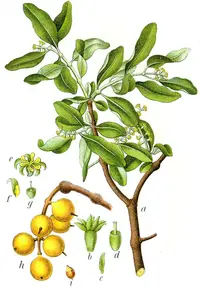
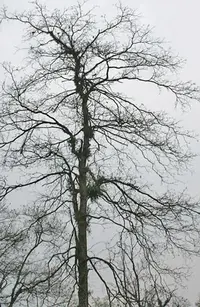
Yellow-berried mistletoe, Loranthus europaeus, is a hemiparasitic shrub that grows attached to the branches of host trees, especially oaks. It absorbs water and minerals from its host but still performs its own photosynthesis.
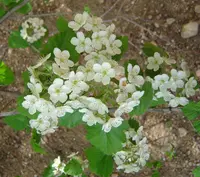
This plant forms dense, bushy clumps with narrow leaves and clusters of yellow berries that stand out in winter. It is naturally found in parts of central and southern Europe, mainly in open woodlands and forest edges.
Because it depends on suitable host trees and has specific germination needs, it is not easy to cultivate in typical gardens or containers. Those who want to learn how to care for Yellow-berried Mistletoe should focus on providing appropriate host species and an outdoor, woodland-like environment.

Care Difficulty
Hard Care

Light Preference
Full Sun

Water Requirements
Low Water

Temperature Preference
Cool Climate

Hardiness Zone
6–9

Soil Texture
Sandy, Loamy, Rocky

Soil pH
Slightly acidic (6.5–7.0), Slightly alkaline (7.0–7.5)

Soil Drainage
Well-drained

Fertilization
Minimal (feed rarely)
Scan your plant to receive care tips personalized for your specific plant
Available on iOS and Android
This hemiparasitic shrub depends on host trees but still needs specific light conditions for healthy growth.
Water needs focus on the host tree, since this species taps host xylem for moisture rather than soil around its own stems.
This species is adapted to temperate climates with distinct seasons and survives moderate winter cold on hardy host trees.
This semi-parasitic species is not normally grown for humidity-sensitive cultivation, so humidity control is rarely critical.
This hemiparasitic shrub does not grow in independent soil; it anchors to host branches rather than standard potting media.
This species is not suitable for container growing because it depends on a living host tree rather than a conventional root system in potting mix.
Loranthus europaeus is a hemiparasitic shrub that usually needs no fertilizer when established on a healthy host tree.
Pruning Loranthus europaeus is mainly done to manage host tree health and mistletoe spread.
This mistletoe is almost never grown in pots, so focus on transplanting young host saplings rather than moving Loranthus europaeus itself.
Propagation of Loranthus europaeus is challenging and usually done by seed on suitable host trees.
This species is generally hardy in temperate climates and needs little active winter care on outdoor host trees.

Plant Health Check
Not sure what's wrong with your plant? Check your plant's health inside the app.
This mistletoe naturally parasitizes mainly European oaks, especially in warm, dry oak forests, and rarely occurs on other tree genera. Its distribution in the landscape often maps directly onto the presence and health of native oak stands.
Although the plant is green and photosynthesizes, it is a hemiparasite that taps into host xylem to withdraw water and dissolved minerals. This dual strategy allows it to survive on exposed branches where other plants would quickly desiccate.
The bright yellow berries ripen late in the year and provide food for birds when other resources are scarce. Their sticky pulp helps seeds adhere to branches, increasing the chance of successful infection of new host twigs.

Botanists consider this species a key indicator of long-established, relatively undisturbed oak woodlands in parts of central and southeastern Europe, so its presence is often used to identify and map ancient forest remnants.
This hemiparasitic shrub can spread locally where suitable host trees and bird dispersers are present. It is not widely classed as invasive in North America, but unmanaged populations may weaken heavily infested host trees.
Keep your plants happy and healthy with plant identification, disease detection, and easy care guidance.