Cornelian cherry Care (Cornus mas)

Also known as: Cornelian cherry dogwood, European cornel, dogwood, Kierelter
Cornelian cherry

About Cornelian cherry

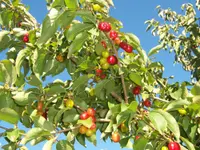
Cornelian cherry (Cornus mas) is a hardy, deciduous large shrub or small tree valued for early yellow flowers and bright red, cherry-like fruits. It forms a dense, rounded crown and can be used as a specimen, hedge, or part of a mixed woodland edge.

In the wild it occurs in parts of Europe and western Asia, often on sunny slopes and forest margins. Its good cold tolerance, strong wood, and general disease resistance make it relatively easy to grow.

It prefers sun to light shade, moderately moist, well-drained soil, and benefits from consistent conditions, which simplifies how to care for Cornelian cherry for most gardeners.

Main Plant Requirements

Care Difficulty

Easy Care

Light Preference

Full Sun

Water Requirements

Moderate Water

Temperature Preference

Cold Hardy

Hardiness Zone

4–8

Soil Texture

Sandy, Loamy, Clay

Soil pH

Slightly acidic (6.5–7.0), Slightly alkaline (7.0–7.5)

Soil Drainage

Moist but well-drained

Fertilization

Minimal (feed rarely)

Get Personalized Care Plan

Scan your plant to receive care tips personalized for your specific plant

Available on iOS and Android

How to Care for the Cornelian cherry

This deciduous shrub prefers a site that balances strong light with some daily shade for best flowering and fruiting.

  • Provide 6–8 hours of sun, with morning sun and light afternoon shade ideal, especially in hotter regions.
  • Tolerates partial shade (around 3–4 hours of direct sun) but Cornelian cherry will bloom and fruit less in deeper shade.
  • In summer, protect from intense late-afternoon sun to reduce leaf scorch; in winter, full exposure helps flower bud development.

Cornus mas prefers evenly moist, well-drained soil rather than frequent, shallow watering.

  • Before watering, let the top 3–5 cm of soil dry; then water deeply so moisture reaches the full root zone.
  • During the first 2–3 growing seasons, monitor weekly in dry spells; mature plants usually need extra water only after 7–10 rain-free days in hot weather.
  • Yellowing, soft leaves and persistent wet soil indicate overwatering, while wilting, curling leaves and dry, cracked soil signal underwatering or drought stress.

This hardy shrub is adapted to temperate climates with cold winters and warm summers.

  • Active growth and fruiting are strongest around 60–75°F (16–24°C), with dormancy breaking as late-winter temperatures rise above freezing.
  • Cornus mas tolerates winter lows near -20°F (-29°C) once established, though young plants benefit from mulching to buffer freeze–thaw cycles.
  • In summer, it handles up to about 90°F (32°C) if soil moisture is maintained; prolonged extreme heat or hot, drying winds can scorch foliage and stress the plant.

Humidity is rarely a concern for Cornus mas grown outdoors in typical garden conditions.

Soil for Cornus mas should be moderately fertile, moist, and well-structured to support steady root and shoot growth.

  • Use a loamy soil rich in organic matter that holds moisture yet remains friable, avoiding heavy, compacted clay.
  • Ensure drainage is moderate to good; standing water around the root zone greatly increases the risk of root rot.
  • Aim for slightly acidic to neutral pH, roughly 6.0–7.5, adjusting with lime or elemental sulfur if necessary.
  • Incorporate 20–30% compost plus coarse sand or fine gravel to improve structure, aeration, and infiltration on dense sites.

This species can be grown in large containers for many years if the pot is chosen and managed carefully.

  • Select a deep, wide container to accommodate its slowly expanding woody root system and reduce tipping in wind.
  • Choose a heavy material such as ceramic or thick-walled resin to stabilize the shrub’s top growth on exposed patios.
  • Raise the pot on feet or bricks so drainage holes stay clear and excess water exits quickly after heavy rain.

Cornus mas generally grows well in average soil, but light feeding supports flowering and fruiting in lean conditions.

  • Apply a balanced slow-release fertilizer (around 10-10-10) once in early spring as new growth begins.
  • On poorer soils, repeat a light application in mid-summer, staying within label rates to avoid excess nitrogen.
  • Mulch annually with compost around the root zone, keeping it a few cm away from the trunk.
  • Stop feeding by late summer so shoots harden before winter, and avoid winter fertilization.

Cornus mas benefits from modest, well-timed pruning to maintain structure and flowering.

  • Prune just after flowering in late winter to early spring, so buds for next year can form later in the season.
  • Remove dead, diseased, or crossing branches first using clean, sharp bypass pruners or loppers.
  • Thin congested interior shoots to improve light penetration and air flow, keeping the natural vase or multi-stem habit.
  • Shorten or remove a few older stems at the base to encourage new growth and maintain size over time.

Cornus mas is usually grown in the ground, so focus on careful transplanting rather than frequent repotting.

  • Transplant in late fall or early spring while the plant is dormant to reduce stress and water loss.
  • Choose a site with well-drained soil and full sun to light shade, matching the original planting depth.
  • Water well before and after moving, and keep the root ball intact to minimize root damage.
  • Apply a 5–8 cm mulch over the root zone after transplanting, and maintain consistent moisture during the first 1–2 growing seasons.

Cornus mas is commonly propagated by seeds, softwood cuttings, and simple layering, each requiring specific conditions.

  • Sow seeds after cold stratification at 35–41°F for 3–4 months, then germinate in moist, well-drained mix at mild temperatures.
  • Take softwood cuttings in early summer, use rooting hormone, and place in high humidity with bright, indirect light.
  • Use simple layering in spring by bending a low branch to the soil, wounding lightly, pinning, and covering with soil.
  • Leave layered shoots in place for 1–2 seasons until roots form strongly, then sever and transplant.

Cornus mas is very cold hardy and usually needs minimal winter care in-ground.

  • Apply a 5–8 cm organic mulch over the root zone in late fall, keeping it slightly away from the trunk.
  • Container plants are more exposed; move pots into a sheltered, unheated garage or against a protected wall in colder zones.
  • Water sparingly during mild winter spells so the root ball does not dry out completely, especially in containers.

Care Tips

Fruit set planning

Plant at least 2 genetically different trees within 10–20 m of each other to improve cross‑pollination and fruit yield, especially if fruit production is a priority when growing Cornelian cherry.

Structured formative pruning

In the first 3–5 years, select 3–5 strong main branches and remove closely crossing or steeply upright shoots in late winter to create an open, vase‑shaped framework that supports heavy fruit loads and good light penetration.

Mulch root zone

Maintain a 5–8 cm layer of organic mulch such as shredded bark or leaf mold over the root area, keeping it 5–8 cm away from the trunk, to buffer soil temperature, conserve moisture, and reduce weed competition.

Understory planting strategy

Avoid planting aggressive, deep‑rooted groundcovers or lawn right up to the base and instead use shallow‑rooted, shade‑tolerant perennials set at least 30–45 cm away to reduce root stress and competition for water and nutrients.

Bird and pest management

Install bird netting just before fruits begin to soften and use sticky bands or corrugated cardboard wraps on the lower trunk in late winter to monitor and reduce crawling pests without resorting immediately to broad‑spectrum sprays.

Common Pests and Diseases

Dogwood anthracnose

This disease causes tan to brown leaf spots with purple margins, blotching, and dieback of twigs, especially in cool, wet springs. Symptoms include premature leaf drop and progressive death of shoots from the tips inward.

Solution

Prune out and destroy infected twigs and fallen leaves, and avoid overhead watering to keep foliage dry. Improve air circulation around the shrub, and in areas with a history of anthracnose use a labeled fungicide at bud break and repeat during prolonged wet periods according to Cornus mas care instructions.

Powdery mildew

This disease produces a white to gray powdery coating on leaves, which may curl, distort, or show reduced vigor. Symptoms include reduced flowering and a general decline in plant appearance in shaded, humid sites.

Solution

Thin crowded branches to increase light and airflow, and avoid excess nitrogen that promotes soft, susceptible growth. Remove heavily infected leaves and, if the problem recurs annually, apply a suitable fungicide early in the season when the first white patches appear.

Dogwood borer

This pest is a clearwing moth whose larvae tunnel into the trunk and lower branches, causing swollen, cracked, or sunken areas and dieback above the damage. Symptoms include sparse foliage and increased sensitivity to drought or other stress.

Solution

Inspect the lower trunk regularly for frass (sawdust-like material) and damaged bark, and prune out and destroy infested branches where possible. Maintain good plant vigor, avoid trunk wounds from string trimmers or mowers, and in high-risk areas consider using a labeled trunk spray timed to adult moth flight based on local extension advice.

Scale insects

These insects appear as small, immobile bumps on stems and sometimes leaves, feeding on sap and causing yellowing, reduced vigor, and sticky honeydew on nearby surfaces. This pest can also promote sooty mold growth on the honeydew.

Solution

For light infestations, scrub affected stems with a soft brush and soapy water or remove individual scales by hand. For heavier infestations, apply horticultural oil during the dormant season to smother overwintering scales and use a summer-weight oil or systemic product labeled for ornamental dogwoods if needed.

Leaf spot complex

This disease group includes several fungi that cause small brown or purple spots on leaves, sometimes merging into larger blotches and leading to early defoliation in wet seasons. Symptoms include cosmetic damage that may become more serious if defoliation repeats over several years.

Solution

Rake and discard fallen leaves to reduce the source of infection, and avoid overhead irrigation that wets foliage in the evening. If leaf spots are severe year after year, use a preventative fungicide labeled for dogwood leaf spots in early spring and repeat during extended rainy periods as directed.

Interesting Facts

Very early bloomer

This species flowers in late winter to very early spring, often before forsythia and long before leaf-out, providing one of the first nectar and pollen sources for bees.

Edible tart fruits

The bright red drupes are botanically fruits with a single seed and are eaten fresh or processed into juices, preserves, and syrups in parts of Eastern Europe and Western Asia due to their sour, cherry-like taste.

Extremely dense wood

Its wood is unusually hard and dense for a temperate shrub, historically valued for tool handles, wedges, and small turned objects because it resists wear and holds a fine edge.

Botan icon

Did you know?

Archaeological finds show that Cornus mas wood was used for spear shafts and other implements in ancient Europe, including by the ancient Greeks and Romans, indicating a very long history of human use linked to its strength and durability.

FAQs about Cornelian cherry

Yes, the ripe red fruits are edible and used for jams, syrups, juices, and liqueurs. They taste tart to sweet-sour when fully ripe. Unripe fruits are astringent and usually not eaten fresh.

Grow Healthy Plants with Botan Care

Keep your plants happy and healthy with plant identification, disease detection, and easy care guidance.

Botan plant care app — identify plants on mobile

Explore More Plants