Peppery Milkcap Care (Lactifluus piperatus)

Peppery Milkcap

About Peppery Milkcap

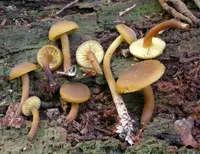
Peppery milkcap, Lactifluus piperatus, is a wild gilled mushroom rather than a leafy plant. It forms sturdy white to cream caps with closely packed gills that exude a sharp, peppery-tasting latex when damaged.

This species typically grows on the ground in deciduous and mixed woodlands, often near beech or other broadleaf trees, where it forms mycorrhiza, a nutrient-sharing partnership with roots. It fruits in groups or scattered patches during warm, moist periods.

Lactifluus piperatus is considered more suitable for experienced foragers and cultivators, since identification can be confusing and its strong taste limits culinary use. Those who want to learn how to care for Peppery Milkcap should understand its reliance on living trees, undisturbed soil, and consistent moisture in a woodland-like setting.

Main Plant Requirements

Care Difficulty

Moderate Care

Light Preference

Partial Shade

Water Requirements

Regular Water

Temperature Preference

Cool Climate

Hardiness Zone

4–9

Soil Texture

Loamy, Silty, Organic-rich

Soil pH

Strongly acidic (4.5–5.5), Acidic (5.5–6.5)

Soil Drainage

Moist but well-drained

Fertilization

Minimal (feed rarely)

Get Personalized Care Plan

Scan your plant to receive care tips personalized for your specific plant

Available on iOS and Android

How to Care for the Peppery Milkcap

This mycorrhizal fungus prefers stable, forest-like light conditions rather than open, exposed sun.

  • Provide bright, dappled shade under deciduous trees, with 2–4 hours of gentle morning sun and filtered light for the rest of the day to mimic woodland edges where Peppery Milkcap naturally appears.
  • Avoid strong midday and afternoon sun in open sites, which can overheat the upper soil layer and dry organic matter too quickly, reducing fruiting potential and stressing the tree partner roots.
  • In summer, maintain leaf-litter or mulch cover so the soil surface stays shaded; in early spring or late fall, partial sun is acceptable as long as the soil does not dry out or heat above typical forest-floor conditions.

This species depends on consistently moist, humus-rich soil rather than frequent surface watering.

  • Aim for soil that stays evenly moist 5–10 cm deep; allow only the top 1–2 cm of leaf litter or soil to dry slightly between natural rain or supplemental irrigation around the host tree.
  • Use deep, infrequent soaking during prolonged dry periods, focusing water at the root zone of the associated tree so Lactifluus piperatus mycelium remains hydrated without creating standing water.
  • Watch for signs of overwatering such as sour, anaerobic odor and waterlogged patches; underwatering shows as very dry, crumbly litter and slowed fungal activity, so improve drainage with organic matter if puddles persist.

This woodland fungus performs best in cool to mild conditions typical of temperate forests.

  • Optimal activity and fruiting occur around 55–70°F (13–21°C), especially in late summer to fall when soil stays cool and evenly moist beneath tree canopies.
  • The mycelium in soil can tolerate down to about 25°F (−4°C), but repeated hard freezes below this without insulating leaf litter reduce survival of fine fungal threads near the surface.
  • Heat above 80°F (27°C), especially with dry soil, suppresses fruiting; maintain shade, organic mulch, and adequate moisture to buffer soil temperature during hot spells.

Humidity is not a meaningful care factor for Lactifluus piperatus, which develops naturally in outdoor forest air and relies more on soil moisture and microclimate than ambient humidity.

Lactifluus piperatus is a mycorrhizal fungus, so soil preparation focuses on creating a suitable forest-like substrate for its tree partners rather than potting soil in the usual sense.

  • Provide a loose, humus-rich, slightly clayey loam that mimics deciduous forest floor, with plenty of decomposed leaf litter.
  • Aim for soil that drains freely yet stays evenly moist, avoiding waterlogged patches or compacted areas that exclude air from fine roots.
  • Maintain a slightly acidic pH around 5.0–6.5, common under beech or oak, by incorporating leaf mold or pine needle compost rather than agricultural lime.
  • Improve aeration and structure by mixing in shredded bark, coarse sand, and well-rotted compost, while avoiding heavy, synthetic-fertilizer-laden substrates.

This species is not suitable for container growing because it depends on mycorrhizal association with living tree roots in a stable soil ecosystem.

This ectomycorrhizal fungus relies mainly on its tree partners for nutrition, so Peppery Milkcap seldom needs direct fertilization.

  • Avoid applying synthetic balanced NPK or strong compost directly to fruiting areas, which can disrupt the native soil community.
  • Maintain a natural leaf-litter layer instead of adding fertilizer, allowing slow nutrient release as organic matter decomposes.
  • If soil is extremely poor, amend the wider site lightly with well-rotted compost once a year, keeping it thin and well mixed into the topsoil.

Lactifluus piperatus does not require true pruning, as it is a wild mushroom rather than a garden plant.

  • Remove only obviously decayed or moldy fruiting bodies, using clean hands or a knife to limit spread of disease organisms.
  • Cut mushrooms at the base rather than pulling, to reduce disturbance of the underground mycelium network.
  • Avoid trimming nearby tree roots or heavy soil disturbance, which can reduce future fruiting and weaken the fungal association.

This fungus is not suited to typical container culture, so management focuses on careful site handling rather than repotting.

  • Transplanting mycelium is unreliable because the fungus depends on ectomycorrhizal partnership with host tree roots.
  • If a site must be disturbed, move soil blocks containing fine roots and attached soil carefully, keeping them intact and moist.
  • Time any soil relocation for cool, moist weather in spring or fall to reduce stress on both tree roots and fungal mycelium.
  • Avoid frequent disturbance; once soil and host trees are established, leave the area stable to support long-term fungal colonization.

Reproducing Lactifluus piperatus in a controlled way is difficult and not typically done by home growers.

This species is naturally cold hardy in its native range and generally needs no special winter care.

Care Tips

Soil pH targeting

Test woodland or garden soil and adjust to a slightly acidic pH around 5.0–6.0 using elemental sulfur or acidifying organic matter, since this fungus associates best with trees in mildly acidic conditions.


Host tree selection

Establish the fungus near suitable host trees such as beech, oak, or hazel, and avoid planting in isolated lawn areas with no compatible trees, as Lactifluus piperatus relies on mycorrhizal partnership with living roots.

Minimal soil disturbance

Mark the inoculated or fruiting area and avoid digging, tilling, or heavy foot traffic there, since compacted or repeatedly disturbed soil can damage the fine root–fungus network and reduce future mushroom production.

Moisture buffering mulch

Apply a thin, loose layer of leaf litter or fine wood chips over the mycelium zone to buffer moisture and temperature, but keep the layer airy so that the developing mushrooms can still emerge through it.

Selective harvesting

Harvest only a portion of the mature caps and cut them at the base rather than pulling, leaving some fruiting bodies to release spores and reducing physical disturbance to the underground mycelium when caring for Peppery Milkcap.

Common Pests and Diseases

Mycoparasitic molds

This disease involves other fungi or molds parasitizing the fruiting bodies, leading to deformed, water-soaked, or fuzzy patches on caps and stems. Symptoms include rapid collapse of affected mushrooms, especially in very wet, stagnant conditions.

Solution

Remove and discard affected fruiting bodies promptly to reduce spore spread, and improve air circulation and drainage around the fruiting area by thinning nearby vegetation and avoiding excessive overhead watering. In cultivation or controlled beds, limit prolonged surface moisture by using drip or soaker irrigation and spacing colonies so caps can dry between rain or watering events.

Bacterial blotch

This disease causes greasy, yellow-brown, or rust-colored spots and streaks on caps, often starting near handling damage or where water sits. Symptoms include soft, slimy tissue and a sour odor in advanced cases.

Solution

Harvest only dry, intact mushrooms and avoid handling them with wet or dirty hands to reduce bacterial transfer. In outdoor or semi-managed patches, minimize standing water on caps by adjusting irrigation timing, reducing sprinkler use, and maintaining good air flow so surfaces dry quickly after rain.

Fungus gnat larvae

This pest consists of small fly larvae that tunnel into caps and stems, leaving winding galleries and soft, browned tissue. This pest is more active in very moist substrates rich in decaying organic matter, where it can quickly infest multiple fruiting bodies.

Solution

Harvest mushrooms promptly when mature to reduce the window for egg-laying, and remove heavily infested specimens so larvae do not complete their life cycle. In managed beds, reduce overly wet organic debris, use fine mesh over high-value areas during peak gnat activity, and encourage natural predators such as ground beetles by maintaining leaf litter nearby without letting it stay waterlogged.

Slugs and snails

These mollusks feed on the caps and gills, leaving large irregular holes, shredded edges, and slime trails. This pest is especially active in damp, shaded conditions and can damage young fruiting bodies overnight.

Solution

Hand-pick slugs and snails in the evening or early morning and remove nearby hiding places such as boards, dense groundcover, and wet debris. Where control is needed in managed mushroom beds, use copper barriers or iron phosphate baits placed outside the main fruiting zone, and maintain slightly drier surface conditions so mushrooms are less attractive as a primary food source.

Interesting Facts

Extremely acrid latex

This species releases a copious white latex when cut, which tastes intensely peppery or burning and is much stronger than in most related milkcap mushrooms.

Mycorrhizal with broadleaf trees

It forms ectomycorrhizal partnerships with roots of deciduous trees, especially beech and oak, exchanging mineral nutrients for sugars and influencing forest nutrient cycles.

Used as a spicy food

In parts of Eastern Europe, the very hot taste is reduced by prolonged soaking or parboiling, after which the mushroom is pickled or salted and used as a pungent condiment.

Botan icon

Did you know?

Molecular studies have shown that this species, once classified in the large genus Lactarius, is distinct enough in microscopic features and DNA sequences to belong in the segregate genus Lactifluus, helping mycologists better understand evolutionary relationships among milkcap fungi.

FAQs about Peppery Milkcap

This mushroom is technically edible but strongly peppery and often considered poor quality. It can cause stomach irritation if undercooked. In some traditions it is eaten after thorough boiling and discarding the water, but caution is advised.

Grow Healthy Plants with Botan Care

Keep your plants happy and healthy with plant identification, disease detection, and easy care guidance.

Botan plant care app — identify plants on mobile

Explore More Plants