Clean substrate tools
Dedicate a separate, disinfected knife or scraper for trimming and harvesting to avoid transferring mold spores or bacteria between trays when growing Agaricus crocodilinus.

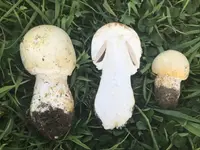
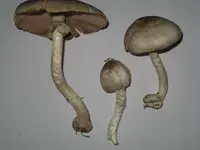
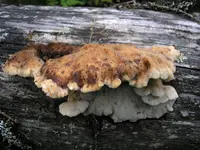
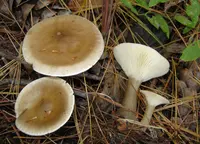
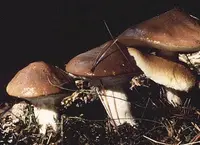
Agaricus crocodilinus is a fleshy, gilled mushroom in the Agaricaceae family, not a leafy houseplant. It produces a typical cap-and-stem fruiting body with gills underneath. The cap is usually convex to flat with age, often showing subtle surface texture and color shifts as it matures.
This species is reported from specific habitats and regions, and is not widely cultivated or traded, so reliable data on how to care for Agaricus crocodilinus in home settings are limited. It is generally associated with moist, organic-rich substrates, similar to many woodland or grassland Agaricus species.
Because it is not a standard horticultural species, it is considered more suitable for specialist mycologists than for casual growers.

Care Difficulty
Moderate Care

Light Preference
Partial Shade

Water Requirements
Moderate Water

Temperature Preference
Warm Climate

Hardiness Zone
Unknown

Soil Texture
Loamy, Organic-rich

Soil pH
Slightly acidic (6.5–7.0)

Soil Drainage
Well-drained

Fertilization
Minimal (feed rarely)
Scan your plant to receive care tips personalized for your specific plant
Available on iOS and Android
This fungus needs low to moderate light that mimics a shaded forest floor.
Moist, well-aerated substrate is essential for healthy mycelium and fruiting.
Stable, cool to mild temperatures support reliable mycelium growth and fruiting.
This species needs consistently moist, high-humidity conditions to form healthy fruiting bodies.
This mushroom does not grow in typical potting soil but in a controlled, layered substrate system.
This species can be grown in shallow containers or trays when moisture and airflow are carefully controlled.
This fungus is usually grown in nutrient-rich substrate, so Agaricus crocodilinus rarely needs extra fertilizer beyond a well-prepared growing medium.
Pruning is not relevant for Agaricus crocodilinus because it is a mushroom, not a woody or leafy plant.
As a cultivated mushroom, this species is managed by refreshing or moving its substrate rather than classic repotting.
Propagation of this mushroom focuses on expanding mycelium rather than typical plant methods like cuttings or seeds.
Outdoor cultivation of this fungus may pause in cold climates, but the organism usually survives in protected substrate without elaborate winter care.

Plant Health Check
Not sure what's wrong with your plant? Check your plant's health inside the app.
Agaricus crocodilinus is a little-documented Agaricus species with an uncertain and debated taxonomic position, and some mycologists question whether historical collections assigned to this name even represent a single, well-defined species.
The species is known from very few verified herbarium specimens and published descriptions, which makes it difficult to characterize its morphology, ecology, and distribution with confidence.
This mushroom is not a common edible species and should be treated as inedible unless positively identified by a qualified mycologist. Many Agaricus relatives can cause gastrointestinal upset, so avoiding consumption is the safest choice.
Keep your plants happy and healthy with plant identification, disease detection, and easy care guidance.