Retain Host Bark
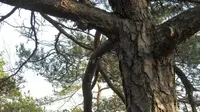
Avoid removing loose bark or decaying areas on host conifers, as this fungus relies on well-developed, undisturbed rot columns in the wood to form and maintain fruiting bodies.

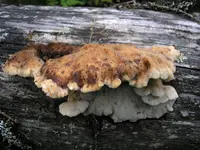
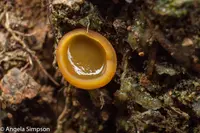
Amylocystis lapponica is a wood-decay fungus rather than a leafy plant. It forms soft, cushion-like fruiting bodies on dead or dying conifer wood, often pale to yellowish in color. These fruiting bodies break down lignin, a key structural component of wood.
This species occurs mainly in cool, boreal and montane forests across northern Europe, Asia, and parts of North America, where it indicates long-standing, old-growth forest conditions. It is not commonly grown in gardens or containers, and how to care for Amylocystis lapponica is mostly relevant to conservation and forest habitat management rather than home cultivation.
In nature it prefers cool, moist, shaded woodland conditions and well-decayed conifer logs with stable humidity and low disturbance.

Care Difficulty
Hard Care

Light Preference
Shade

Water Requirements
Keep Soil Moist

Temperature Preference
Cool Climate

Hardiness Zone
Unknown

Soil Texture
Organic-rich, Peaty, Loamy

Soil pH
Strongly acidic (4.5–5.5)

Soil Drainage
Moist but well-drained

Fertilization
Minimal (feed rarely)
Scan your plant to receive care tips personalized for your specific plant
Available on iOS and Android
This wood-decaying fungus prefers cool, shaded forest conditions with very limited direct sun.
Moist, cool wood and consistently damp surrounding substrate support this fungus best.
This species is adapted to cool, boreal and temperate climates and dislikes strong heat.
This wood-decay fungus develops in consistently moist, cool forest conditions rather than in dry air.
Amylocystis lapponica does not grow in mineral soil but on moist, decaying conifer wood, so the key is preparing a suitable lignin-rich substrate.
This species is only moderately suited to container-style cultivation on inoculated wood or blocks, mainly for specialized fungal hobbyists.
This wood-decaying fungus is adapted to nutrient-poor forest conditions and does not benefit from deliberate fertilization in cultivation.
Active pruning is not relevant for Amylocystis lapponica, as it is a bracket fungus that forms fruiting bodies on dead or decaying conifer wood.
As a saprophytic fungus that grows on dead conifer trunks, this species is not suited to standard pot culture or garden transplanting.
Deliberate propagation of Amylocystis lapponica is rarely attempted outside research settings and is technically demanding.
This fungus is naturally cold hardy in boreal and cool temperate forests and generally requires no special winter care in outdoor settings.

Plant Health Check
Not sure what's wrong with your plant? Check your plant's health inside the app.
This wood-decay fungus is strongly associated with undisturbed boreal spruce forests and is considered an indicator of long-term habitat continuity in Fennoscandia and parts of northern Europe and Asia.
It causes brown rot in conifer wood, meaning it efficiently breaks down cellulose and hemicellulose while leaving behind modified lignin, which contributes to the formation of coarse, crumbly forest humus.
The species typically colonizes large, fallen trunks and stumps of Norway spruce and related conifers, showing a strong preference for well-decayed, moss-covered logs in moist, shaded forest microhabitats.

Genetic studies have shown that populations of Amylocystis lapponica are often highly fragmented, reflecting the scattered distribution of suitable old-growth conifer forest patches across its range and making it a key focus species in forest conservation planning.
This wood-decay fungus is not considered edible. It is tough, corky, and lacks culinary value. It is not known as poisonous, but consumption is not recommended due to poor texture and limited safety information.
Keep your plants happy and healthy with plant identification, disease detection, and easy care guidance.