Bondarzewia occidentalis Care

Bondarzewia occidentalis

About Bondarzewia occidentalis

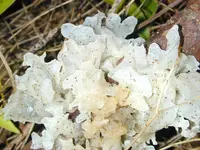
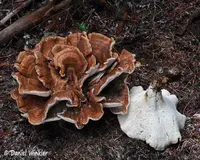
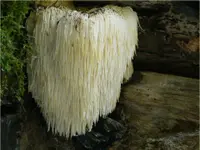
Bondarzewia occidentalis, often called the western polypore, is a large bracket fungus rather than a typical leafy plant. It forms overlapping, fan-shaped rosettes at the base of conifers, especially old or stressed trees.

In nature it occurs mainly in western North American forests, where it causes butt rot in hosts like Douglas fir. It is not suited to standard home cultivation, since it depends on living or recently dead wood and specific forest conditions. Gardeners who want to care for Bondarzewia occidentalis usually focus on identifying and managing it on trees rather than actively growing it. It prefers cool, moist, shaded environments and well-aerated woody substrates instead of conventional soil.

Main Plant Requirements

Care Difficulty

Moderate Care

Light Preference

Partial Shade

Water Requirements

Moderate Water

Temperature Preference

Cold Hardy

Hardiness Zone

5–9

Soil Texture

Loamy, Sandy, Organic-rich

Soil pH

Acidic (5.5–6.5)

Soil Drainage

Moist but well-drained

Fertilization

Minimal (feed rarely)

Get Personalized Care Plan

Scan your plant to receive care tips personalized for your specific plant

Available on iOS and Android

How to Care for the Bondarzewia occidentalis

This wood-decay fungus prefers cool, shaded forest conditions rather than direct open sun.

  • Provide dappled or filtered light under conifers or other trees, mimicking 1–3 hours of weak morning sun and bright shade for the rest of the day.
  • Avoid strong midday and afternoon sun, which can dry and crack fruiting bodies and desiccate the underlying wood host.
  • In summer, increased canopy shade is acceptable; in early spring or fall, brief low-angle sun is tolerated but not required for Bondarzewia occidentalis development.

This species depends on consistent natural moisture in the soil and decaying wood rather than direct, frequent watering.

  • Maintain evenly moist, well-drained soil around the host tree or stump; avoid waterlogged conditions that create standing puddles for more than 24 hours.
  • If supplemental watering is needed, moisten the soil when the top 3–5 cm feels dry, allowing water to soak into the root and wood zone instead of wetting fruiting bodies directly.
  • Watch for overwatering signs such as foul odor, slimy wood, or persistent boggy soil; very hard, cracked ground and shrinking fungal margins suggest insufficient moisture.

This fungus is adapted to cool, temperate forest climates with moderate seasonal variation.

  • Optimal fruiting typically occurs around 50–68°F (10–20°C), with mycelium growth continuing slowly from about 41–77°F (5–25°C) in moist substrates.
  • Short exposures down to about 23–25°F (-5 to -4°C) are usually tolerated in dormant periods, but repeated hard freezes can damage exposed fruiting bodies.
  • Sustained heat above 82–86°F (28–30°C), especially with dry air and soil, can stunt or halt fruiting; shade and stable moisture help buffer high summer temperatures.

Humidity is not a primary factor for Bondarzewia occidentalis, which naturally grows outdoors on decaying conifer stumps and logs.

This wood-decay fungus requires moist, organic-rich substrate rather than conventional potting soil.

  • Use a base of well-rotted conifer wood, wood chips, and coarse bark rather than mineral garden soil.
  • Maintain constant moisture in the substrate without waterlogging, allowing excess water to drain freely from the wood matrix.
  • Aim for slightly acidic conditions, roughly pH 5.0–6.5, typical of coniferous forest litter and decaying logs.
  • Avoid compacted, clay-based, or heavily fertilized mixes, which suppress fungal colonization and reduce aeration around the mycelium.

This species is generally unsuitable for standard container growing, as it depends on large pieces of decaying conifer wood rather than soil.

This native wood-decay fungus typically grows on conifer roots and stumps and does not benefit from garden-style fertilization.

Bondarzewia occidentalis forms annual to short-lived fruiting bodies that need no true pruning, only basic hygiene.

  • Remove old, decayed, or insect-damaged brackets with a clean knife or pruning saw to reduce mold buildup.
  • Cut at the base of the fruiting body without gouging living tree tissue to limit unnecessary wounding.
  • Collect and dispose of infected or heavily sporulating pieces away from vulnerable conifers if disease spread is a concern.

This fungus is not suited to normal container culture, so management focuses on how and where it colonizes trees or buried wood.

  • Transplantation is rarely attempted; instead, allow natural colonization of suitable conifer stumps, roots, or large buried wood pieces.
  • If moving colonized wood, do so in cool, moist weather to limit desiccation of the mycelium, the threadlike feeding network.
  • Avoid disturbing root zones of living conifers, since this species can act as a butt rot pathogen on stressed hosts.
  • For experimental cultivation, place inoculated wood in shaded, well-drained, consistently moist forest-like conditions and minimize handling.

Human-directed propagation of Bondarzewia occidentalis is specialized and usually limited to research or mushroom-culture experiments.

This fungus is cold hardy in its native range and normally requires no deliberate winter care.

Care Tips

Host tree selection

Establish this fungus only on already-declining or dead conifers, since it is a root and butt rot pathogen and will eventually destabilize living host trees.

Secure spore source

To reliably establish a patch, place fresh, mature fruiting bodies directly on cut conifer stumps or partially bury them at the base so spores fall and mycelium can colonize the wood.

Maintain wood moisture

Mulch around the stump with coarse wood chips and avoid removing surrounding leaf litter so the substrate stays evenly moist and the mycelium can expand.

Minimize disturbance

Flag or mark the colonized area and avoid soil compaction, digging, or repeated foot traffic around the stump, which can damage the mycelium network and reduce future fruiting.

Harvesting technique

Cut only part of each fruiting body at the base with a clean knife and leave some intact to ensure continued spore production and a long-lived colony when caring for Bondarzewia occidentalis.

Common Pests and Diseases

Armillaria root disease

This disease is caused by Armillaria species that infect and kill the roots and lower trunk of conifers, providing the dead wood substrate on which Bondarzewia occidentalis typically fruits. Symptoms include declining or dead host trees, resin bleed at the base, and white mycelial fans under the bark.

Solution

Management focuses on forestry practices: remove and properly dispose of heavily infected stumps and roots when feasible, avoid replanting highly susceptible conifer species on infested sites, and favor mixed-species plantings to reduce the spread and impact of Armillaria.

Heterobasidion root and butt rot

This disease is caused by Heterobasidion species that decay roots and butt wood of conifers, creating structurally weakened trees and large zones of infected stumps that may later support B. occidentalis. Symptoms include crown thinning, windthrow, and extensive internal decay near the base of trees.

Solution

To reduce inoculum, freshly cut conifer stumps in managed stands can be treated with approved biological or chemical stump treatments, and thinning schedules can be planned to avoid peak sporulation periods; prompt removal of severely decayed trees and stumps helps limit further spread in plantations and high‑value stands.

Bark beetle infestation

These insects attack stressed or weakened conifers, boring under the bark and often killing the tree, after which the decaying root and butt wood may be colonized by B. occidentalis. Symptoms include fine boring dust, pitch tubes on the bark, and rapid crown discoloration.

Solution

Management relies on maintaining tree vigor, promptly removing and properly disposing of heavily infested logs, and using trap logs or pheromone traps where appropriate; in commercial forests, sanitation felling of infested trees before beetles emerge helps reduce local populations.

Wood‑boring beetle larvae

These insects develop inside dead or decaying conifer wood, tunneling through the same substrates that B. occidentalis uses, which can alter the structure and moisture profile of the fruiting area. Symptoms include galleries and exit holes in stumps or logs and frass accumulation in and around the wood.

Solution

In managed sites where the structural integrity of deadwood is important, infested material can be stripped of bark or removed and replaced with sound cull logs; reducing unnecessary log piles and improving airflow around stored wood helps make conditions less favorable for heavy larval development.

Interesting Facts

Western conifer specialist

This fungus is strongly associated with coniferous forests of western North America, particularly Douglas-fir and true firs, where it colonizes the base and roots of living trees.

Heart rot pathogen

It causes a brown cubical heart rot in conifer trunks and roots, breaking down the inner wood while trees may still appear outwardly healthy for years.

Layered rosette brackets

Its fruiting bodies often form large, overlapping rosettes of fan-shaped caps emerging from the soil at the tree base, sometimes reaching impressive diameters in mature forest sites.

Botan icon

Did you know?

Molecular studies have shown that this species, once confused with similar Eurasian Bondarzewia taxa, represents a distinct North American lineage adapted to the specific conifer communities and climate regimes of the Pacific Northwest and adjacent regions.

FAQs about Bondarzewia occidentalis

This wood-decay fungus forms large rosettes at the base of host conifers, but it does not spread rapidly across soil surfaces. It expands slowly via mycelium in wood, so it is not considered an aggressive garden spreader.

Grow Healthy Plants with Botan Care

Keep your plants happy and healthy with plant identification, disease detection, and easy care guidance.

Botan plant care app — identify plants on mobile

Explore More Plants