Spore-friendly harvesting
Cut the mushroom cleanly at the base with a sharp knife and leave undisturbed pieces of stem and any over-mature caps in place so spores can drop and support future flushes when growing Spring King Bolete.

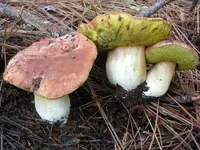
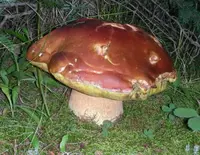
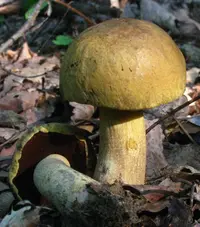
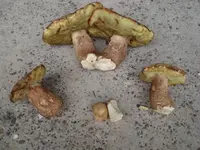
Spring king bolete, Boletus rex-veris, is a fleshy, mycorrhizal fungus that forms a symbiotic relationship with tree roots rather than growing like a typical houseplant. It produces stout, pale to tan caps with a thick, white to yellowish stem and a sponge-like pore surface instead of gills.
This mushroom naturally occurs in western North America, especially in mountain conifer forests during spring. It is considered choice for foraging but is difficult to cultivate because it depends on specific tree partners and stable forest soil conditions.
Those exploring how to care for Spring King Bolete at home usually focus on maintaining suitable host trees outdoors, with cool conditions, clean soil, and consistent, moderate moisture.

Care Difficulty
Hard Care

Light Preference
Partial Shade

Water Requirements
Regular Water

Temperature Preference
Cool Climate

Hardiness Zone
Unknown

Soil Texture
Loamy, Sandy, Organic-rich

Soil pH
Acidic (5.5–6.5), Slightly acidic (6.5–7.0)

Soil Drainage
Moist but well-drained

Fertilization
Minimal (feed rarely)
Scan your plant to receive care tips personalized for your specific plant
Available on iOS and Android
This spring-fruiting mycorrhizal fungus prefers bright forest conditions with moderated light rather than full, open sun.
This ectomycorrhizal fungus depends on evenly moist, well-drained soil around host tree roots rather than direct, frequent surface watering.
This spring bolete fruits best in cool to mild conditions that follow winter chilling and gradual soil warming.
This ectomycorrhizal fungus needs consistently moist, cool air to fruit well.
Boletus rex-veris relies on specific soil conditions because it forms symbiotic roots with conifer hosts.
This species is not suitable for typical container growing because it depends on living tree roots and large soil volumes to complete its life cycle.
Boletus rex-veris is a wild mycorrhizal fungus that depends on its tree host, so direct fertilization is usually unnecessary and can be harmful.
Pruning is not applicable to Boletus rex-veris, as the visible mushroom is only the fruiting body of an underground fungus.
Transplanting efforts focus on the fungus–tree partnership rather than the mushroom itself, which does not respond like a typical potted plant.
Propagation of Boletus rex-veris is technically complex and rarely successful for home growers, since it relies on specialized mycorrhizal relationships with tree roots.
This species overwinters within the soil as mycelium and is naturally cold hardy in its native range, so specific winter protection is not required.

Plant Health Check
Not sure what's wrong with your plant? Check your plant's health inside the app.
This species fruits primarily in spring and early summer, making it one of the few large edible boletes in western North America that appears well before the classic autumn mushroom season.
It forms ectomycorrhizal partnerships with high-elevation conifers, especially ponderosa and other pines, exchanging mineral nutrients and water from the soil for sugars from the tree roots.
For many years it was grouped with the European porcini complex, but modern morphological study and DNA analysis have confirmed it as a distinct North American taxon.

In some western US regions this species can be a strong indicator of spring snowmelt patterns, often fruiting in noticeable waves that track the receding snow line across montane pine forests.
This species is considered a choice edible mushroom when correctly identified and cooked. It must never be eaten raw. Always confirm identification with an expert, since similar boletes can cause stomach upset or require different preparation.
Keep your plants happy and healthy with plant identification, disease detection, and easy care guidance.