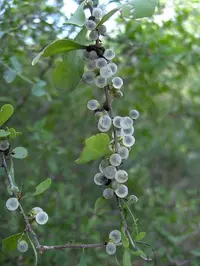
Herrania purpurea Care

Herrania purpurea

About Herrania purpurea

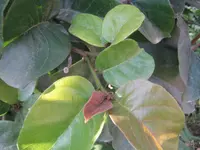
Herrania purpurea is a small, understory tree related to cacao, valued for its unusual purple, ridged pods and ornamental foliage. It stays relatively compact and has a somewhat bushy, shrubby habit in cultivation.

This species is native to humid tropical forests of South America, where it grows in warm, shaded, and consistently moist environments. Its need for stable warmth, high humidity, and protection from direct sun makes it more challenging than common houseplants.

For those willing to create a warm, humid microclimate with rich, well-drained soil, it can be a rewarding collector’s plant. Understanding how to care for Herrania purpurea starts with replicating its shaded rainforest conditions as closely as possible indoors or in a greenhouse.

Main Plant Requirements

Care Difficulty

Hard Care

Light Preference

Partial Shade

Water Requirements

Keep Soil Moist

Temperature Preference

Tropical / Frost Sensitive

Hardiness Zone

Unknown

Soil Texture

Loamy, Peaty, Organic-rich

Soil pH

Acidic (5.5–6.5)

Soil Drainage

Moist but well-drained

Fertilization

Light (every 4–6 weeks)

Get Personalized Care Plan

Scan your plant to receive care tips personalized for your specific plant

Available on iOS and Android

How to Care for the Herrania purpurea

This understory tree prefers bright, filtered light that mimics a humid forest edge.

  • Provide 4–6 hours of bright, indirect light daily, such as dappled shade under taller vegetation or shade cloth outdoors.
  • Allow gentle morning sun but protect from direct midday and afternoon sun, which can cause leaf scorch, yellowing, and crispy edges on Herrania purpurea leaves.
  • In winter or overcast seasons, move the plant to a brighter, sheltered position while still avoiding harsh, direct rays.

This species prefers consistently moist but not waterlogged soil.

  • Water when the top 2–3 cm of soil feels slightly dry, aiming to keep the root zone evenly damp rather than letting it fully dry out.
  • Use deep, slow watering so moisture reaches the full root depth, then let excess drain freely through well-structured, organic-rich soil.
  • In cooler months, reduce frequency as growth slows; watch for wilt and curling leaves as underwatering signs, and yellowing, soft leaves as overwatering signs.

This tropical tree requires warm, stable temperatures without exposure to frost.

  • Aim for 70–85°F (21–29°C) for active growth, with only brief dips outside this range to avoid stress and slowed development.
  • Protect from temperatures below 55°F (13°C); prolonged exposure near 40°F (4°C) or any frost can cause leaf drop, tissue damage, and possible plant death.
  • In hot periods above 90°F (32°C), provide extra shade, airflow, and soil moisture to prevent heat stress and leaf scorch.

This species needs high, stable humidity to grow well and avoid leaf damage.

  • Aim for 70–90% humidity; it tolerates brief drops to around 60% but declines in drier air.
  • Crisping leaf edges, stalled growth, and flower bud drop indicate humidity stress.
  • Use grouped plants, a room humidifier, or an enclosed greenhouse cabinet to keep Herrania purpurea adequately humidified.

This species prefers a loose, organic-rich, consistently moist but sharply draining substrate.

  • Use a mix of roughly 40% fine bark, 30% coco coir or peat, 20% compost, and 10% perlite for structure and drainage.
  • Aim for slightly acidic soil, around pH 5.5–6.5, to support nutrient availability and root health.
  • Ensure a crumbly, aerated texture that stays evenly moist yet never waterlogged, which reduces root-rot risk.
  • Avoid heavy clay, compacted mixes, or straight garden soil that hold water and exclude air from roots.

This species can be grown in containers if root space, drainage, and moisture balance are carefully managed.

  • Choose a deep, slightly oversized pot to accommodate its taproot-like structure and encourage steady vertical growth.
  • Use a sturdy, heavier container material to prevent tipping as the plant gains height and biomass.
  • Elevate the pot and allow rapid drainage so excess water leaves the root zone within minutes after watering to avoid stagnation.

Feeding supports steady growth in Herrania purpurea when grown in containers or poor soils.

  • Use a balanced liquid fertilizer (around 10-10-10) at 1/2 strength every 4–6 weeks during the warm growing season.
  • Alternatively, incorporate a light layer of mature compost over the root zone once or twice in spring and midsummer.
  • For containers, a slow-release balanced fertilizer in spring can provide gentle, steady nutrients for 3–4 months.
  • Pause feeding or reduce to very light applications during the coolest, lowest-growth months.

Pruning is mainly used to keep Herrania purpurea healthy and structurally sound.

  • Carry out light pruning at the end of the dry or cool season, just before active growth resumes.
  • Remove dead, diseased, or storm-damaged branches first, cutting back to healthy wood with clean, sharp bypass pruners.
  • Thin congested interior shoots to improve airflow and light penetration while keeping the natural form.
  • Limit heading cuts; shorten only overly long, awkward branches to guide shape and maintain manageable size.

Transplanting is more relevant than repotting for Herrania purpurea, which is usually grown in the ground in warm climates.

  • Look for roots circling a container, water running straight through, or slowed growth as cues the plant has outgrown its pot.
  • Plan transplanting for late spring or early summer, once soil is warm and stable, to reduce shock.
  • Move up only 1 container size or into a hole just wider than the root ball, keeping the root flare at soil level.
  • Handle roots gently, water deeply after planting, and shade the plant for 1–2 weeks to limit stress while it re-establishes.

Propagation of Herrania purpurea is usually done on a small scale and tends to be slow and specialized.

  • Use fresh seeds from ripe pods, sowing in warm, consistently moist, well-drained medium in late spring or early summer.
  • Maintain temperatures around 75–85°F, high humidity, and bright shade to support germination and early seedling growth.
  • Stem cuttings are less reliable; if attempted, use semi-ripe wood, rooting hormone, bottom heat, and a covered, humid environment.
  • Label seed batches and monitor for damping-off, discarding any seedlings that show stem collapse at soil level.

This strictly tropical species is frost-tender and needs careful winter management in any climate with cool seasons.

  • Keep outdoor plants only in frost-free areas; avoid exposure below about 50°F for extended periods.
  • For container plants, move indoors or into a heated greenhouse before nights drop below 55°F.
  • Maintain bright, indirect light, slightly drier soil, and good air movement through winter.
  • In marginal climates, a deep organic mulch layer around the root zone helps buffer brief cool spells.

Care Tips

Provide trunk support

Install a sturdy stake or narrow trellis early so the main stem can be loosely tied and kept upright, which reduces wind damage and allows better light penetration into the canopy.

Mulch for root stability

Apply a 3–5 cm layer of fine bark or leaf mold over the root zone, keeping it a few cm away from the stem, to buffer soil moisture and temperature swings and protect the shallow feeder roots.

Use windbreaks outdoors

When planting outside, position the plant near a hedge, fence, or temporary shade cloth to act as a windbreak and reduce leaf tearing and stress on young shoots.

Warm root zone

In cooler months, place container plants on an insulating surface like thick foam or wood, not bare concrete, to keep the root zone warmer and maintain steady growth.

Monitor pollination needs

If flowering but not setting pods, consider hand-pollination by gently transferring pollen between flowers with a soft brush, which can significantly improve fruit set when growing Herrania purpurea in sheltered or indoor locations.

Common Pests and Diseases

mirid bugs

These insects pierce young pods, flowers, and tender shoots, causing deformities, dry patches, and premature fruit drop. Symptoms include small dark feeding spots and misshapen or aborted pods.

Solution

Inspect flushes of new growth and pods regularly and remove heavily damaged pods. Use fine insect netting in outdoor or greenhouse setups, encourage natural predators such as spiders and predatory bugs, and, if needed, apply a targeted contact insecticide based on pyrethrins or insecticidal soap to young pods and shoots, repeating as label-directed.

cocoa pod borers

This pest is a small moth whose larvae tunnel into young pods, feeding on the developing seeds and pulp. Symptoms include uneven pod ripening, premature yellowing, and internal frass when pods are opened.

Solution

Harvest pods promptly at maturity and destroy any infested pods away from the growing area. In outdoor or greenhouse situations, reduce adult moths with light traps, use pod sleeves or bags where practical, and maintain good sanitation by removing dropped pods and plant debris that could harbor larvae or pupae.

moniliophthora pod rot

This disease, closely related to frosty pod rot of cacao, attacks flowers and pods in warm, humid conditions. Symptoms include pale lesions that expand into corky, brown, or whitish fungal growth, leading to mummified pods and seed loss.

Solution

Remove and destroy all infected pods and mummified fruits as soon as they are noticed to break the disease cycle. Improve airflow with careful pruning, avoid overhead watering, keep humidity from staying continuously above 80–85% around pods, and in outdoor plantings follow local fungicide recommendations based on copper or systemic fungicides if the disease is persistent.

phytophthora black pod

This disease is caused by water molds (Phytophthora spp.) that infect pods and stems in wet, poorly drained, or overcrowded conditions. Symptoms include dark, water-soaked lesions on pods that quickly turn black and may extend into the peduncle and nearby tissues.

Solution

Improve drainage and avoid water pooling around the plant, reduce leaf and pod wetness by watering at soil level, and prune for better light and airflow. Promptly remove and discard infected pods and fallen debris, and in outdoor or greenhouse systems consider preventive copper-based fungicide sprays during prolonged wet periods according to label directions.

mealybugs

These insects feed on sap on stems, leaf nodes, and under leaf surfaces, often on sheltered inner growth. Symptoms include white, cottony clusters, sticky honeydew, and sooty mold developing on leaves and pods.

Solution

Wipe or rinse off colonies with a damp cloth or a gentle shower, focusing on nodes and underside of leaves, and isolate heavily infested plants. For persistent infestations, apply insecticidal soap or a light horticultural oil thoroughly to all plant surfaces every 7–10 days until no new mealybugs appear, and reduce excessive nitrogen fertilization that promotes soft, susceptible growth while learning how to take care of Herrania purpurea in a more balanced way.

Interesting Facts

Close cacao relative

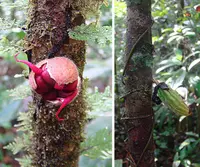
Herrania purpurea belongs to the same family as cacao (Theobroma cacao) and produces small, purple, cacao-like pods directly on its trunk and older branches, a trait called cauliflory where flowers and fruits emerge from woody stems.

Amazon understory specialist

This species is native to lowland rainforests of the western Amazon basin, where it grows as an understory tree or shrub in warm, humid, shaded environments with consistently moist but well-drained soils.

Pollination on the trunk

Its small, often inconspicuous flowers develop on the woody stems and trunk, positioned where small insects can easily access them in the dense forest understory, illustrating a specialized pollination strategy within the cacao family.

FAQs about Herrania purpurea

This species grows slowly to moderately, adding only a small amount of height and spread each year. Growth is fastest in stable warm conditions with evenly moist substrate, high humidity, and consistent nutrition, especially during the active growing season.

Grow Healthy Plants with Botan Care

Keep your plants happy and healthy with plant identification, disease detection, and easy care guidance.

Botan plant care app — identify plants on mobile

Explore More Plants