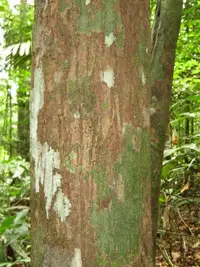
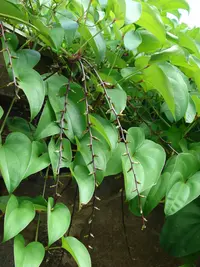
Aristolochia cordiflora Care

Aristolochia cordiflora

About Aristolochia cordiflora

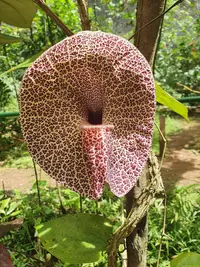
Aristolochia cordiflora is a tropical climbing vine known for its unusual heart-shaped flowers and lush green foliage. It belongs to the birthwort family, which includes many ornamental but specialized species.

This plant is native to parts of Central and South America, where it grows in warm, humid forests and scrambles over trees or supports. In cultivation it usually needs a sturdy trellis or fence and does best in sheltered, frost-free conditions.

It can be moderately challenging, as it prefers consistent warmth, moisture, and well-drained, humus-rich soil, plus bright filtered light. Gardeners who learn how to care for Aristolochia cordiflora often grow it mainly for its distinctive, collector-style appeal.

Main Plant Requirements

Care Difficulty

Moderate Care

Light Preference

Partial Shade

Water Requirements

Regular Water

Temperature Preference

Tropical / Frost Sensitive

Hardiness Zone

Unknown

Soil Texture

Loamy, Organic-rich

Soil pH

Acidic (5.5–6.5), Slightly acidic (6.5–7.0)

Soil Drainage

Moist but well-drained

Fertilization

Light (every 4–6 weeks)

Get Personalized Care Plan

Scan your plant to receive care tips personalized for your specific plant

Available on iOS and Android

How to Care for the Aristolochia cordiflora

This vine prefers bright, gentle light that avoids harsh midday exposure.

  • Provide 4–6 hours of morning sun or bright filtered light; protect from direct sun between 11 a.m. and 4 p.m. in summer to prevent leaf scorch.
  • Aristolochia cordiflora tolerates partial shade, but in very deep shade flowering and vigorous growth decline noticeably.
  • In hot climates, use dappled light under taller plants or a shade cloth, increasing light exposure slightly during cooler months for stronger growth.

This species prefers evenly moist soil that never stays soggy for long periods.

  • Water when the top 3–5 cm of soil feel dry, then soak thoroughly so excess drains away, supporting deep root development.
  • In spring and summer, check moisture more often; in cooler seasons, allow the soil to approach the drier end of moist before watering again.
  • Watch for yellowing, soft leaves as a sign of overwatering and crisp, drooping foliage as a sign of underwatering, and adjust watering volume or drainage.

This vine grows best in warm, frost-free conditions with only moderate temperature swings.

  • Aim for 65–80°F (18–27°C) during active growth; short peaks to 85°F (29°C) are tolerated if soil moisture and shade are adequate.
  • Avoid temperatures below 45°F (7°C); light frost can damage foliage and repeated exposure may kill stems or roots.
  • In regions with cool winters, growth slows or stops; protect plants from cold winds and sudden temperature drops, especially after warm spells.

This vine benefits from moderate humidity but usually adapts to typical indoor levels.

  • Aim for 40–60% humidity to support steady growth and reduce leaf-edge browning.
  • It tolerates short dry-air spells, but prolonged humidity below 30% may cause curled, crispy leaf tips.
  • Increase humidity by grouping plants, placing the pot on a pebble tray with water, or running a small nearby humidifier.

This species prefers loose, organic-rich, well-drained soil that holds moisture without staying waterlogged.

  • Use a mix of 50–60% peat- or coir-based potting medium with 20–30% compost and 20–30% perlite or fine bark for aeration.
  • Ensure the structure is crumbly and loamy so roots receive both air and consistent moisture.
  • Keep pH slightly acidic to neutral, around 6.0–7.0, which supports nutrient uptake for Aristolochia cordiflora.
  • Avoid heavy clay, compacted mixes, or pots that stay soggy, which can trigger root rot and stunted growth.

This twining climber is suitable for container growing when the pot is chosen for stability and drainage.

  • Choose a wide, heavy container that resists tipping once the vine climbs a support or trellis.
  • Select a pot depth that allows the root system to spread horizontally, leaving space above the mix for watering without overflow.
  • Use porous materials like unglazed clay if extra evaporation is needed, but switch to thicker walls in hot climates to reduce rapid drying.

This vine benefits from moderate feeding during active growth but does not need heavy fertilization for healthy development.

  • Use a balanced liquid fertilizer (around 10-10-10 or 20-20-20) diluted to 1/2 strength every 4–6 weeks in spring and summer.
  • Alternatively, incorporate a thin layer of compost or use a slow-release granular fertilizer at the start of the growing season.
  • Stop feeding Aristolochia cordiflora in late fall and winter when growth slows or stops, to avoid weak, stretched stems.

Thoughtful pruning keeps this twining vine manageable and encourages healthier growth.

  • Carry out main pruning in late winter or early spring before vigorous new growth begins.
  • Remove dead, damaged, or crossing stems first, then thin congested areas to improve air flow and light penetration.
  • Shorten overly long shoots to maintain the desired size and direction on the support structure or trellis.
  • Use clean, sharp hand pruners and make cuts just above a healthy bud or side shoot on Aristolochia cordiflora.

Container-grown plants and young vines benefit from careful transplanting to support strong root development.

  • Check for roots circling the pot, pushing through drainage holes, or stalled top growth as signs it needs a larger container or in-ground planting.
  • Plan major transplanting or repotting for early spring, about every 2–3 years, when new growth is just starting.
  • Move into a pot 1–2 in wider using a free-draining, organic-rich mix, and keep the root ball at the same depth as before.
  • Water thoroughly after transplanting Aristolochia cordiflora, then keep soil evenly moist and shaded for 1–2 weeks to reduce root stress.

New plants are most often produced from seeds and softwood cuttings taken during the warm growing season.

  • Sow fresh seeds in spring in a warm (70–75°F), bright location, using a moist, free-draining seed mix, and keep humidity high until germination.
  • Take 8–10 in softwood cuttings in late spring or early summer, removing lower leaves and dipping the base in rooting hormone.
  • Insert cuttings into moist, sterile medium, then maintain bright, indirect light and high humidity until firm roots develop.
  • Once rooted, gradually acclimate young Aristolochia cordiflora plants to lower humidity and stronger light before planting out.

This vine prefers mild climates and needs protection in regions with freezing winters.

  • In USDA zones warmer than 9, plants in the ground usually overwinter with minimal damage if soil drainage is good.
  • In cooler areas, apply a 5–8 cm mulch layer around the root zone to buffer temperature swings, keeping mulch away from the stems.
  • Move container-grown Aristolochia cordiflora indoors to a bright, frost-free space when temperatures near 40°F, and water sparingly.

Care Tips

Provide strong trellis

Install a sturdy, weather-resistant trellis or wire mesh before planting so the vine can be gently tied and directed early, which prevents tearing tender stems later when they become woody and heavy.

Guide young vines

Check new growth weekly and loosely tie or clip young shoots along the support in a spiral pattern to create even coverage and reduce tangling that can trap moisture and invite fungal problems.

Monitor pollinator access

If growing in a screened patio or greenhouse, leave vents or doors open at flowering time or hand-pollinate with a small brush so the unusual flowers are properly pollinated and seed set is not limited by lack of insect visitors.

Use root-zone mulch

Apply a 5–8 cm layer of composted bark or leaf mold around, but not touching, the main stem to keep roots cool, stabilize soil moisture, and reduce weed competition without promoting rot at the crown.

Seasonal hardening routine

In cooler regions, gradually acclimate container-grown plants outdoors in spring and back indoors in fall over 7–10 days, as this slow transition greatly reduces shock when caring for Aristolochia cordiflora across seasons.

Common Pests and Diseases

Swallowtail caterpillars

This pest commonly feeds on Aristolochia foliage, chewing large irregular holes and sometimes stripping young vines. Symptoms include missing leaves, green droppings on lower foliage, and rapid defoliation during warm months.

Solution

Hand-pick caterpillars in small infestations and relocate them away from the vine, especially if butterflies are desired in the garden. For heavier damage, protect key shoots with fine insect netting or use a targeted Bacillus thuringiensis (Bt) product applied in the evening according to label directions to limit impact on non-target insects.

Spider mites

These insects tend to appear in hot, dry conditions on container or protected plantings, causing fine stippling, dulling of leaves, and webbing on young growth. Symptoms include leaf yellowing, reduced vigor, and a dusty appearance on the undersides of leaves.

Solution

Rinse vines thoroughly with a strong but gentle stream of water, focusing on leaf undersides, and repeat several times per week. If populations persist, increase humidity around the plant, remove heavily infested leaves, and apply insecticidal soap or horticultural oil, ensuring full coverage but avoiding use in direct hot sun.

Leaf spot

This disease produces brown to black spots with possible yellow halos on leaves, especially in dense, shaded growth with poor air circulation. Symptoms include premature leaf drop and a generally thin canopy on affected sections of the vine.

Solution

Remove and discard spotted leaves promptly, including fallen debris, to reduce the source of infection. Improve airflow by thinning crowded stems, avoid overhead watering, and, if the problem recurs, use a copper- or chlorothalonil-based fungicide labeled for ornamental vines, applied at the earliest sign of spotting as part of broader Aristolochia cordiflora care instructions.

Powdery mildew

This disease shows as white, powdery patches on upper leaf surfaces and tender shoots, often developing in warm days combined with cool, humid nights. Symptoms include distorted new growth, reduced flowering, and gradual decline of affected foliage.

Solution

Prune to open the vine for better light and airflow, and remove heavily infected leaves to slow spread. Water at the soil level in the morning, avoid overhead irrigation, and, if needed, apply a sulfur or potassium bicarbonate fungicide labeled for powdery mildew on ornamentals, repeating at the interval on the product label until new growth emerges clean.

Interesting Facts

Heart-shaped trap flowers

This species develops inflated, heart-shaped flowers with a narrow tube and a flared mouth that functions as a temporary trap for small insects, mainly flies, that act as pollinators.

Specialized odor signals

The flowers release a faint, often unpleasant scent that mimics decaying organic material, which specifically attracts certain fly species that become temporarily confined inside the floral tube until pollen transfer is complete.

FAQs about Aristolochia cordiflora

This species is a twining vine that climbs rather than forming a ground-hugging spread. It wraps its stems around nearby supports, such as trellises, wires, or shrubs, and gradually extends several meters in favorable conditions.

Grow Healthy Plants with Botan Care

Keep your plants happy and healthy with plant identification, disease detection, and easy care guidance.

Botan plant care app — identify plants on mobile

Explore More Plants