Algerian ivy Care (Hedera canariensis)

Also known as: Canary Ivy, Algerian ivy
Algerian ivy

About Algerian ivy

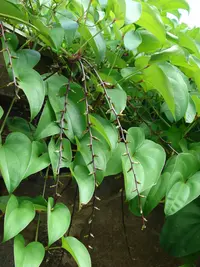
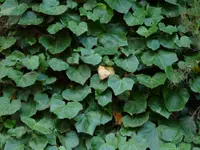
Algerian ivy, Hedera canariensis, is a fast-growing evergreen vine valued for its dense, glossy green leaves and strong climbing habit. It can also form a groundcover where it has space to spread.

This species is native to North Africa and the Canary Islands, and it adapts well to many mild and coastal climates. It clings to walls, fences, or tree trunks using small aerial roots.

The plant is generally tough and forgiving, which makes it relatively easy to care for Algerian ivy in both gardens and large containers. It prefers bright, indirect light, evenly moist but not waterlogged soil, and benefits from regular pruning to control its vigorous growth.

Main Plant Requirements

Care Difficulty

Easy Care

Light Preference

Partial Shade

Water Requirements

Moderate Water

Temperature Preference

Cool Climate

Hardiness Zone

8–11

Soil Texture

Sandy, Loamy, Organic-rich

Soil pH

Acidic (5.5–6.5), Slightly acidic (6.5–7.0)

Soil Drainage

Moist but well-drained

Fertilization

Light (every 4–6 weeks)

Get Personalized Care Plan

Scan your plant to receive care tips personalized for your specific plant

Available on iOS and Android

How to Care for the Algerian ivy

Hedera canariensis grows best with bright, indirect light and some protection from harsh sun.

  • Outdoors, give 3–6 hours of morning sun or light dappled shade under trees; avoid strong afternoon sun, especially in hotter regions.
  • Tolerates partial to full shade, but dense shade can cause leggy growth and larger, thinner leaves with reduced variegation on Algerian ivy forms.
  • In hot summers, provide filtered light or shade cloth on south- and west-facing exposures to prevent leaf scorch and dry, crispy edges.

Hedera canariensis prefers evenly moist, not soggy, soil with brief drying at the surface between waterings.

  • Water when the top 2–4 cm of soil feels dry; the soil below should still feel slightly cool and damp, not saturated.
  • Use well-drained soil; yellowing leaves, soft stems, and a sour smell indicate overwatering, while dull, curling leaves suggest underwatering.
  • Reduce watering in cool, wet seasons and increase during hot, windy periods, always checking soil moisture rather than following a fixed schedule.

This species prefers mild conditions and tolerates light cold but suffers in hard frost or extreme heat.

  • Ideal growth occurs around 50–75°F (10–24°C), where foliage remains dense and leaves maintain good color and texture.
  • It can survive brief drops to about 20–25°F (-6 to -4°C), but repeated freezes or unprotected exposure below this range can cause dieback.
  • In hot climates above 85°F (29°C), provide shade and consistent soil moisture, as prolonged heat and dry air can stress plants and brown leaf edges.

This species prefers moderately moist air but copes with typical indoor humidity.

  • Aim for 40–60% humidity; Algerian ivy usually tolerates brief dips lower if soil moisture is stable.
  • Crisp leaf edges, brown tips, and spider mite outbreaks often signal air that is too dry.
  • Increase humidity by grouping plants, placing the pot on a pebble tray with water below the base, or running a small nearby humidifier.

Hedera canariensis grows best in loose, moist but well-drained, organic-rich soil.

  • Use a mix of roughly 2 parts peat- or coco-based potting mix, 1 part compost, and 1 part perlite or pine bark to keep it airy.
  • Soil should feel springy, not compacted; break up clods and avoid heavy garden clay that holds water around roots.
  • Aim for slightly acidic to neutral pH, around 6.0–7.0, which supports balanced nutrient uptake and healthy foliage.
  • Improve drainage by raising containers slightly off the saucer and avoiding fine sand that can close soil pores.

This ivy adapts well to container growing for both indoor and outdoor use.

  • Choose a wide, stable pot so trailing or climbing stems cannot tip the container as they gain length and weight.
  • Select heavier materials like ceramic or concrete outdoors to anchor the plant in wind and prevent root ball rocking.
  • Use a deep enough pot to allow a broad, fibrous root system, which helps support dense top growth in a limited soil volume.

Hedera canariensis benefits from light, controlled feeding during the active growing season, especially in containers.

  • Use a balanced liquid fertilizer (for example 10-10-10 or 20-20-20) at 1/2 strength every 4–6 weeks in spring and summer.
  • Apply a slow-release fertilizer or a thin layer of compost to outdoor plants once in early spring for steady nutrition.
  • Suspend feeding in late fall and winter, when growth slows, to avoid weak, stretched shoots.
  • For Algerian ivy in low-light indoor settings, use more dilute solutions and extend the interval between applications.

Pruning Hedera canariensis helps control spread, maintain shape, and remove unhealthy growth.

  • Best time is late winter to early spring, before strong new growth, with light touch-ups through summer as needed.
  • Remove dead, diseased, or storm-damaged stems back to healthy tissue using clean, sharp pruners or shears.
  • Thin congested, tangled vines to improve air flow and light penetration, which can reduce leaf spot problems.
  • Shorten overly long runners to contain size and encourage denser, more compact foliage coverage.

Hedera canariensis adapts well to both containers and the ground, but benefits from timely repotting or transplanting when rootbound or overcrowded.

  • Check for roots circling the pot, emerging from drainage holes, or slowed growth as signs a container plant needs a larger pot.
  • Plan repotting or garden transplanting for early spring or early fall, when temperatures are mild and stress is lower.
  • For containers, move up only 1 pot size, gently loosen circling roots, and replant in fresh, well-draining mix.
  • Water thoroughly after moving and keep the plant shaded or in bright, indirect light for 3–7 days to limit transplant shock.

Hedera canariensis is commonly multiplied by stem cuttings and simple layering, which root reliably under suitable conditions.

  • Take 8–12 cm semi-ripe stem cuttings in spring or early summer, each with several leaves and at least 1 node.
  • Remove lower leaves, insert the node into moist, well-draining mix, and maintain high humidity and bright, indirect light.
  • Optional rooting hormone on the cut end can speed callus and root formation, especially in cooler rooms.
  • For layering, pin a flexible stem to moist soil so a node contacts the surface, then sever and pot once roots form.

Hedera canariensis is moderately cold tolerant but benefits from simple winter care in colder regions or exposed sites.

  • In USDA zones warmer than 8, established outdoor plants usually overwinter with minimal intervention.
  • In cooler zones or windy sites, apply a 5–8 cm mulch layer around the root zone, keeping it slightly away from stems.
  • For containers, move pots into an unheated garage, porch, or cool bright room to avoid prolonged hard freezes.

Care Tips

Early runner training

As vines elongate, guide new stems along trellises or walls using soft ties every 10–15 cm so they root and attach evenly instead of forming a dense, tangled clump at the base.

Rooted cutting renewal

Every few years, layer 1–2 healthy stems into a shallow tray of moist potting mix, let them root, then replace older, woody sections with these vigorous young plants to maintain dense foliage and strong growth.

Controlled ground spread

When used outdoors as groundcover, install a shallow physical edge (such as metal or plastic strip edging) sunk 5–8 cm into the soil and trim back any runners that cross it monthly to prevent unwanted spread into beds or lawns.

Regular pest scouting

Inspect the undersides of leaves and stem joints every 1–2 weeks for spider mites, aphids, or scale, and if found, isolate the plant and apply insecticidal soap or horticultural oil according to label directions before infestations become established.

Support for heavy vines

In containers or against structures, add sturdy mesh, wire, or a fixed trellis and periodically secure older, heavier stems so their weight does not pull the plant away from its support, which helps when caring for Algerian ivy in small spaces.

Common Pests and Diseases

Spider mites

This pest often infests Algerian ivy foliage, especially in warm, dry indoor air or sheltered outdoor spots. Symptoms include fine webbing, tiny speckled leaves, and overall leaf dullness or bronzing.

Solution

Rinse foliage thoroughly with a firm stream of lukewarm water, including the leaf undersides, then repeat every few days for 1–2 weeks. If needed, follow with insecticidal soap or a ready-to-use horticultural oil, and increase humidity plus air movement to make conditions less favorable for mites.

Scale insects

These insects attach to stems and leaf veins as small, dome-shaped or oval bumps and suck plant sap. Symptoms include sticky honeydew, sooty mold growth on leaves, and gradual decline in vigor.

Solution

Gently scrape or wipe off individual scales with a cotton swab dipped in isopropyl alcohol, then wash the plant to remove honeydew. For heavier infestations, use insecticidal soap or horticultural oil, making sure to coat stems and leaf undersides, and repeat applications according to label directions.

Leaf spot (fungal/bacterial)

This disease causes brown, tan, or black spots with possible yellow halos on leaves, sometimes merging into larger dead patches. Symptoms include premature leaf drop, especially in dense, shaded, or overhead-watered plantings.

Solution

Remove and discard affected leaves and any fallen debris, then improve airflow and avoid wetting foliage by watering at soil level. In persistent outdoor cases, a labeled copper or broad-spectrum fungicide can be used preventively on new growth, following the product directions carefully.

Aphids

These insects cluster on tender shoot tips and the undersides of young leaves, feeding on sap. Symptoms include distorted new growth, sticky honeydew, and the possible presence of ants farming them.

Solution

Spray the plant with a strong stream of water to dislodge aphids, then use insecticidal soap on remaining colonies, ensuring full coverage of new growth and leaf undersides. Pruning heavily infested shoot tips and controlling nearby ant activity helps prevent reinfestation.

Bacterial leaf scorch

This disease leads to irregular brown, dry areas starting at leaf edges, often with a narrow yellow band between healthy and dead tissue. Symptoms include progressive dieback of vines in hot, dry conditions, especially in crowded groundcover plantings.

Solution

Remove and discard affected vines to reduce bacterial spread and avoid overhead irrigation that keeps foliage wet. Improve spacing and airflow, and maintain even soil moisture to reduce stress, since there is no reliable home treatment once vines are severely affected.

Interesting Facts

Macaronesian native range

This species is naturally native to the Canary Islands and Madeira, where it climbs volcanic rock faces and laurel forests rather than the temperate woodlands typical for many other ivies.

Large, leathery foliage

Compared with English ivy, its leaves are broader, thinner-lobed, and more leathery, which helps it tolerate higher light and warmer, coastal conditions in its native habitats.

Clonal spread by layering

In the wild and in gardens, stems that touch the ground often root at the nodes, allowing the plant to form extensive clonal patches through a process called layering, without relying solely on seed production.

Botan icon

Did you know?

In some mild coastal regions outside its native range, this ivy has become invasive, forming dense mats that smother understory vegetation and climbing trees with such vigorous growth that it can alter light and moisture conditions for native plant communities.

FAQs about Algerian ivy

Brown leaves usually result from underwatering, low humidity, or salt buildup from fertilizer. Sudden browning on one side can indicate sun scorch. Trim damaged foliage, flush the soil occasionally, and adjust watering to keep it evenly moist, not soggy.

Grow Healthy Plants with Botan Care

Keep your plants happy and healthy with plant identification, disease detection, and easy care guidance.

Botan plant care app — identify plants on mobile

Explore More Plants