Provide sturdy support
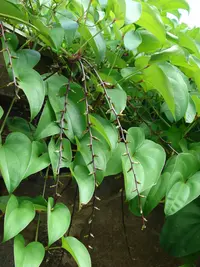
Install a strong trellis, fence, or wire mesh before the vine starts rapid growth so the stems can be tied loosely and guided upward, which keeps foliage off the ground and reduces rot and pest issues when growing air yam.

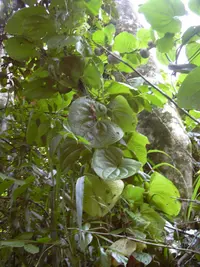
Air yam, Dioscorea bulbifera, is a vigorous twining vine grown mainly for its unusual aerial tubers that form along the stems. These bulbils resemble small, lumpy potatoes and can appear in large numbers.
In nature it occurs in tropical regions of Africa and Asia and has become invasive in many warm areas, especially in the southeastern United States. It grows rapidly and can smother nearby vegetation if not managed.
This plant prefers warm temperatures, consistent moisture, and well-drained soil, which makes it relatively easy to establish in suitable climates. However, its fast growth and spreading habit mean growers must actively manage and care for air yam to keep it under control.

Care Difficulty
Moderate Care

Light Preference
Full Sun

Water Requirements
Moderate Water

Temperature Preference
Tropical / Frost Sensitive

Hardiness Zone
9–12

Soil Texture
Sandy, Loamy, Organic-rich

Soil pH
Acidic (5.5–6.5), Slightly acidic (6.5–7.0)

Soil Drainage
Moist but well-drained

Fertilization
Light (every 4–6 weeks)
Scan your plant to receive care tips personalized for your specific plant
Available on iOS and Android
This vigorous vine needs strong light to build energy for its tubers and bulbils.
Healthy growth depends on evenly moist but well-aerated soil for this yam species.
Temperature strongly influences vine vigor, tuber formation, and dormancy timing.
This species tolerates a wide humidity range and usually does well in average indoor air.
This yam prefers loose, well-aerated, sharply drained soil that still holds moderate moisture.
This vine is suitable for container growing when the pot supports its vigorous climbing habit.
This vining tuber benefits from light, seasonal feeding rather than heavy fertilization when caring for air yam.
Pruning Dioscorea bulbifera focuses on managing vigorous vine growth and maintaining safe, tidy support structures.
Container-grown plants are occasionally repotted, while in-ground Dioscorea bulbifera is usually transplanted as tubers or bulbils.
This species is most commonly propagated from bulbils, the small aerial tubers formed along its vines.
This tropical yam is frost-sensitive and needs specific winter care in cooler climates.

Plant Health Check
Not sure what's wrong with your plant? Check your plant's health inside the app.
This species forms numerous aerial tubers, called bulbils, along its climbing stems, which function as both storage organs and a primary means of vegetative reproduction.
In parts of the southeastern United States and many tropical regions, it is a listed invasive species because its fast-growing vines and prolific bulbils can form dense mats that smother native vegetation and alter understory light conditions.
Different wild and cultivated forms range from inedible and toxic to traditionally eaten after careful processing, due to varying concentrations of bitter and potentially harmful compounds such as dioscorine.

In Florida, long-term field observations have shown that the aerial bulbils of this species can remain viable in the environment for multiple years, creating a persistent seedbank-like reservoir that makes management and eradication particularly difficult once the vine is established.
Yellowing leaves often come from natural aging, nutrient deficiency, or excess moisture around the tuber. Check drainage, avoid waterlogged soil, and consider a balanced fertilizer. Sudden widespread yellowing can also follow cold exposure or root damage.
Keep your plants happy and healthy with plant identification, disease detection, and easy care guidance.