Edge Erosion Control
Plant along the outer margins of ponds or ditches, not in the deepest water, so roots help stabilize soil while stems stay above typical high-water levels to reduce erosion and stem rot risk.

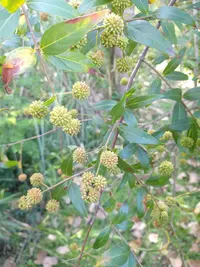
Sarandí colorado, Cephalanthus glabratus, is a wetland shrub native to South America, often found along riverbanks, marsh edges, and periodically flooded areas. It belongs to the coffee family (Rubiaceae) and forms dense, branching thickets.
Plants usually have glossy green leaves and rounded flower heads that attract many pollinators, giving a soft, ornamental look in naturalistic plantings. Its growth habit is more spreading than upright, and it can form a living screen in suitable conditions.
Cephalanthus glabratus prefers consistently moist soil, good sunlight, and space for its roots, which makes it better suited to larger gardens or waterside plantings. Understanding how to care for sarandí colorado starts with providing stable moisture and avoiding very dry, compacted sites.

Care Difficulty
Moderate Care

Light Preference
Full Sun

Water Requirements
Aquatic

Temperature Preference
Warm Climate

Hardiness Zone
8–11

Soil Texture
Loamy, Silty, Organic-rich

Soil pH
Acidic (5.5–6.5), Slightly acidic (6.5–7.0)

Soil Drainage
Waterlogged tolerant

Fertilization
Minimal (feed rarely)
Scan your plant to receive care tips personalized for your specific plant
Available on iOS and Android
This wetland shrub prefers abundant light but tolerates some shade when sited carefully outdoors.
This species naturally grows along streams and wetlands, so it prefers consistently moist conditions rather than drying out.
This shrub is adapted to temperate climates with mild winters and warm, humid summers.
Cephalanthus glabratus prefers consistently moist air but adapts to moderate household humidity.
This wetland shrub requires constantly moist, aerated soil that never dries out completely.
This species can grow in containers if the pot is managed to stay very moist and heavy enough to stabilize the shrub.
Cephalanthus glabratus usually grows well in reasonably fertile soil but benefits from light feeding in poor or depleted sites.
Pruning Cephalanthus glabratus is useful to maintain structure, remove damaged wood, and support flowering.
This shrub is most often grown in the ground, so care focuses on transplanting rather than frequent repotting.
Cephalanthus glabratus is commonly propagated from seeds or softwood to semi-hardwood cuttings.
This species is generally cold hardy in mild to moderate winter climates and needs only basic preparation.

Plant Health Check
Not sure what's wrong with your plant? Check your plant's health inside the app.
This species is a native wetland shrub of southern South America, especially Uruguay, Argentina, and southern Brazil, where it grows naturally along riverbanks, marsh edges, and seasonally flooded lowlands.
It develops a shallow but wide root system adapted to periodic flooding, which allows the plant to tolerate waterlogged, low-oxygen soils that would stress many other shrubs.
Its spherical white flower heads are rich in nectar and are visited by a wide range of insects, including bees and butterflies, which makes it an important nectar source in riparian habitats and is relevant for Cephalanthus glabratus plant care in naturalistic plantings.
This shrub has dense spherical flower heads rich in nectar and pollen, which strongly attract bees, native solitary bees, hoverflies, and butterflies. Planting several together can significantly increase pollinator activity in wet or riparian gardens.
Keep your plants happy and healthy with plant identification, disease detection, and easy care guidance.