Crepe myrtle Care (Lagerstroemia indica)

Also known as: Leggerstreamer, crepe myrtle, Common Crape Myrtle, Pride-Of-India, ladies' streamer, lilac of the south
Crepe myrtle

About Crepe myrtle

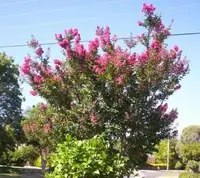
Crepe myrtle, Lagerstroemia indica, is a deciduous shrub or small tree known for its long summer flowering season and colorful peeling bark. It is widely planted in warm and mild regions as an ornamental street or garden tree.

Plants typically have a multi-stemmed, vase-shaped form with showy clusters of crepe-like flowers in pink, white, red, or purple. Many cultivars also develop attractive orange to red fall color.

Lagerstroemia indica originates from parts of Asia but is now common in urban and suburban landscapes in the United States. Its tolerance of heat, pruning, and a range of soils makes it generally easy to grow if you understand how to care for Crepe myrtle, especially regarding light and moisture needs.

Main Plant Requirements

Care Difficulty

Easy Care

Light Preference

Full Sun

Water Requirements

Moderate Water

Temperature Preference

Warm Climate

Hardiness Zone

7–10

Soil Texture

Sandy, Loamy, Clay

Soil pH

Acidic (5.5–6.5), Slightly acidic (6.5–7.0)

Soil Drainage

Well-drained

Fertilization

Minimal (feed rarely)

Get Personalized Care Plan

Scan your plant to receive care tips personalized for your specific plant

Available on iOS and Android

How to Care for the Crepe myrtle

This sun-loving shrub flowers best with strong, direct light.

  • Provide 6–8 hours of full sun daily; morning and midday sun support dense foliage and abundant blooms on Crepe myrtle.
  • Tolerates light afternoon shade, especially in hot, inland areas, but too much shade leads to lanky growth, fewer flowers, and more mildew issues.
  • Avoid planting where nearby trees or buildings will shade it as they mature; ensure open exposure from late spring through summer for sustained flowering.

This plant prefers consistent moisture in well-drained soil, especially while establishing.

  • For in-ground Lagerstroemia indica, water deeply when the top 5–8 cm of soil feels dry, aiming to moisten soil 20–30 cm deep rather than giving light surface splashes.
  • Reduce watering frequency in fall and winter, but do not allow new plantings to dry out completely during extended dry spells.
  • Watch for overwatering signs such as yellowing leaves and soft stems, and underwatering signs such as crisp leaf edges and premature leaf drop; improve drainage if water pools for more than 1–2 hours.

This species handles a wide temperature range but has clear limits for cold and heat stress.

  • Optimal growth occurs around 70–90°F (21–32°C), with warm summers promoting vigorous shoots and flowering.
  • Mature plants tolerate winter lows near 0°F (−18°C) in many regions, but young plants benefit from protection when temperatures drop below 15°F (−9°C).
  • Heat-tolerant once established, but during extended periods above 100°F (38°C), mulch and consistent soil moisture help protect roots and reduce stress.

Lagerstroemia indica handles a wide humidity range and usually does not need special humidity management outdoors.

Soil for Lagerstroemia indica should be moderately fertile, well-drained, and not compacted.

  • Use a loamy or sandy-loam structure with plenty of coarse particles so water drains within a few minutes after thorough watering.
  • Aim for slightly acidic to neutral pH, around 6.0–7.0, which supports nutrient availability and root health.
  • Incorporate 20–30% compost plus sharp sand or fine gravel to improve both fertility and drainage without creating heavy, soggy conditions.
  • Avoid dense clay that stays waterlogged; if unavoidable, build raised beds and mix in coarse sand and organic matter to enhance aeration.

This species can grow successfully in containers when the pot is chosen and managed for its woody root system and eventual height.

  • Select a deep, heavy container that resists tipping as the woody stems become tall and top-heavy in wind or rain.
  • Choose a potting mix blended for trees or shrubs so the medium holds moisture yet drains faster than typical indoor mixes.
  • Group pots in a sheltered, sun-exposed spot so the container does not overheat or dry unevenly on one side during hot weather.

Lagerstroemia indica responds well to moderate feeding during its active growing season.

  • Apply a balanced slow-release fertilizer (such as 10-10-10) in early spring as new growth begins.
  • Supplement with a light application of compost around the drip line to improve soil structure and nutrients.
  • Avoid high-nitrogen products that push leafy growth at the expense of flowers on Crepe myrtle.
  • Stop feeding by late summer and never fertilize during winter dormancy to prevent weak, frost-tender growth.

Thoughtful pruning helps Lagerstroemia indica develop a strong framework and abundant blooms.

  • Schedule main pruning in late winter to very early spring, before new buds swell.
  • Remove dead, crossing, or inward-growing branches with clean bypass pruners or a sharp pruning saw.
  • Thin crowded shoots from the center to improve air flow and light penetration, not by topping branches.
  • Shorten only smaller branch tips to refine shape and encourage vigorous new flowering wood.

Crepe myrtle is usually grown in the ground, so focus on careful transplanting and occasional container up-potting.

  • Transplant or upsize containers in late winter to early spring while the plant is dormant.
  • Look for roots circling the pot, water running straight through, or stalled growth as signs a container plant needs more space.
  • Move to a slightly larger container or planting hole, loosening circling roots gently without tearing.
  • Water deeply after planting, keep soil evenly moist for several weeks, and shade temporarily to reduce transplant stress.

Lagerstroemia indica is commonly propagated from cuttings and seeds under warm, bright conditions.

  • Take softwood cuttings in late spring or early summer, 10–15 cm long, from non-flowering shoots.
  • Dip cut ends in rooting hormone and place in a moist, free-draining mix under high humidity and bright, indirect light.
  • Sow seeds in late winter indoors or in spring outdoors, just covered in a light seed-starting mix.
  • Maintain warmth (70–75°F), consistent moisture, and gentle air circulation to support rooting or germination.

Most Lagerstroemia indica cultivars are moderately cold hardy but benefit from some winter attention in cooler regions.

  • In climates colder than about USDA zone 7, mulch 5–8 cm around the root zone, keeping mulch off the trunk.
  • Allow top growth to die back naturally in fall; avoid late-season pruning that stimulates tender shoots.
  • Move container-grown plants into a sheltered, frost-free but cool location, watering sparingly over winter.

Care Tips

Trunk training

Select 3–5 strong main stems while the plant is young, remove competing shoots at the base, and lightly stake if needed so the future framework is open, balanced, and wind‐stable.

Sucker management

Check the base and root zone several times per season and promptly remove all root suckers and low inward-facing shoots to keep the canopy high, airy, and less prone to disease.

Airflow spacing

When planting multiple shrubs or trees, allow generous spacing and avoid crowding with other shrubs so air can move freely through the canopy and reduce powdery mildew pressure.

Mulch collar setup

Maintain a 5–8 cm deep ring of bark mulch over the root zone but keep a mulch-free collar 5–8 cm away from the trunk to prevent bark rot and discourage rodents.

Winter bark protection

In colder regions, wrap the lower trunk with a breathable tree wrap and avoid late-fall fertilizing so new growth hardens off properly and bark is less likely to crack during winter, which is key when growing Crepe myrtle at the edge of its hardiness range.

Common Pests and Diseases

Powdery mildew

This disease causes a white to gray powdery coating on young leaves, shoots, and flower buds, often leading to distorted growth and reduced flowering.

Solution

Prune crowded interior branches to increase airflow, avoid overhead watering, and remove heavily infected shoots. In humid regions, apply a labeled fungicide containing myclobutanil, propiconazole, or sulfur at the first sign of infection, following product directions carefully as part of broader Crepe myrtle care instructions.

Sooty mold

This disease appears as a black, soot-like film on leaves and stems that grows on the sticky honeydew excreted by sap-feeding insects such as aphids or scale.

Solution

Identify and control the honeydew-producing insects with a strong water spray, horticultural oil, or insecticidal soap, then gently wipe or hose off affected foliage. Improving airflow and reducing plant stress also helps new growth emerge clean and healthy.

Crapemyrtle aphid

This pest feeds on the undersides of leaves, causing yellowing, leaf drop, and large amounts of sticky honeydew that can lead to sooty mold.

Solution

Spray leaf undersides with a firm stream of water to dislodge aphids, and use insecticidal soap or horticultural oil during active infestations. Encouraging natural predators such as lady beetles and avoiding excessive nitrogen fertilizer reduces recurring outbreaks.

Crapemyrtle bark scale

This pest forms clusters of small white or gray felt-like bumps on stems and trunks, producing honeydew that leads to black sooty mold and overall plant decline if ignored.

Solution

Gently scrub reachable stems with a soft brush and soapy water to remove scales and residue, then treat with a properly labeled horticultural oil when crawlers are active. For heavy infestations, a systemic insecticide containing imidacloprid or dinotefuran applied at the correct time of year can provide longer-term control.

Cercospora leaf spot

This disease causes small purple to brown spots on leaves that may enlarge and lead to premature leaf drop, especially in late summer and fall.

Solution

Rake and discard fallen leaves, prune to open the canopy for better air circulation, and avoid frequent overhead irrigation. In areas with recurring problems, use a preventive foliar fungicide labeled for Cercospora on crape myrtle, applied according to local extension recommendations.

Interesting Facts

Bark that exfoliates

The trunk and branches regularly shed their outer bark in thin plates, revealing smooth, mottled new bark in shades of cream, tan, and gray, which adds ornamental value even in winter.

Late-summer flowering

Unlike many temperate shrubs and trees, it naturally flowers in mid to late summer on new growth, providing extended color when many other woody plants have finished blooming.

High heat tolerance

This species evolved in warm regions of China and surrounding areas and shows strong tolerance to heat and urban conditions, which is one reason it is widely used in street and parking-lot plantings in the southern United States.

Botan icon

Did you know?

Modern landscaping in the southeastern United States relies heavily on cultivars of this species because they combine long flowering periods with relatively low susceptibility to common urban stresses, leading some researchers to use them as model plants for studying woody ornamental performance in hot climates.

FAQs about Crepe myrtle

Lack of flowers often comes from too much shade, excessive nitrogen fertilizer, or heavy pruning of branch tips where buds form. Old, exhausted wood, drought stress, or late frost on forming buds can also greatly reduce blooming.

Grow Healthy Plants with Botan Care

Keep your plants happy and healthy with plant identification, disease detection, and easy care guidance.

Botan plant care app — identify plants on mobile

Explore More Plants