



5 min read · 11 Sept 2026
Top 5 Best Indoor Plants for Air Quality
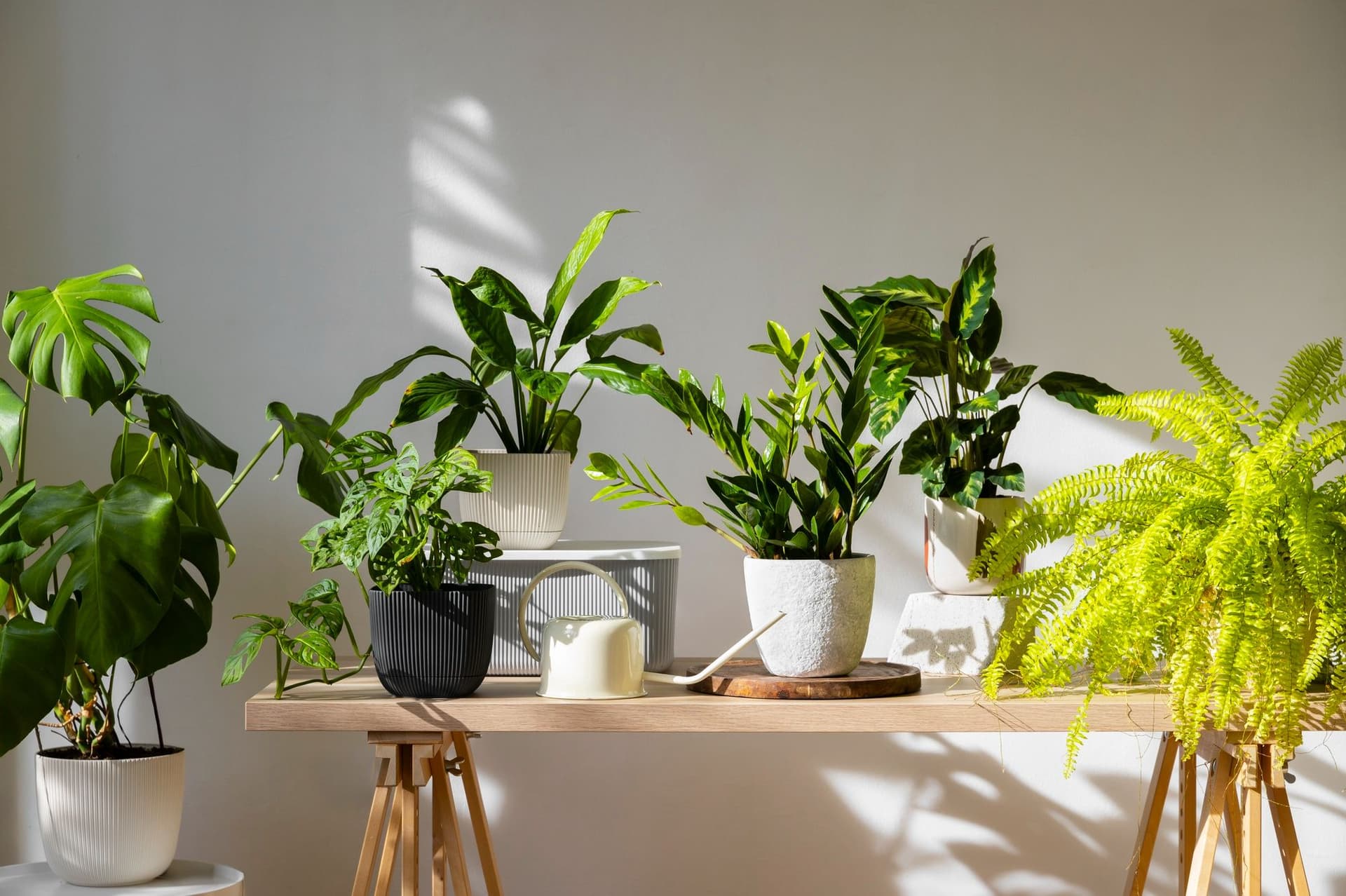
Indoor plants can make a room feel fresher thanks to their air-purifying qualities. Here are 5 of the most suitable choices for your routine and living space.
Plant Recommendations


Recognize Crepe myrtle by its opposite or sometimes whorled leaves, each simple, oval, and usually 1 to 3 inches (2.5 to 7.5 cm) long, plus a multi-stemmed small tree form.
Another strong clue is the smooth, peeling bark that exposes mottled tan, gray, and cinnamon patches on the trunks and main branches.

Not sure about your plant ID? Upload a photo and check it with Botan.
Clear images work best. Avoid photos taken too close or too far away
Check the plant’s form, leaves, flowers, and seed capsules.
Use several traits together, especially the multi-trunk habit and crinkled six-petaled flowers.
Lagerstroemia indica shows clear visual shifts from sapling structure to flowering and fruiting form.
Crepe myrtle has several well-known selections that can often be told apart at a glance.
In spring, new leaves emerge bronze to reddish before turning green. By summer, Crepe myrtle is easiest to spot when large flower clusters become visible at branch tips, often from mid to late summer. In fall, foliage may shift to yellow, orange, or red before dropping. Winter exposes the smooth, mottled bark and the shrub or small tree’s bare branching, which can be a useful identification clue.
A few flowering shrubs and small trees can be mistaken for crepe myrtle at a glance.
Japanese tree lilac(Syringa reticulata)
Often confused when in white bloom and trained as a small tree. It has opposite leaves and creamy flower panicles; Lagerstroemia indica has alternate or subopposite leaves and crinkled flowers in denser clusters.
Rose of Sharon(Hibiscus syriacus)
Can resemble it as a summer-blooming shrub with similar size. Rose of Sharon usually has 3-lobed, toothed leaves and large hibiscus flowers with a central staminal column; L. indica has smooth-edged oval leaves and many smaller ruffled flowers.
Lagerstroemia indica is native to parts of eastern Asia, especially China, and has long been cultivated beyond its native range. In the wild, it occurs in open woodland, scrub, valley slopes, and forest margins rather than deep shade. That setting helps with identification because truly wild plants are more likely in disturbed, sunny edge habitats in its native region, not in wetlands, desert, or dense forest understory. Outside eastern Asia, most plants are cultivated or escaped from cultivation.

What Plant Is This?
Find out what plant you have and get specific care tips
Use Botan to compare a photo and confirm the plant, which helps avoid mix-ups before labeling, pruning, or buying another one.
Japanese stewartia has larger, cup-shaped flowers with five broad petals and orange anthers. This plant usually shows crinkled petals in clustered panicles and often peels to reveal smooth, mottled bark, a key Crepe myrtle identification trait.
Identify it from a photo with Botan, then review plant details, care information, and common problems for that species.

5 min read · 11 Sept 2026
Indoor plants can make a room feel fresher thanks to their air-purifying qualities. Here are 5 of the most suitable choices for your routine and living space.

6 min read · 8 Sept 2026
Frozen and fresh vegetables are nutritionally comparable: frozen produce often retains vitamins just as well as fresh and may sometimes contain more. Here’s how blanching and storage affect nutrients—and when to choose each.

10 min read · 7 Jul 2026
Bamboo grows extremely fast: some species can reach 5-6 m in just 3-4 months under the right conditions. This guide explains how much bamboo can grow per day, week, and year, and what affects its growth rate.