


8 min read · 16 Oct 2026
20 Funny Plant Names That Make You Laugh
Some plants carry names that sound like jokes. This guide explains the origins of 20 funny plant names. You will also see which of these plants you can grow at home.

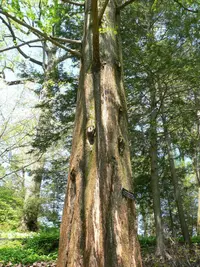
Recognize dawn redwood by its opposite, flat needles arranged in two ranks on deciduous side shoots, creating a featherlike spray. The trunk is straight and strongly tapered, with the main branches and branchlets set opposite rather than alternate.
Mature trees are tall and narrowly conical, often reaching well over 50 feet (15 m).

Take a photo and use Botan to confirm your plant identification.
Clear images work best. Avoid photos taken too close or too far away
Check the overall form and foliage pattern first on Metasequoia glyptostroboides.
Opposite leaves and opposite branchlets together are a strong visual clue.
Metasequoia glyptostroboides shows useful age-related changes in form, bark, and reproductive structures.
Several cultivated forms of dawn redwood are distinct enough to recognize at a glance.
Dawn redwood is one of the few conifers that drops its leaves. In spring, soft light green needles emerge in opposite pairs along flat, feathery branchlets, creating a fresh, fernlike look. By fall, the foliage turns coppery orange to reddish brown before the branchlets shed. In winter, the bare tree shows opposite branching and small rounded cones that can remain visible after leaf drop.
These trees are the most likely sources of confusion with dawn redwood.
bald cypress(Taxodium distichum)
Both are deciduous conifers with soft, flat needles. Bald cypress usually has alternate leaves on the twig, not opposite pairs. Its trunk often develops a broader, buttressed base.
Chinese swamp cypress(Glyptostrobus pensilis)
It can also show feathery, deciduous foliage. The branchlets are often more pendulous, and the leaves are spirally arranged rather than opposite.
Metasequoia glyptostroboides is native to a small area of south-central China, especially valleys and lower mountain slopes in Hubei, Hunan, and Chongqing. Its very limited wild range can help separate it from similar conifers that are native across broader parts of North America or Eurasia. In nature, it grows in moist ravines, streamside woodland, and mixed valley forests, often at about 2,600-4,900 feet (800-1,500 m). Finding a deciduous conifer in a wet valley setting supports identification.

Confirm Your Plant Species
Use Botan to double-check your plant ID
Use Botan to identify or verify the plant from a photo, helping avoid mix-ups before you label, buy, or plant it.
The quickest clue is its opposite leaf arrangement on soft, flat needles. Most conifers with a similar feathery look have alternate leaves. In fall, the foliage turns coppery before dropping, since this species is deciduous.
Identify a plant from a photo with Botan, then get its profile, care information, and common problems in one place.


8 min read · 16 Oct 2026
Some plants carry names that sound like jokes. This guide explains the origins of 20 funny plant names. You will also see which of these plants you can grow at home.

7 min read · 28 May 2026
In spring, many plants need repotting—an essential part of care. To avoid stress, consider the plant’s type and size. This article offers a step-by-step guide for repotting indoors or outdoors and shows how to check plant health and get care tips using the Botan App.

8 min read · 31 Jul 2026
To keep plants healthy and thriving, provide the right balance of light, humidity, nutrients, airflow, and quality soil. This guide covers the essentials of year-round plant care.