
West Indian Lantana Identification (Lantana camara)

To recognize Lantana camara, look for opposite, oval leaves with coarse serrations and a rough surface on square, often prickly stems. It usually grows as a branching shrub.

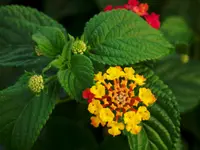
The flowers are borne in tight, rounded clusters about 1 to 2 inches (2.5 to 5 cm) across, with many small tubular blooms packed together.

Lantana camara Identification

Check Your Plant with Botan

Upload a clear image to check whether your plant ID is correct.

Clear images work best. Avoid photos taken too close or too far away

Check the leaf pairs, flower heads, and rough stems on Lantana camara.

  • Leaves grow in opposite pairs, are oval to egg-shaped, and usually have coarse toothed edges.
  • Leaf blades are often about 1 to 4 inches (2.5 to 10 cm) long and show a rough, wrinkled surface.
  • Flowers sit in tight, rounded clusters about 1 to 2 inches (2.5 to 5 cm) across, with many small tubular blooms.
  • The plant forms a branched shrub, often 3 to 6 feet (0.9 to 1.8 m) tall, with square stems that may carry small prickles.

Black, berry-like fruits may also be visible.

West Indian Lantana shows clear stage-based changes in habit, stems, flowers, and fruits.

  • Seedling: Seedlings have opposite first leaves on short soft stems. Early leaves are small, simple, and already rough-textured, before dense branching begins.
  • Young plant: Young plants form a low, spreading shrub with square green stems and paired ovate leaves, often 1-3 inches (2.5-7.5 cm) long.
  • Flowering stage: Lantana camara becomes easier to recognize when rounded flower clusters appear at shoot tips, with many tiny tubular florets opening yellow, orange, pink, or red.
  • Fruiting stage: After flowering, clusters carry fleshy berries that turn from green to glossy dark purple-black, replacing the bright flower heads with compact fruiting clusters.

Several named selections of Lantana camara are easy to separate by flower color, habit, or leaf variegation.

  • 'Confetti': Flowers open yellow, then shift to pink and magenta in the same cluster, creating a distinctly multicolored head.
  • 'Miss Huff': A larger, vigorous form that often reaches about 5 to 6 feet (1.5 to 1.8 m) tall, with orange to coral flower clusters.
  • 'New Gold': A low, spreading plant, often 1 to 2 feet (30 to 60 cm) tall, with solid golden-yellow flower heads and little color change.
  • f. variegata: Leaves show stable cream to yellow margins or mottling, unlike the plain green leaves of the typical form.

In warm seasons, Lantana camara is easiest to recognize when rounded flower clusters appear, often from late spring into fall. Colors may shift within one cluster as older florets fade and new ones open. By late summer to fall, clusters can be followed by small berries that turn from green to dark purple-black as they ripen. In frost-prone areas, cold can cause leaf drop and leave bare, twiggy stems visible.

A few shrubs with clustered flowers are mistaken for Lantana camara.

trailing lantana(Lantana montevidensis)

Often confused because both have small flower clusters and rough leaves. Trailing lantana stays low and spreading, usually under 18 inches (45 cm), while Lantana camara is a taller, upright shrub. Its stems also trail rather than form a bushy mound.

porterweed(Stachytarpheta jamaicensis)

Confusion happens when both are grown as flowering landscape shrubs. Porterweed has flowers spaced along long, narrow spikes, not packed into rounded heads. The plant is usually more open and wand-like, with less dense branching.

Lantana camara is native to tropical parts of the Americas, including Mexico, Central America, the Caribbean, and northern South America. In its native range it occurs in open disturbed places such as scrub, forest edges, thickets, roadsides, and coastal lowlands. Habitat can help with identification because this species often appears as a woody shrub in sunny edge habitats rather than deep forest or wetlands. Finding it in brushy, disturbed tropical or subtropical sites supports an ID, especially within the Americas.

  • Poisonous fruit and foliage: Unripe berries and the leaves are toxic if eaten by humans and pets, especially children, dogs, cats, and livestock. Ripe fruit is variably reported, so it should not be treated as safe by sight.
  • Skin contact: Leaves and stems can irritate skin in some people after handling. The concern is contact exposure rather than ingestion.

Check Your Plant ID

Upload a clear photo to Botan to identify the plant or confirm your guess before labeling it incorrectly.

FAQ

The most reliable trait is the rough, opposite leaves with rounded teeth and a strong scent when crushed, paired with tight, rounded flower clusters. This combination is central to Lantana camara identification.

More Plant Identification Guides

Identify Your Plant and Learn More

Use Botan to identify a plant from a photo, then view plant details, care information, and common problems for that species.

Botan app identifying a plant from a photo
13 Best Front Yard Trees for Every Home and Yard

12 min read · 7 Aug 2026

13 Best Front Yard Trees for Every Home and Yard

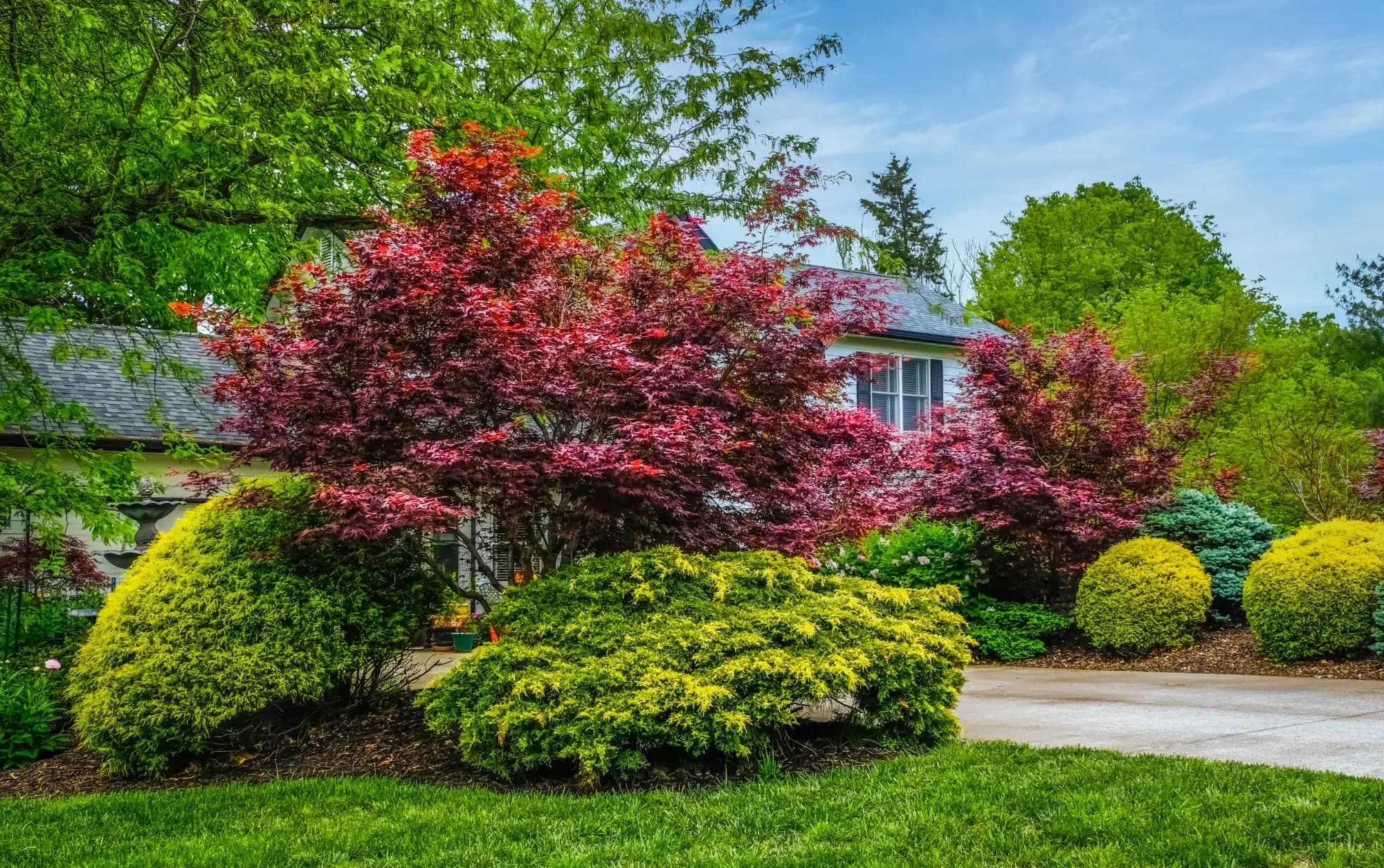
A front yard tree can stay for decades. Therefore, choosing one deserves serious consideration. Here are 13 trees that have proven themselves, sorted by their purpose. You'll also find five species to avoid and basic planting information.

Plant Recommendations
13 Best Front Yard Trees for Every Home and Yard
Plants That Repel Mosquitoes – 10 Effective Choices

8 min read · 6 Jul 2026

Plants That Repel Mosquitoes – 10 Effective Choices

Plants that repel mosquitoes can help mask human scent naturally and make outdoor spaces more comfortable. Explore the most effective options, their benefits and drawbacks, and choose the right plant for your space.

Plant Recommendations
Plants That Repel Mosquitoes – 10 Effective Choices
Planting Grass Seed in Summer – What Works and What Fails

7 min read · 6 Aug 2026

Planting Grass Seed in Summer – What Works and What Fails

Summer seeding succeeds when the grass type suits the season, and the soil stays moist. Find out how to prepare the seedbed and choose a safe window for planting.

Plant Care
Planting Grass Seed in Summer – What Works and What Fails