Matteuccia Care (Onoclea struthiopteris)

Also known as: ostrich fern, fiddlehead fern, shuttlecock fern
Matteuccia

About Matteuccia

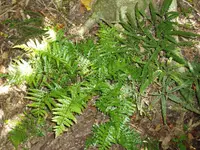
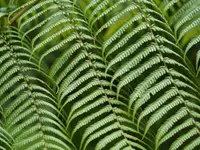
Matteuccia, often known as ostrich fern, is a hardy, deciduous fern valued for its tall, vase-shaped clumps of feathery fronds. The species Onoclea struthiopteris forms arching sterile fronds that resemble ostrich plumes and shorter, upright fertile fronds that persist into winter. In nature, it grows in cool, moist woodlands, riverbanks, and shaded valleys across North America, Europe, and parts of Asia. It spreads gradually by underground rhizomes, creating colonies where conditions are suitable. This fern prefers consistent moisture, rich humus soil, and shade to part shade, which makes it reliable in cool, damp gardens. For gardeners learning how to care for Matteuccia, its main needs are steady moisture and protection from hot, dry conditions.

Main Plant Requirements

Care Difficulty

Moderate Care

Light Preference

Partial Shade

Water Requirements

Keep Soil Moist

Temperature Preference

Cold Hardy

Hardiness Zone

3–7

Soil Texture

Loamy, Silty, Organic-rich

Soil pH

Acidic (5.5–6.5), Slightly acidic (6.5–7.0)

Soil Drainage

Moist but well-drained

Fertilization

Minimal (feed rarely)

Get Personalized Care Plan

Scan your plant to receive care tips personalized for your specific plant

Available on iOS and Android

How to Care for the Matteuccia

This fern prefers cool, shaded conditions that mimic moist woodland edges.

  • Provide bright shade or dappled light, such as under deciduous trees, with at most 1–3 hours of gentle morning sun and no strong afternoon sun.
  • Tolerates deep shade but fronds become looser and taller; in sites with >3–4 hours of direct sun, use constant soil moisture and mulch to protect roots.
  • In hot summers, use filtered light or north/east exposure; Matteuccia nearby often indicates similar low-light, moist-site needs.

Onoclea struthiopteris performs best in consistently moist, never stagnant, soil.

  • Keep soil evenly damp, allowing only the top 1–2 cm to dry slightly; avoid letting the root zone dry out fully, especially in active growth.
  • Increase watering during warm, windy periods; reduce slightly in cool weather or dormancy when fronds die back, but do not allow the site to become bone dry.
  • Yellowing, limp fronds and sour-smelling soil suggest overwatering or poor drainage, while crisping tips and drooping fronds indicate underwatering or chronic dryness.

This hardy fern is adapted to cool, temperate climates with cold winters and mild summers.

  • Active growth is strongest around 60–75°F (16–24°C); fronds may scorch in prolonged heat above 85°F (29°C) without high humidity and steady moisture.
  • Rhizomes tolerate winter lows near -20°F (-29°C) under mulch or snow cover; fronds naturally die back with frost and regrow in spring.
  • In hot regions, choose cooler microclimates such as north-facing beds, avoid reflected heat, and maintain moist soil to buffer temperature extremes.

This fern prefers consistently moist air and reacts quickly to dry indoor conditions.

  • Aim for 60–80% humidity, similar to a damp woodland edge, especially in heated homes.
  • Crisping frond tips, stalled fiddlehead expansion, and edge browning indicate humidity stress rather than underwatering.
  • Increase humidity with a nearby humidifier, grouped plants, or a wide pebble tray, but avoid misting that keeps fronds wet for long periods.

Onoclea struthiopteris grows best in moist, organic, well-structured soil that stays damp but not stagnant.

  • Use a deep, loamy mix rich in leaf mold or compost, with about 60–70% organic matter to mimic stream-bank conditions.
  • Ensure slow, even drainage by blending compost with garden loam and 10–20% coarse sand or fine grit, avoiding heavy clay pockets.
  • Target slightly acidic soil, roughly pH 5.5–6.5, which supports strong rhizome growth and nutrient uptake.
  • Avoid compacted, waterlogged, or very sandy soils; regularly top-dress with compost to maintain moisture retention and aeration.

This species can be grown in containers outdoors if the pot supports its spreading rhizomes and moisture needs.

  • Choose a wide, heavy container to accommodate outward rhizome spread and resist wind tipping as fronds lengthen.
  • Use a tall pot profile that allows a deep, moisture-retentive lower zone with a more aerated upper layer for roots.
  • Elevate the container slightly on feet so surplus water leaves the drainage holes freely, preventing a permanent water reservoir at the base.

Onoclea struthiopteris is a woodland fern that needs only modest feeding in reasonably rich soil.

  • Use a light top-dressing of compost or well-rotted leaf mold in early spring as the main nutrient source.
  • If desired, apply a balanced, slow-release NPK granular fertilizer at half strength once in spring.
  • Avoid summer high-dose feeding, which encourages weak, lush fronds and can dry out the root zone.
  • Do not fertilize during winter dormancy; growing Matteuccia in nutrient-poor soil is preferable to overfeeding.

Onoclea struthiopteris benefits from simple, seasonal cleanup rather than structural pruning.

  • Cut back dead or fully browned fronds at ground level in late fall or very early spring using clean hand pruners or scissors.
  • Remove damaged, diseased, or badly tattered fronds whenever they appear to maintain plant health and reduce pest issues.
  • Thin out a few crowded fertile fronds if they shade young croziers, improving air movement around the crown.
  • Leave healthy green fronds through the season, as they are essential for photosynthesis and rhizome energy storage.

This fern is more often transplanted in the ground than grown long term in containers.

  • Transplant or divide clumps in early spring or early fall when soil is cool and moisture is reliable.
  • Move plants when growth is slow, crowns are congested, or rhizomes spread beyond the desired area.
  • Lift the clump carefully, keep as much soil on the roots as possible, and replant at the same depth in moist, shaded ground.
  • Water thoroughly after transplanting and keep soil evenly moist for several weeks to reduce root stress and improve establishment.

Onoclea struthiopteris is most commonly propagated by division of established clumps.

  • Divide in early spring as new croziers just emerge, or in early fall while soil is still warm.
  • Lift the clump and separate rhizomes into sections, each with several healthy buds and roots.
  • Replant divisions immediately into humus-rich, consistently moist soil, spacing to allow future spread.
  • Keep divisions shaded with steady moisture and mulch until new frond growth confirms successful establishment.

This fern is cold hardy in much of the US and usually needs minimal winter care in the ground.

  • Tolerates freezing temperatures once established, with fronds naturally dying back after hard frost.
  • Apply a 5–8 cm layer of leaf mold or bark mulch over the root zone in late fall to moderate soil temperature.
  • In very cold or exposed sites, avoid cutting fronds too early; old foliage can help trap insulating snow.
  • For container-grown plants in cold climates, move pots into a sheltered, unheated but frost-moderated spot.

Care Tips

Control Spreading Rhizomes

Install a 20–30 cm deep root barrier or sink bottomless pots into the ground to keep the fern’s creeping rhizomes from invading nearby beds while still allowing a full, dense clump to form.

Use Seasonal Mulch

Apply 5–8 cm of shredded leaf mold or fine bark around, but not on top of, the crowns in late fall to buffer winter temperature swings and maintain the cool, moist soil this species prefers.

Manage Spring Runoff

Direct roof or path runoff toward the planting area with a shallow swale or stone-lined channel so emerging fronds benefit from extra moisture without having the crowns sit in standing water.

Staggered Division Timing

Divide only a portion of a large colony every 3–4 years in early spring, leaving undisturbed sections so the planting keeps a mature look while new divisions establish elsewhere in the garden.

Combine With Groundcovers

Underplant with moisture-tolerant, shallow-rooted groundcovers to shade the soil surface, reduce weed pressure, and create a stable microclimate that simplifies long-term Onoclea struthiopteris plant care.

Common Pests and Diseases

Fern aphids

This pest feeds on tender fronds and midribs, causing distortion, yellowing, and sticky honeydew that can attract sooty mold. Colonies are most common on young, rapidly expanding fronds in moist shade.

Solution

Rinse colonies from fronds with a firm stream of water, repeating every few days until numbers drop. For persistent infestations, apply insecticidal soap or a neem-based spray to all frond surfaces in the early morning, and cut back heavily distorted fronds to reduce reinfestation while maintaining good plant vigor with steady moisture.

Slugs and snails

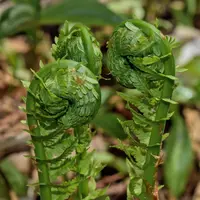
These pests chew irregular holes and notches in emerging fiddleheads and young fronds, often leaving slime trails on the soil and foliage. Damage is usually worst in cool, wet conditions and in dense shade with heavy mulch.

Solution

Hand-pick slugs and snails at dusk or early morning and reduce hiding places by thinning dense debris and excess mulch. Where damage is severe, use iron phosphate slug bait according to label directions and place shallow beer or yeast traps near plantings to intercept pests before they reach the crowns.

Rhizoctonia crown rot

This disease attacks the underground crown and bases of fronds, leading to stunted growth, collapsing fronds, and dark, sunken tissue at the crown in poorly drained or overly wet sites. Symptoms include patchy dieback in clumps that previously grew vigorously.

Solution

Remove and destroy affected crowns and any obviously rotted rhizome sections, then improve drainage by raising the planting area or amending heavy soil with coarse organic matter. Avoid overwatering, keep mulch slightly away from the crown, and replant only into well-drained, moisture-retentive soil to support healthy growing Matteuccia stands.

Leaf spot fungi

This disease group causes small brown, tan, or purplish spots that can merge into larger blotches, leading to premature browning of fronds in humid, crowded plantings. Symptoms include more severe spotting on older fronds and in areas with poor air movement.

Solution

Prune and remove heavily spotted or senescing fronds at ground level and discard them, not in home compost. Improve air circulation by thinning crowded clumps, water at soil level rather than overhead in the evening, and if needed apply a labeled copper or chlorothalonil fungicide early in the season when the first spots appear.

Fern scale

This pest appears as small, flat, brown or gray bumps on frond stems and undersides, where it sucks sap and weakens plants over time. Symptoms include yellowing, reduced vigor, and possible sticky honeydew on nearby surfaces.

Solution

Gently scrub infested stems and frond bases with a soft brush dipped in soapy water to remove scales, then rinse thoroughly. For persistent problems in large plantings, use horticultural oil during the dormant or early growth period to smother overwintering scales, and maintain steady plant health so clumps can tolerate light feeding.

Interesting Facts

Dimorphic frond strategy

This fern produces two distinct frond types: large, arching sterile fronds that form a vase-shaped clump in summer and much smaller, erect fertile fronds that persist through winter and release spores.

Floodplain habitat specialist

In nature it is strongly associated with cool, moist riverbanks, stream terraces, and alluvial floodplains, where it exploits periodically disturbed, nutrient-rich soils created by flooding.

Clonal colony formation

It spreads slowly by underground rhizomes, forming long-lived colonies that can occupy the same site for decades and help stabilize soil on slopes and along waterways.

Botan icon

Did you know?

This species is one of the few hardy temperate ferns that was historically harvested on a modest scale as an edible spring vegetable in parts of northeastern North America, where its tightly coiled young fronds, known as fiddleheads, became a seasonal regional food.

FAQs about Matteuccia

This fern spreads by creeping rhizomes and can form large colonies over several years in favorable, moist sites. It is best planted where it has room, or controlled by edging, root barriers, or division.

Grow Healthy Plants with Botan Care

Keep your plants happy and healthy with plant identification, disease detection, and easy care guidance.

Botan plant care app — identify plants on mobile

Explore More Plants