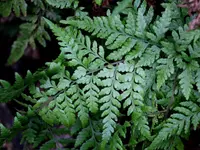
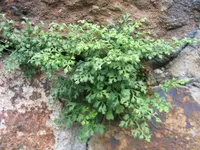
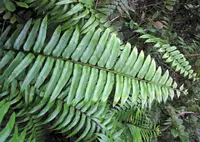
Asplenium lamprophyllum Care

Asplenium lamprophyllum

About Asplenium lamprophyllum

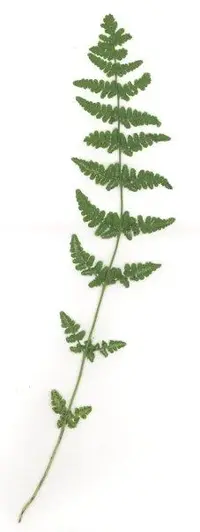
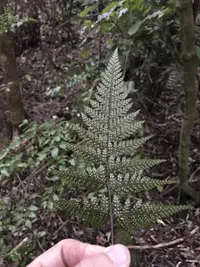
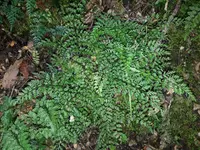
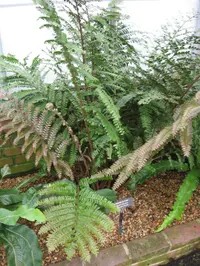
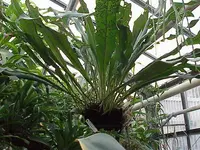
Asplenium lamprophyllum is a tropical fern valued for its glossy, arching fronds and elegant clumping habit. It forms a compact rosette that suits containers and shaded displays. Native to humid forest habitats, it thrives in consistently moist, well-drained substrate and sheltered, low to medium light conditions. Its evergreen foliage and slow to moderate growth make it a stable feature plant rather than a fast filler. This species prefers steady moisture and good air humidity, so it can be slightly demanding in dry indoor environments. With attention to humidity and avoidance of harsh sun, it is generally manageable for enthusiasts learning how to care for Asplenium lamprophyllum.

Main Plant Requirements

Care Difficulty

Moderate Care

Light Preference

Partial Shade

Water Requirements

Keep Soil Moist

Temperature Preference

Tropical / Frost Sensitive

Hardiness Zone

Unknown

Soil Texture

Loamy, Peaty, Organic-rich

Soil pH

Acidic (5.5–6.5)

Soil Drainage

Moist but well-drained

Fertilization

Light (every 4–6 weeks)

Get Personalized Care Plan

Scan your plant to receive care tips personalized for your specific plant

Available on iOS and Android

How to Care for the Asplenium lamprophyllum

This fern prefers soft, filtered light similar to a bright forest understory.

  • Provide bright, indirect light or dappled shade for 6–8 hours daily; gentle morning sun is usually tolerated, but protect from strong midday and afternoon rays.
  • Outdoors, place Asplenium lamprophyllum where tree canopies or shade cloth filter direct sun; indoors, set back from east or north windows behind sheer curtains.
  • Watch fronds for signs of stress: pale, limp growth suggests too little light, while crisped tips or bleached patches indicate excess sun exposure.

This species prefers evenly moist but not waterlogged soil around the root zone.

  • Water when the top 1–2 cm of soil feels slightly dry, allowing moisture to reach the full root depth without leaving the soil soggy.
  • Use free-draining, humus-rich soil so excess water can escape; standing water around roots increases risk of rot and sour, swampy odors.
  • In warmer months, check moisture more often; in cooler seasons, extend intervals and watch for limp, curling fronds as a sign of underwatering and black, mushy bases as a sign of overwatering.

This fern thrives in mild, stable temperatures with high humidity.

  • Aim for 65–80°F (18–27°C) during active growth; this range supports steady frond development and root activity.
  • Avoid exposing plants to temperatures below 50°F (10°C); foliage and rhizomes can be damaged by light frost or prolonged cold drafts.
  • In hot spells above 85°F (29°C), increase shade and humidity, reduce heat-reflecting surfaces nearby, and avoid placing plants close to heaters or hot, sun-baked walls.

This fern prefers consistently moist air and reacts quickly to dry conditions.

  • Aim for 60–80% humidity; avoid placing it near heating vents or strong drafts.
  • Crisping frond tips, slowed unfurling, and brown edges indicate humidity stress.
  • Increase humidity with a nearby humidifier, grouped plants, or a water-filled pebble tray beneath (not touching) the pot.

This species prefers a loose, moist, and airy mix that mimics a forest floor.

  • Use an organic-rich mix of 50–60% peat or coco coir, 20–30% fine pine bark, and 10–20% perlite for structure and air spaces.
  • Ensure rapid drainage so water runs through within seconds while the mix still holds gentle, even moisture.
  • Keep pH slightly acidic to neutral (pH 5.5–7.0), which supports nutrient uptake and healthy root growth in Asplenium lamprophyllum.
  • Avoid heavy garden soil, compacted mixes, and large amounts of sand, which either suffocate roots or dry out too quickly.

This fern adapts well to container growing when moisture and stability are controlled.

  • Choose a pot only 2–4 cm wider than the root mass to prevent excess wet mix that stays cold and soggy.
  • Select a slightly heavier or ceramic pot so the fronds do not tip the container as the plant gains size.
  • Place a coarse drainage layer over the holes only if they clog easily, relying mainly on a free-draining mix and immediate removal of saucer water.

Light, consistent feeding supports healthy fronds without overwhelming this fern’s roots.

  • Use a balanced liquid fertilizer at 1/4–1/2 strength or a mild organic product suitable for ferns.
  • Feed Asplenium lamprophyllum every 4–6 weeks during spring and summer when growth is active.
  • Avoid fertilizing in winter or when growth slows, as excess salts can burn roots.
  • Flush the pot with plain water occasionally to reduce fertilizer salt buildup in the mix.

Pruning focuses on hygiene and appearance rather than reshaping this naturally arching fern.

  • In late winter or early spring, remove dead, yellowing, or diseased fronds at the base with clean scissors.
  • Trim storm-damaged or torn fronds promptly to limit infection and improve appearance.
  • Thin out crowded, inward-growing fronds to improve air movement around the crown.
  • Disinfect tools before and after working on Asplenium lamprophyllum to reduce fungal and bacterial spread.

Repotting should be done only when the fern clearly outgrows its container or becomes rootbound.

  • Check for roots circling the pot, protruding from drainage holes, or noticeably slower growth as signs to repot.
  • Plan repotting in spring, every 2–3 years, using a moisture-retentive, airy mix suited to ferns.
  • Move only 1 pot size up to avoid excess wet soil around sensitive roots.
  • Handle the root ball gently, loosen circling roots slightly, water well afterward, and keep humidity high to limit stress.

Propagation of this fern is possible but more advanced and slower than many houseplants.

  • Division of crowded clumps in early spring is the most practical method for home growers.
  • Lift the plant, gently tease apart sections with at least a few healthy fronds and roots each.
  • Replant divisions into small pots with sterile, moist fern mix and high humidity, avoiding direct sun.
  • Spore propagation of Asplenium lamprophyllum is specialized, requiring sterile technique and consistently warm, humid conditions.

This fern is sensitive to frost and benefits from moderately warm, stable winter conditions.

  • Keep temperatures around 60–70°F indoors; avoid cold drafts and sudden temperature drops.
  • For outdoor containers, move plants indoors before nights fall near 40°F.
  • Maintain slightly drier soil than in summer but never let the root zone dry out completely.
  • Increase ambient humidity with trays or humidifiers to offset dry indoor heating air.

Care Tips

Rotate for symmetry

Rotate the pot 90° every 2–3 weeks so the rosette stays balanced and fronds develop evenly rather than leaning toward the main light source.

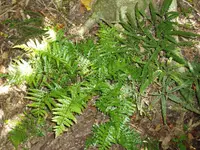
Use stable staging

Place the plant on a wide, stable stand or bench so the arching fronds are not brushed in passing, which reduces mechanical damage and broken pinnae over time.

Gentle frond grooming

Remove only fully brown or collapsed fronds by cutting them at the base with clean scissors, and leave any green tissue intact so the plant can keep photosynthesizing efficiently.

Offset management

If basal offsets crowd the crown, divide and repot only in active growth, keeping divisions large with intact root masses to prevent setback when growing Asplenium lamprophyllum.

Prevent salt buildup

Every 2–3 months, flush the potting mix thoroughly with tepid water until it runs freely from the drainage holes to remove accumulated fertilizer salts that can burn fine fern roots.

Common Pests and Diseases

Scale insects

This pest attaches firmly along the frond midribs and undersides, appearing as tiny brown or tan bumps that cause yellowing and decline of fronds. Symptoms include sticky honeydew and sooty mold on and around the plant.

Solution

Remove heavily infested fronds and gently scrape or wipe remaining scales from fronds and rachis with a cotton pad dipped in 70% isopropyl alcohol, taking care not to damage the thin blades. For ongoing Asplenium lamprophyllum care, keep humidity stable, avoid plant stress, and use repeated applications of a light horticultural oil spray labeled safe for ferns, applied to both frond surfaces and repeated every 7–10 days until new growth is clean.

Fern aphids

These insects cluster on young unfurling fronds and soft tissue, causing distortion, pale growth, and sticky honeydew deposits. Infestations are often worse in warm, still indoor air or in shaded greenhouse corners.

Solution

Rinse fronds thoroughly with a gentle but firm stream of lukewarm water, focusing on the undersides and new croziers. If populations persist, use insecticidal soap labeled for ferns, applied in the early evening and repeated every 5–7 days, and improve air movement while avoiding direct drafts on the plant.

Rhizoctonia blight

This disease causes brown, sunken lesions at the base of fronds and along the rhizome, leading to sudden collapse of affected fronds. Symptoms include patchy dieback in clumps, especially under warm, poorly ventilated, and constantly moist conditions.

Solution

Remove and discard affected fronds and any mushy rhizome sections, then allow the potting mix surface to dry slightly between waterings while maintaining overall humidity. Improve air circulation, avoid overhead watering, and, in serious cases, repot into a fresh, well‑drained but moisture‑retentive fern mix and apply a fungicide labeled for Rhizoctonia on ornamentals if allowed in your region.

Pythium root and rhizome rot

This disease leads to blackened, water‑soaked roots and rhizome tissue, with fronds turning dull, yellow, and eventually collapsing. Symptoms include a sour smell from the potting mix and plants that wilt despite wet soil.

Solution

Unpot the fern, trim off all dark or mushy roots and rhizome sections, and repot into fresh, sterile, free‑draining substrate in a container with ample drainage holes. Reduce watering so the mix stays evenly moist, not saturated, disinfect containers and tools, and avoid standing saucer water; where legal and appropriate, a targeted systemic fungicide for Pythium can be used on valuable specimens.

Bacterial leaf spot

This disease produces water‑soaked, translucent spots on frond blades that turn brown and sometimes develop yellow halos, often starting on older fronds. Symptoms include irregular lesions that may merge, giving fronds a scorched, patchy appearance in humid, stagnant air conditions.

Solution

Promptly remove and discard affected fronds, avoid splashing water on the foliage, and water at the soil level in the morning so surfaces dry quickly. Increase air movement around the plant without exposing it to cold drafts, reduce overcrowding with neighboring plants, and in greenhouse settings consider copper‑based bactericidal products used strictly according to label directions and fern sensitivity guidelines.

Interesting Facts

Shiny frond surface

This fern has unusually glossy, bright green fronds whose upper surface reflects light, an adaptation thought to help it cope with low-light, shaded rainforest conditions by maximizing light capture.

Distinctly winged rachis

The central stalk of each frond (rachis) is narrowly winged along much of its length, creating a flattened, leaf-like look that helps distinguish it from many other bird’s-nest-type Asplenium species.

Narrow rainforest niche

It is native to humid, shaded rainforest habitats in parts of New Guinea and nearby regions, where it typically grows on forest floors or lower slopes rather than as a high epiphyte on tree trunks.

FAQs about Asplenium lamprophyllum

This fern adapts to both, but usually performs more consistently indoors or in sheltered, shaded outdoor spots. Protected environments provide stable humidity and temperature, which reduces stress and frond damage compared with exposed gardens or balconies.

Grow Healthy Plants with Botan Care

Keep your plants happy and healthy with plant identification, disease detection, and easy care guidance.

Botan plant care app — identify plants on mobile

Explore More Plants