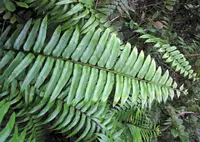
wallrue Care (Asplenium ruta-muraria)

wallrue

About wallrue

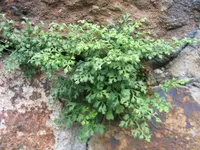
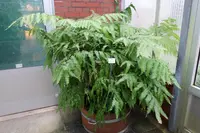
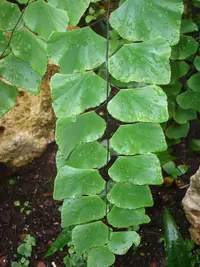
Wallrue is a small, tufted fern that often grows in rocky crevices, old stone walls, and shaded cliffs. It forms low, compact clumps of finely divided, bluish-green fronds. Asplenium ruta-muraria is native to Europe and parts of North America, where it naturally colonizes lime-rich stone and well-drained cracks. This slow-growing fern prefers cool, shaded positions and consistent but not excessive moisture. It is generally moderate in difficulty, as it dislikes disturbance and sustained dryness. Gardeners who care for wallrue usually focus on providing stable moisture, good air flow, and protection from strong sun and heat.


Main Plant Requirements

Care Difficulty

Moderate Care

Light Preference

Partial Shade

Water Requirements

Moderate Water

Temperature Preference

Cold Hardy

Hardiness Zone

4–8

Soil Texture

Rocky, Sandy, Loamy

Soil pH

Slightly acidic (6.5–7.0), Neutral (7.0)

Soil Drainage

Well-drained

Fertilization

Minimal (feed rarely)

Get Personalized Care Plan

Scan your plant to receive care tips personalized for your specific plant

Available on iOS and Android

How to Care for the wallrue

This small fern thrives in cool, bright conditions with protection from intense midday sun.

  • Provide 2–4 hours of gentle morning sun or bright, open shade; north or east-facing exposures suit wallrue on rocks or walls.
  • Avoid strong afternoon sun, which can scorch fronds and bleach them pale; use nearby plants, rocks, or walls to create dappled or filtered light.
  • In summer, ensure shade during the hottest hours; in winter, slightly increased exposure helps compensate for low-angle, weaker light.

This fern prefers steady moisture around its roots but poor tolerance of waterlogged conditions.

  • Allow the surface and top 1–2 cm of substrate in wall crevices or rocky pockets to dry slightly before watering again.
  • Increase watering during warm, dry spells, using small amounts that soak in quickly; reduce frequency in cool or wet seasons.
  • Watch fronds for signals: crisp, browning tips indicate underwatering, while blackened bases, limp fronds, or algae on stone suggest overwatering or poor drainage.

This hardy fern tolerates a wide temperature range but grows best in cool to mild conditions.

  • Aim for active growth in 50–70°F (10–21°C), where fronds remain compact and maintain good color.
  • Mature plants survive short drops near 10–15°F (-12–-9°C) if in crevices with good drainage, but repeated freeze–thaw on saturated sites can damage roots.
  • In hot weather above 80–85°F (27–29°C), provide shade and consistent moisture, as prolonged heat with dry substrates leads to frond dieback.

This species prefers moderately moist air but usually adapts to typical indoor humidity.

  • Aim for 40–60% humidity, which suits its natural crevice-dwelling habit.
  • It tolerates short spells of drier air, but prolonged very dry conditions can brown leaf tips and edges.
  • Increase humidity with a nearby open tray of water and stones rather than misting, which can encourage fungal spots on wallrue fronds.

This fern prefers a lean, mineral, yet slightly organic mix that mimics rocky crevices.

  • Use a gritty mix such as 40% fine gravel or coarse sand, 40% loam, and 20% leaf mold or compost to combine drainage with modest nutrients.
  • Aim for a slightly alkaline to neutral pH around 7.0–8.0, as Asplenium ruta-muraria naturally grows in calcareous, lime-rich rock.
  • Improve aeration by avoiding peat-heavy mixes; add extra grit or perlite if water lingers on the surface after watering.
  • Avoid compacted, waterlogged, or purely organic potting mixes, which promote root rot and prevent the roots from anchoring in crevice-like pockets.

This small fern adapts well to container growing when its rocky habitat is imitated.

  • Choose a shallow, wide pot to allow rhizomes to spread laterally and to recreate crevice-like planting pockets between stones.
  • Use a heavy clay or ceramic container when placing outdoors to prevent the light root ball from tipping in wind.
  • Top-dress with small rocks around the crown to stabilize the plant and keep the root zone cooler and more evenly moist.

This small fern needs only modest feeding, as wallrue is adapted to nutrient-poor rocky habitats.

  • Use a very dilute balanced liquid fertilizer (around 1/4 strength, such as 10-10-10) during the main growing season if growth appears weak.
  • Apply no more than once every 4–6 weeks in spring and early summer for container-grown plants.
  • Avoid feeding in late fall and winter, when growth slows or stops entirely.
  • Compost or slow-release products are usually unnecessary and can cause salt buildup in the shallow root zone.

Pruning needs for Asplenium ruta-muraria are minimal and focus on hygiene rather than shaping.

  • Remove dead, yellowed, or damaged fronds at the base at any time of year to limit disease.
  • In late winter or early spring, tidy winter-burned fronds so new growth receives light and air.
  • Use clean, sharp scissors or small pruners to avoid tearing the delicate fronds and crowns.
  • Avoid heavy cutting, which can weaken the small clumps and reduce their natural compact form.

This fern is usually grown in rock crevices or walls and prefers minimal disturbance when repotting or transplanting.

  • Look for roots circling a small container, tight root pads, or stalled growth as signs it needs more space.
  • Plan any transplanting for early spring so the plant can recover while conditions are cool and moist.
  • Expect to transplant only every few years, as it tolerates relatively tight quarters.
  • Move the root mass gently, keep original soil attached, and water lightly afterward to reduce shock and drying.

Asplenium ruta-muraria is most often propagated by spores, which is a slow but natural method for this species.

  • Collect mature brown sori (spore clusters) from frond undersides in late summer.
  • Sow spores on sterile, fine, moist medium under high humidity and low to moderate light.
  • Maintain temperatures around 60–70°F and avoid direct sun to support gametophyte and young fern development.
  • Vegetative division is difficult due to tight clumps and is usually reserved for experienced growers.

This fern is quite cold hardy in temperate climates and typically needs little special winter care in the ground.

  • In exposed rock gardens, light leaf mulch around the root area can buffer freeze–thaw cycles.
  • For container plants, move pots to a sheltered, unheated area to avoid deep freezing of the root ball.
  • Reduce watering in winter, keeping the medium barely moist to prevent rot in cold, low-light conditions.

Care Tips

Mimic crevice habitat

Tuck the root ball tightly between rocks, bricks, or in a shallow wall joint filled with gritty mix so the crown is secure and shaded while the fronds can access light and air, which closely replicates its natural cliff and wall habitat.

Use mineral-rich stone

Mount plants in contact with limestone, tufa, or mortar-rich brick to provide a slow, natural source of calcium and maintain the slightly alkaline micro-environment this fern prefers over time.

Control moss competition

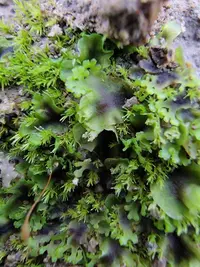
Gently peel or scrape away mosses and liverworts from around the crown and frond bases every few months so they do not trap excess moisture against the plant or outcompete it for fine crevice space.

Encourage self-seeding

Leave some mature fronds with dark, ripe sori (spore clusters) in place through late season and avoid heavy cleaning under the parent plant so spores can settle into nearby crevices and establish new clumps when growing wallrue outdoors.

Protect from hard wash

If the plant is set in a wall or rock crevice, deflect roof runoff and heavy hose spray so water does not hit directly, which prevents soil from washing out and keeps the delicate fronds from tearing.

Common Pests and Diseases

Rust fungus

This disease causes small orange, brown, or dark pustules on fronds, often on the undersides, and can lead to early frond yellowing and drop. Symptoms include a dusty spore coating that rubs off on fingers or nearby surfaces.

Solution

Remove and discard affected fronds, then improve airflow and avoid wetting the fronds when watering. If needed, apply a sulfur or copper-based fungicide labeled for ferns, following label directions and keeping humidity moderate rather than excessively high.

Leaf spot

This disease produces scattered brown to black spots or blotches on fronds, sometimes with a yellow halo, and can distort or weaken the leaf tissue. Symptoms include slow spread along older fronds, especially in shaded, persistently damp conditions.

Solution

Cut off and dispose of badly spotted fronds and keep debris off and around the plant. Water at the base, allow the planting surface to dry slightly between waterings, and use a mild copper or chlorothalonil fungicide if spotting continues to expand.

Scale insects

These insects appear as tiny, fixed, brown or gray bumps on frond stalks and the undersides of pinnae, and they feed by sucking sap. This pest weakens the plant over time, causing dull, yellowing fronds and reduced new growth.

Solution

Gently wipe or scrub affected areas with a soft brush or cloth dipped in diluted insecticidal soap, taking care not to tear the fronds. Repeat treatments every 7–10 days until no new scale is seen, and improve light and airflow to help the plant recover as part of Asplenium ruta-muraria care.

Interesting Facts

True wall specialist

This fern is naturally adapted to grow in tiny crevices of limestone and mortar, which is why it appears so often on old stone walls, ruins, and rocky outcrops in Europe and parts of North America.

Calcium-loving fern

It is calcicolous, meaning it prefers calcium-rich substrates, and often indicates the presence of limestone or other alkaline rock in an area.

Miniature evergreen fronds

Its small, leathery, fan-shaped fronds can remain green year-round in mild climates, allowing the plant to photosynthesize whenever conditions are suitable, even in winter thaws.

Botan icon

Did you know?

Historical botanists noted that this fern was one of the few vascular plants able to colonize vertical castle and church walls, so it was used as a living clue to the age and type of stonework in old European buildings.

FAQs about wallrue

Brown tips or fronds usually come from low humidity, underwatering, or excess fertilizer salts. Improve local humidity, water when the top substrate just begins to dry, and flush the pot occasionally to remove built-up minerals.

Grow Healthy Plants with Botan Care

Keep your plants happy and healthy with plant identification, disease detection, and easy care guidance.

Botan plant care app — identify plants on mobile

Explore More Plants