Rough Tree Fern Care (Dicksonia squarrosa)

Also known as: hard treefern, New Zealand tree fern, wheki
Rough Tree Fern

About Rough Tree Fern

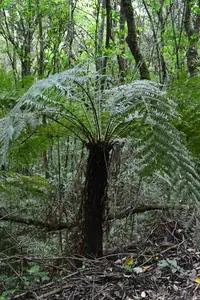
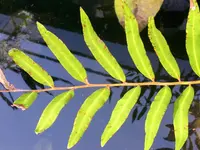
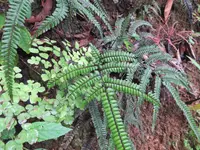
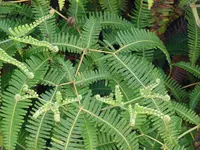
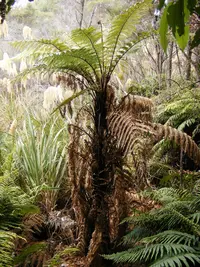
Rough tree fern (Dicksonia squarrosa) is an evergreen tree fern known for its slender, upright black trunks and graceful, finely divided fronds forming a soft, arching crown. It often develops multiple trunks from a shared base, creating a clumping, architectural look in shaded gardens.

This species is native to New Zealand’s moist forests, where it grows under taller trees in cool, humid conditions. It prefers consistently damp, humus-rich soil and protection from strong, drying winds.

Due to its need for steady moisture and shelter, it is moderately demanding and suits gardeners who can monitor conditions. Understanding how to care for Rough Tree Fern helps it establish and develop a stable trunk over time.

Main Plant Requirements

Care Difficulty

Hard Care

Light Preference

Partial Shade

Water Requirements

Keep Soil Moist

Temperature Preference

Cool Climate

Hardiness Zone

8–10

Soil Texture

Loamy, Peaty, Organic-rich

Soil pH

Acidic (5.5–6.5), Slightly acidic (6.5–7.0)

Soil Drainage

Moist but well-drained

Fertilization

Minimal (feed rarely)

Get Personalized Care Plan

Scan your plant to receive care tips personalized for your specific plant

Available on iOS and Android

How to Care for the Rough Tree Fern

This fern favors cool, shaded woodland conditions rather than direct, open sun.

  • Provide bright, dappled shade or filtered light, with at most 1–2 hours of mild morning sun and no harsh afternoon sun on the fronds.
  • In hot summers, protect Rough Tree Fern with overhead canopy or shade cloth to prevent frond scorch and drying of the trunk.
  • In cooler, cloudy climates, choose a site with high, shifting shade so the plant receives ambient light 8–10 hours without direct exposure.

This species needs consistently moist conditions around both roots and trunk, without becoming waterlogged.

  • In active growth, keep soil evenly damp, allowing only the top 1–2 cm to dry slightly; in cool seasons, let the top 3–4 cm dry before the next deep soak.
  • Water from above so moisture reaches the fibrous trunk, especially for Dicksonia squarrosa, but avoid standing water around the base to prevent rot.
  • Watch for crisp, browning frond tips as a sign of underwatering, and yellowing, limp fronds or sour-smelling soil as signs of overwatering.

This fern prefers mild, cool-temperate conditions without temperature extremes.

  • Aim for 55–70°F (13–21°C) for strong growth, with steady moisture and shelter from drying winds.
  • The plant tolerates brief dips to about 25°F (−4°C) if the crown is thickly mulched, but repeated hard frosts can damage new fronds.
  • In hot spells above 80°F (27°C), provide extra shade, high humidity, and more frequent watering to keep the trunk and root zone cool.

This fern needs consistently high humidity to maintain healthy fronds.

  • Aim for 60–80% humidity; growth declines if air stays much drier.
  • In dry indoor air, frond tips brown and uncurling fronds crisp, clear signs of humidity stress.
  • Use grouped plants, pebble trays under pots, or a nearby humidifier to support caring for Rough Tree Fern.

This species prefers deep, organic, moisture-retentive but well-aerated soil.

  • Use a mix of roughly 50% composted bark or leaf mold, 30% peat-free compost, and 20% coarse perlite for structure and air spaces.
  • Ensure free drainage; soil should stay evenly moist but never waterlogged to protect Dicksonia squarrosa’s shallow roots.
  • Aim for slightly acidic to neutral pH, around 5.5–7.0, which supports nutrient availability without leaf scorch.
  • Avoid heavy clay, compacted ground, or pure sand; incorporate extra bark and coarse material if existing soil drains slowly.

This fern can be grown in containers if moisture and stability are carefully managed.

  • Choose a deep, heavy pot to support the top-heavy trunk and prevent wind tipping as the crown enlarges.
  • Select thick-walled terracotta or heavy plastic to moderate moisture swings and reduce rapid drying in hot weather.
  • Fill the pot so the trunk base sits above the rim, allowing easy watering over the trunk without overflow loss at the sides.

Dicksonia squarrosa is a slow-growing fern that benefits from light, consistent feeding rather than heavy fertilization.

  • Use a balanced, dilute liquid fertilizer (around 10-10-10) at 1/4–1/2 strength every 4–6 weeks during spring and summer.
  • Alternatively, top-dress with a thin layer of compost around the root zone once in spring, keeping it away from the crown.
  • Pause or reduce feeding to 1 light application in late winter in mild climates; do not feed dormant or stressed plants.
  • Choose slow-release granules only if soil is poor, applying sparingly and monitoring for salt buildup in containers.

Pruning Dicksonia squarrosa is mainly about tidiness and keeping the crown healthy rather than shaping the plant.

  • Best time to prune is late winter to early spring, before strong new fronds emerge.
  • Remove only dead, brown, or damaged fronds at the base with clean, sharp pruners to reduce disease risk.
  • Leave healthy old fronds if possible; they help protect the trunk and support the plant’s structure.
  • Avoid cutting into the crown or green trunk tissues, as this can permanently stunt or kill the fern.

This tree fern is usually grown in the ground, but container or young plants need careful transplanting to avoid root shock.

  • Look for roots circling the pot drainage holes, very slow growth, or the plant drying out quickly as signs it needs a larger container.
  • Transplant or upsize the pot in early spring, just before vigorous growth, using a moisture-retentive, humus-rich mix.
  • Move up only 1 pot size, keep the original soil ball intact, and handle the fibrous root mass gently to limit stress.
  • Water thoroughly after planting, keep shaded and evenly moist for several weeks, and avoid disturbing the trunk or crown.

Dicksonia squarrosa is slow and technically demanding to propagate, so it is usually purchased as an established plant.

  • Spore propagation is possible but requires sterile conditions, fine milled peat or similar medium, and steady warmth of 68–75°F.
  • Collect mature brown spores from the underside of fronds, sow on moist medium, then cover to maintain high humidity and low light.
  • Gametophytes and young ferns develop slowly, often over many months, so keep moisture stable and avoid temperature swings.
  • Division of trunks or offsets is sometimes used by specialists but carries high risk and should only be attempted on large, healthy plants.

Rough Tree Fern is moderately frost tolerant but benefits from extra protection in colder or exposed sites.

  • Hardy down to about 20–23°F once established, but young plants are more vulnerable to freeze damage.
  • Apply a 5–10 cm mulch of bark or leaf litter around the root zone in late fall, keeping the crown itself uncovered.
  • Wrap the crown and upper trunk loosely with breathable frost cloth or dry fern fronds during severe cold spells.
  • Move container-grown plants into a sheltered, frost-free but cool spot and keep the root ball just moist, never waterlogged.

Care Tips

Protect Growing Crown

Keep the crown free of debris and old frond stubs by gently clearing it after storms or heavy leaf fall, since trapped material can hold water and cause rot in the growth point.

Mulch The Trunk

Pack loose, fibrous mulch such as leaf mold or fine bark around the trunk and root zone to insulate the fibrous stem, retain moisture, and encourage new feeder roots to form into the mulch layer.

Shade-Train New Plantings

For the first 1–2 summers after planting, use temporary shade cloth or position taller plants to filter harsh afternoon sun, then gradually reduce shading as the fern establishes deeper roots.

Winter Crown Protection

In regions with frost, stuff the crown lightly with dry straw or bracken and wrap the upper trunk with breathable horticultural fleece during cold snaps, then remove coverings promptly once consistent mild weather returns.

Support Multi-Trunk Clumps

As multiple trunks develop, use discreet stakes or a low, circular support frame to stabilize the clump against wind rock, which can loosen roots and stress the plant when growing Rough Tree Fern in exposed sites.

Common Pests and Diseases

Scale insects

This pest attaches to the fibrous trunk and frond stalks, sucking sap and causing yellowing, weak fronds, and sticky honeydew. Symptoms include clusters of small, dome-shaped bumps that are hard to remove with fingers.

Solution

Remove affected fronds or trunk fibers if heavily infested, then gently scrub remaining colonies with a soft brush dipped in diluted insecticidal soap or horticultural oil, taking care not to damage the crown. Improve air movement around the plant and repeat treatments every 7–10 days until no new scale appears.

Soft rot of crown

This disease affects the growing crown, especially after mechanical damage or water sitting in the crown, leading to foul-smelling, mushy tissue and collapse of new fronds. Symptoms include browning or blackening at the center of the plant that spreads into the pithy trunk core.

Solution

Cut out all soft, discolored crown tissue with a sterile knife until only firm material remains, then dust the area lightly with a sulfur or copper-based fungicide. Keep the crown just moist, avoid overhead watering that pools in the center, and ensure the trunk base drains well to prevent recurrence.

Red spider mites

These insects thrive in hot, dry conditions, feeding on the underside of fronds and causing a dull, gray-green appearance with fine speckling. This pest may also produce fine webbing between leaf segments when populations are high.

Solution

Raise humidity around the fern by regular misting of the air (not soaking the crown) and using a pebble tray or humidifier, then wash fronds thoroughly with a strong but gentle stream of water to dislodge mites. For persistent infestations, apply insecticidal soap or a miticide labeled for ferns, making sure to cover undersides of fronds and repeating after 7–10 days.

Sooty mold

This disease develops on the sticky honeydew produced by sap-sucking insects like scale, forming a black, powdery coating on fronds and trunk fibers. Symptoms include reduced photosynthesis, dull appearance, and slow growth rather than direct tissue death.

Solution

First control the honeydew-producing insects with targeted measures such as oil or soap sprays, then gently wipe or rinse affected fronds with lukewarm water to remove the mold layer. Improve light and airflow around the plant to help surfaces dry more quickly and discourage further fungal growth.

Interesting Facts

Multiple trunk habit

This species often forms clumps of many slender trunks arising from one root system, a growth pattern much less common in other tree ferns, which are usually single-stemmed.

Fire survival strategy

The plant stores buds and energy in a protected underground rhizome, allowing it to resprout rapidly after fire or trunk damage in its native New Zealand forests.

Nocturnal spore release

Studies on New Zealand tree ferns show that this species releases most of its spores at night, which likely reduces desiccation and improves spore dispersal conditions.

Botan icon

Did you know?

In traditional Māori ecology, this fern was recognized as a strong colonizer of disturbed ground, quickly reclaiming slips and gaps in the forest and helping to create the cool, shaded microclimate needed for slower-growing forest species to re-establish.

FAQs about Rough Tree Fern

Growth is fairly slow, usually 5–15 cm of trunk per year in good conditions. It can take 5–10 years to develop a distinct trunk, depending on moisture, shade, and consistent organic mulching.

Grow Healthy Plants with Botan Care

Keep your plants happy and healthy with plant identification, disease detection, and easy care guidance.

Botan plant care app — identify plants on mobile

Explore More Plants