Use Rock Slabs
Mount the plant on a flat, porous rock slab (such as sandstone or limestone) with a thin layer of moss or leaf mold so the rooting frond tips can anchor naturally and form a spreading colony.

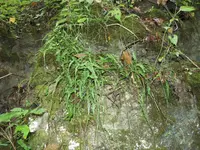
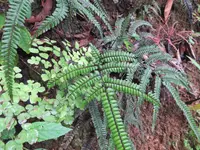
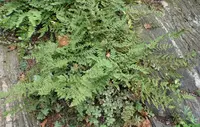
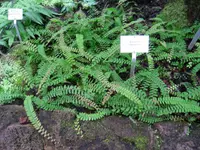
Walking fern, Asplenium rhizophyllum, is a small evergreen fern native to shaded limestone rocks and moist woodlands in eastern North America. It forms low, spreading clumps rather than tall fronds. The simple, tongue-shaped fronds taper to tips that root when they touch moss or soil, allowing the plant to slowly “walk” across a surface. This growth habit makes it a good choice for naturalistic rock gardens and terrariums. It prefers cool, humid conditions, consistent moisture, and loose, gritty, humus-rich substrates that mimic mossy rock. With stable moisture and shelter from harsh sun, many growers find it moderately easy to care for walking fern.

Care Difficulty
Moderate Care

Light Preference
Partial Shade

Water Requirements
Keep Soil Moist

Temperature Preference
Cold Hardy

Hardiness Zone
3–8

Soil Texture
Loamy, Rocky, Organic-rich

Soil pH
Strongly acidic (4.5–5.5), Acidic (5.5–6.5)

Soil Drainage
Moist but well-drained

Fertilization
Minimal (feed rarely)
Scan your plant to receive care tips personalized for your specific plant
Available on iOS and Android
This fern prefers low to moderate light that mimics shaded woodland ledges.
This species prefers consistently moist, cool substrates without saturation.
This fern is adapted to cool, temperate climates with moderate seasonal change.
This fern benefits from consistently moist air and reacts quickly to dry indoor conditions.
Asplenium rhizophyllum prefers a moist, airy, humus-rich substrate that mimics leaf litter over rocks or logs.
This species adapts well to container culture when moisture and stability are managed carefully.
This fern prefers lean, low-nutrient conditions, so apply only light feeding when grown in containers or garden beds with poor soil.
Asplenium rhizophyllum needs minimal pruning, mainly to maintain health and a tidy appearance.
This fern is usually grown in the ground, but container plants or clumps in unsuitable spots benefit from careful transplanting.
This species spreads naturally as frond tips root, so propagation focuses on encouraging and managing that habit.
This native fern is cold hardy in much of its range and usually needs only modest winter care outdoors.

Plant Health Check
Not sure what's wrong with your plant? Check your plant's health inside the app.
This fern extends slender leaf tips that touch nearby moss or soil, then form roots and new plantlets at the tip, creating a chain of connected fronds that appears to “walk” across rock surfaces.
It is strongly associated with shaded limestone or dolomitic rocks in eastern North America, often growing in thin mossy crevices where few other ferns can tolerate the high calcium and low soil depth.
This species naturally hybridizes with several related spleenworts, and some of those hybrids are sterile and persist only where both parents grow close together, which helps botanists trace local evolutionary history.

This fern often acts as an indicator species for relatively undisturbed, moist, shaded cliff habitats, so its presence can signal remnant old-growth or long-stable forested ravine ecosystems in parts of its native range.
Browning usually comes from low humidity, missed waterings, or excess fertilizer salts building up in the soil. Dry leaf tips are common in heated homes. Rinse the substrate occasionally and maintain steadier moisture to prevent further damage.
Keep your plants happy and healthy with plant identification, disease detection, and easy care guidance.