


Protect trunk fibers
Wrap the fibrous trunk with breathable burlap or horticultural fleece in cold or windy periods to reduce moisture loss from the crown and prevent desiccation of the living trunk tissue.

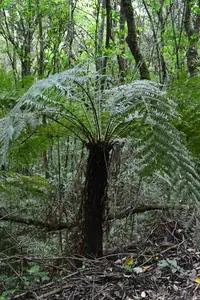
Xaxim is a type of tree fern, commonly referring to Dicksonia sellowiana, valued for its fibrous trunk that can host many epiphytic plants such as orchids and bromeliads. It is often sold as hollow or cut trunk sections used as a living substrate in shade gardens, terrariums, and vivariums.
In nature, this species occurs in humid montane and Atlantic forests of South America, where it grows under tall tree canopies in consistently moist, cool conditions. Its preference for high humidity, steady moisture, and protection from strong sun makes it moderately demanding, especially in dry indoor environments.
Understanding how to care for xaxim starts with recreating that shaded, humid forest setting using moisture-retentive but well-drained media and shelter from harsh temperature swings.

Care Difficulty
Hard Care

Light Preference
Partial Shade

Water Requirements
Keep Soil Moist

Temperature Preference
Warm Climate

Hardiness Zone
9–11

Soil Texture
Loamy, Peaty, Organic-rich

Soil pH
Acidic (5.5–6.5), Slightly acidic (6.5–7.0)

Soil Drainage
Moist but well-drained

Fertilization
Minimal (feed rarely)
Scan your plant to receive care tips personalized for your specific plant
Available on iOS and Android
This tree fern prefers bright, indirect light similar to a humid, shaded forest edge.
This species needs consistently moist conditions around both the root zone and trunk.
This subtropical tree fern thrives in mild, frost-free climates with stable temperatures.
This tree fern needs consistently high humidity to keep fronds lush and prevent desiccation.
Dicksonia sellowiana prefers a moist, airy, organic-rich substrate that mimics a forest floor.
This species can be grown in large containers if the pot supports its tall, fibrous trunk and constant moisture needs.
Dicksonia sellowiana benefits from light feeding but is sensitive to excess salts and strong fertilizers.
Pruning Dicksonia sellowiana is minimal and mainly focused on hygiene and safety, not shaping.
This tree fern is usually grown in the ground, so focus on careful transplanting or rare container up-potting when truly necessary.
Reproducing Dicksonia sellowiana at home is possible but slow and technically demanding, so it is not commonly attempted by beginners.
This subtropical tree fern has limited frost tolerance and needs thoughtful winter care in cool and cold climates.

Plant Health Check
Not sure what's wrong with your plant? Check your plant's health inside the app.
The fibrous trunk of this species is formed by a dense mass of roots and old leaf bases rather than true woody tissue, which allows the plant to store water and anchor a rich community of mosses, epiphytes, and invertebrates.
This fern is native to the Atlantic Forest of Brazil and neighboring regions, where it acts as a structural relic of ancient fern-dominated forests that were more widespread in past geological periods.
The species has been heavily overharvested because its trunk, sold as xaxim, is used as a natural growing substrate for orchids and other epiphytes, which has contributed to population declines in the wild.

In Brazil, strict legal protection now covers this species due to its threatened status, and the commercial use of its trunk for xaxim has largely shifted toward cultivated or alternative substrates, making caring for xaxim an important conservation-related topic.
Growth is relatively slow. In suitable humid, mild climates, this species may add around 5–15 cm of trunk per year, sometimes less. Rate depends strongly on moisture, shade, and consistent organic matter around the trunk and roots.
Keep your plants happy and healthy with plant identification, disease detection, and easy care guidance.

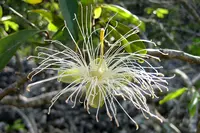
Morisonia flexuosa
Morisonia flexuosa
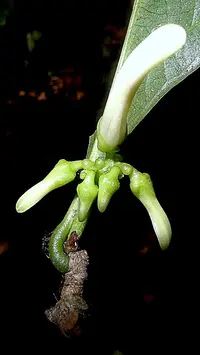
Amphirrhox longifolia
Amphirrhox longifolia
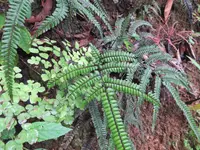
pyramid maidenhair
Adiantum pyramidale
fan maidenhair
Adiantum tenerum
 POPULAR
Queen Anthurium
Anthurium warocqueanum
Caryocar glabrum
Caryocar glabrum
glossy maidenhair
Adiantum pulverulentum
Mexican maidenhair fern
Adiantum poiretii