Understory placement
Position plants beneath taller, lightly shading shrubs or trees to mimic their natural forest-edge habitat and reduce stress from intense midday light and drying winds.

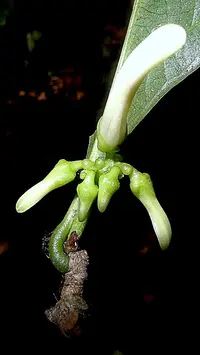
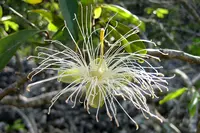
Amphirrhox longifolia is a small understory shrub or subshrub, usually with slender, somewhat arching stems and narrow, elongated leaves. It belongs to the violet family and can show small, delicate flowers when conditions are suitable.
This species is native to tropical regions of the Americas, where it typically grows in shaded, humid forest habitats. Its natural preference for dappled light and consistent moisture influences how to care for Amphirrhox longifolia in cultivation.
The plant tends to be modest in size and slow to spread, which can make it manageable in shaded gardens or specialized collections. It is not widely grown, so information is limited and it suits growers willing to observe and adjust conditions, especially soil moisture and shade levels.

Care Difficulty
Moderate Care

Light Preference
Partial Shade

Water Requirements
Moderate Water

Temperature Preference
Warm Climate

Hardiness Zone
Unknown

Soil Texture
Loamy, Sandy, Organic-rich

Soil pH
Acidic (5.5–6.5), Slightly acidic (6.5–7.0)

Soil Drainage
Moist but well-drained

Fertilization
Minimal (feed rarely)
Scan your plant to receive care tips personalized for your specific plant
Available on iOS and Android
This species prefers bright, gentle light that mimics dappled forest conditions.
Watering should keep the root zone lightly moist but never saturated.
Stable warm conditions support healthy growth and flowering.
This species prefers moderately humid air and shows stress in very dry indoor conditions.
Soil for this species should be lightly moist, airy, and fast-draining.
This species can adapt to container culture when the pot supports its root pattern and moisture needs.
This species is typically nutrient-efficient but can benefit from light feeding in poor soils or containers.
Pruning is usually light and focused on maintaining health and a natural form.
This plant is more often grown in the ground than in pots, so management focuses on careful transplanting.
Propagation is typically done from seed and is moderate in difficulty for home growers.
In mild, frost-free climates this species usually needs minimal dedicated winter care.

Plant Health Check
Not sure what's wrong with your plant? Check your plant's health inside the app.
This small violet-family herb is native to humid lowland forests of tropical South America, where it typically grows in shaded understory conditions on leaf-litter rich soils.
Its seeds bear an elaiosome, a small fatty appendage that attracts ants, which then carry the seeds away and help disperse them, a process known as myrmecochory.
In addition to normal open flowers, it produces cleistogamous flowers that never open and self-pollinate, ensuring seed production even when pollinators are scarce.
This species usually forms loose colonies through self-seeding and short rhizomes but is not considered aggressively spreading in typical garden conditions. In rich, moist soil it can naturalize, so occasional thinning of seedlings may be needed.
Keep your plants happy and healthy with plant identification, disease detection, and easy care guidance.