Frond refresh cycles
Allow older fronds to brown fully, then cut them cleanly at the rhizome level to stimulate compact new growth and keep the clump airy and disease resistant.

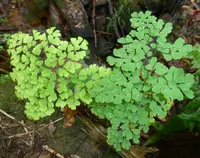
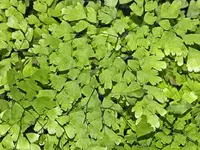
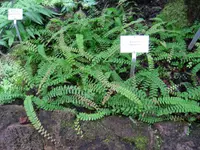
The Mexican maidenhair fern, Adiantum poiretii, is a delicate, fine-textured fern valued for its light, arching fronds and airy look. Its wiry black stems carry small, fan-shaped leaf segments that create a soft, lacy canopy. In nature, it often grows in rocky, shaded slopes and moist crevices, especially in warmer regions with good humidity. This background explains its preference for consistently moist, well-drained substrate and protection from strong direct sun. The plant is moderately demanding under home conditions because it reacts quickly to drying out, low humidity, or drafts. Understanding how to care for Mexican maidenhair fern helps keep the foliage dense, green, and long-lived indoors.

Care Difficulty
Hard Care

Light Preference
Partial Shade

Water Requirements
Keep Soil Moist

Temperature Preference
Tropical / Frost Sensitive

Hardiness Zone
10–11

Soil Texture
Loamy, Peaty, Organic-rich

Soil pH
Acidic (5.5–6.5), Slightly acidic (6.5–7.0)

Soil Drainage
Moist but well-drained

Fertilization
Light (every 4–6 weeks)
Scan your plant to receive care tips personalized for your specific plant
Available on iOS and Android
This fern prefers soft, filtered light that mimics the dappled shade of its native habitats.
This species requires consistently moist but not waterlogged conditions to maintain healthy fronds.
This fern favors mild, stable temperatures with protection from both frost and extreme heat.
This fern needs consistently high humidity to keep its fine foliage hydrated and healthy.
This species prefers a loose, humus-rich medium that stays evenly moist but never waterlogged.
This fern adapts well to container culture when moisture and stability are carefully managed.
Adiantum poiretii responds to light, consistent feeding rather than heavy applications.
Adiantum poiretii benefits from periodic, light pruning to maintain a clean, airy clump.
This fern prefers stable conditions and only occasional disturbance when clearly root-bound.
Division is the most practical method for multiplying Adiantum poiretii in home conditions.
Adiantum poiretii is not frost hardy and needs protective winter care in most temperate climates.

Plant Health Check
Not sure what's wrong with your plant? Check your plant's health inside the app.
This species naturally occurs on shaded limestone rocks and cliff faces around the Mediterranean, including southern Europe and North Africa, often rooting in thin crevices with very little soil.
Unlike some related maidenhair ferns, its delicate fan-shaped leaf segments and thin black stalks are essentially hairless, which is a consistent feature used by botanists to distinguish it from similar rock-dwelling Adiantum species.
In parts of its range it can partly die back or lose fronds during dry, hot periods and then resume growth from surviving rhizomes when cooler, moister conditions return.
Fronds brown mainly from low humidity, missed waterings, or hot, dry drafts. Crisp edges suggest underwatering; soft, dark tips suggest overwatering and poor drainage. Trim damaged fronds, adjust moisture, and keep conditions stable for recovery.
Keep your plants happy and healthy with plant identification, disease detection, and easy care guidance.