kariba-weed Care (Salvinia molesta)

Also known as: Giant Salvinia, Salvinia, African Pyle
kariba-weed

About kariba-weed

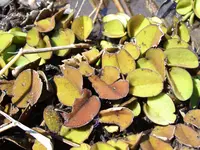
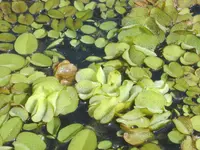
Kariba-weed (Salvinia molesta) is a free-floating aquatic fern that forms dense mats of small, oval leaves on the water surface. Each leaf pair is covered in fine hairs that repel water, giving the plant a velvety texture.

This species is native to South America but has spread to warm regions worldwide, especially in slow-moving or still freshwater. It grows very fast and can quickly cover ponds or aquariums, which makes it useful for shading water but also potentially invasive.

Salvinia molesta prefers warm water, bright indirect light, and gentle water movement. Understanding how to care for kariba-weed starts with controlling its spread and removing excess growth regularly.

Main Plant Requirements

Care Difficulty

Easy Care

Light Preference

Partial Sun

Water Requirements

Aquatic

Temperature Preference

Tropical / Frost Sensitive

Hardiness Zone

10–12

Soil Texture

Silty, Peaty, Organic-rich

Soil pH

Slightly acidic (6.5–7.0), Neutral (7.0)

Soil Drainage

Waterlogged tolerant

Fertilization

Minimal (feed rarely)

Get Personalized Care Plan

Scan your plant to receive care tips personalized for your specific plant

Available on iOS and Android

How to Care for the kariba-weed

This free-floating aquatic fern prefers bright, gentle light rather than intense direct sun.

  • Provide 3–5 hours of morning sun with bright, filtered light the rest of the day; avoid harsh midday sun that can scorch leaves and dry surface water too fast.
  • Allow partial shade, especially in warm climates; kariba-weed often grows best where taller plants or structures cast dappled shade over the water.
  • In summer, protect from full, unshaded afternoon sun; in cooler seasons, ensure ponds or tubs are not deeply shaded all day to maintain steady growth.

As an aquatic fern, this species must sit on still or very slow-moving water rather than soil.

  • Maintain a consistent water depth of at least 15–20 cm so roots stay fully submerged and leaf mats can float freely without drying at the edges.
  • Use low-nutrient, non-chlorinated water when possible; heavy fertilizer runoff can cause weak, overly lush growth, while strong chlorine or salt can burn leaf surfaces.
  • Watch for stress signs: pale, crisping leaves suggest water is too low or moving too fast, while black, rotting fronds indicate stagnant, foul water or severe pollution for Salvinia molesta.

This tropical floating fern grows fastest in warm, stable conditions without frost exposure.

  • Aim for 72–86°F (22–30°C) for active growth; growth slows noticeably below 68°F (20°C) and above about 90°F (32°C).
  • Avoid temperatures below 50°F (10°C); light frost or brief dips near 40°F (4°C) can kill fronds, and repeated cold snaps may wipe out exposed colonies.
  • In hot summers above 90°F (32°C), provide partial shade and sufficient water depth to buffer heat, and in cooler seasons position ponds or tubs where they receive more sun to offset lower air temperatures.

This free-floating aquatic fern needs constant high humidity because all fronds sit at the water–air interface.

  • Aim for near-100% humidity by keeping plants on still or very slow-moving water surfaces at all times.
  • Dry indoor air quickly desiccates leaf hairs, causing curling, browning tips, and reduced buoyancy.
  • Increase local humidity by using deeper, wider water trays, minimizing air movement, and covering tanks or ponds partially to trap moisture.

Salvinia molesta does not root in soil and instead floats freely on water surfaces.

  • Use a shallow container of clean, nutrient-poor water rather than any submerged soil or substrate layer.
  • If nutrient support is needed, add a small amount of aquatic plant fertilizer to the water instead of relying on potting mixes.
  • Avoid silt, peat sludge, or rich organic mud, which can smother lower fronds and promote rot and algae growth.
  • Keep the water surface unobstructed and gently aerated so fronds stay floating and do not become waterlogged.

This species can be grown in containers as a free-floating aquatic, provided the water body is stable and monitored closely.

  • Choose wide, shallow tubs or tanks to maximize surface area, since this plant only occupies the top water layer.
  • Maintain a low but stable water level so mats do not climb over the rim and spread outside the container.
  • Prevent overcrowding by regularly thinning mats to preserve light penetration and oxygen exchange across the surface when caring for kariba-weed.

Salvinia molesta grown in containers or indoor tubs benefits from light, controlled feeding to support steady leaf production.

  • Use a very dilute balanced liquid fertilizer (around 10-10-10 NPK at 1/4–1/8 strength) designed for aquatic plants to avoid nutrient burn.
  • Feed every 4–6 weeks during the warm growing season only, monitoring water quality to prevent algae blooms.
  • Avoid compost or heavy slow-release pellets that can foul the water and damage roots in kariba-weed setups.
  • Stop feeding in winter or cool dormant periods, as low light and temperature reduce nutrient demand and unused fertilizer can pollute the water.

Pruning Salvinia molesta is mainly about controlling spread and maintaining healthy, well-lit foliage mats.

  • Trim back dense or crowded patches during the main growing season to keep a thin, even layer on the water surface.
  • Remove dead, yellowing, or damaged fronds with fine scissors or fingers to reduce decay and maintain water quality.
  • Skim off excess plants to manage size and light levels for submerged species, shaping the mat to the container or pond.
  • Collect and dispose of removed material responsibly to prevent accidental escape into natural waterways.

Management of Salvinia molesta focuses on thinning and transplanting rather than classic repotting, since it is a free-floating aquatic fern.

  • Transplant or thin when growth becomes very dense, light penetration drops, or circulation is visibly reduced at the water surface.
  • Best timing is in warm months, when plants recover quickly from disturbance and resume active growth.
  • Plan to thin or move plants every 2–4 weeks in high-light, nutrient-rich setups to prevent overcrowding and oxygen depletion.
  • Gently lift clumps by hand or with a net, avoid crushing roots, and place small, separated rafts into clean, similar-temperature water to reduce stress.

Salvinia molesta is most commonly propagated vegetatively by dividing its floating mats rather than by seed.

  • Divide healthy mats in late spring to late summer, when water temperatures are warm and growth is active.
  • Gently separate interconnected fronds into small clusters, keeping root structures and floating leaves intact.
  • Place divisions on the surface of still or very slow-moving water with moderate light and stable warmth for best establishment.
  • Maintain low to moderate nutrients and good water quality; avoid strong currents that can submerge new clusters and hinder expansion.

In most temperate climates Salvinia molesta is not frost tolerant and requires active winter management in cultivation.

  • Move container-grown plants indoors before temperatures drop below 50°F, using aquariums or tubs with supplemental light if needed.
  • Maintain water above 60°F with stable conditions to prevent dieback and rot in overwintering colonies.
  • Avoid outdoor overwintering in regions with freezing temperatures, since surface ice and frost kill foliage and root structures.
  • Reduce feeding and thinning in winter as growth slows, focusing on clean water and adequate but not intense light.

Care Tips

Control Layer Thickness

Regularly thin the mat so it stays at 1–3 frond layers thick, which prevents lower fronds from rotting and keeps oxygen exchange at the water surface efficient.

Create Flow-Free Zones

Use floating rings or a sectioned-off area to shelter the plant from strong currents, since calm surface water allows stable growth while still letting filters work elsewhere in the tank or pond.

Nutrient Load Management

Test water for nitrates and phosphates and adjust fish stocking, feeding, or water-change frequency so the plant has nutrients to grow without creating an impenetrable mat that blocks light to submerged plants.

Seasonal Biomass Harvest

In warm seasons, remove and compost or dispose of excess biomass weekly to keep the plant from overtaking the surface and to maintain good gas exchange for fish and other aquatic life.

Quarantine And Disposal

Always quarantine new floating plants for 2–3 weeks to check for pests and never release unwanted material into natural waterways, sealing removed fronds in a bag before placing them in the trash when caring for kariba-weed.

Common Pests and Diseases

Aphids

These insects cluster on young floating fronds and stems, sucking sap and causing distortion, yellowing, and stunted growth. This pest can reduce the plant’s buoyancy and lead to mats that brown and die back in patches.

Solution

Remove heavily infested fronds and discard them away from ponds. Rinse remaining plants under a firm but gentle stream of water or temporarily submerge them to dislodge aphids, and if needed use a pond-safe insecticidal soap or neem-based product, keeping fish and other aquatic life in mind.

Spider mites

These pests are more common in warm, stagnant water or when plants are grown in humid greenhouse conditions, causing speckled, faded fronds and fine webbing between leaves. This pest weakens the floating mat and can make leaves curl and dry along the edges.

Solution

Increase water movement and humidity around the foliage, and periodically hose or dunk the plants to wash mites off the undersides of fronds. For persistent problems, apply a pond-safe miticide or neem-based spray to affected mats outside the main pond, then rinse before returning them to the water.

Leaf spot

This disease produces small brown or dark lesions on the floating leaves that may enlarge and coalesce, leading to thinning or fragmentation of the mat. Symptoms include weakened plants that sink more easily and break apart during handling or strong water movement.

Solution

Skim out and discard affected clusters of fronds to reduce inoculum, and avoid overcrowding so water and air can move through the mat. Maintain good water quality, remove decaying organic matter, and, in ornamental setups, rotate fresh healthy stock from a clean container if spotting becomes widespread.

Algal overgrowth

This problem occurs when planktonic or filamentous algae overrun the water surface, shading the fronds and competing for nutrients. Symptoms include pale, slow-growing plants tangled in green strands or trapped below a dense algal film.

Solution

Reduce nutrient load by limiting fish feeding, cleaning filters, and removing sludge from the bottom. Physically skim algae from the surface, increase water circulation or shading, and maintain a reasonable plant density so Salvinia molesta plant care focuses on balanced growth rather than choking competition.

Interesting Facts

Egg-beater leaf hairs

The upper leaf surface is covered with microscopic branched hairs that look like tiny egg beaters and strongly repel water, allowing the plant to stay dry and float even when splashed or rained on.

Locked in sterile phase

This fern reproduces only vegetatively because the commonly naturalized strains are sterile, spreading through fragmentation of stems rather than viable spores.

Three distinct growth forms

In invaded waterways it often shows three growth forms along a gradient from sparse to extremely dense mats, shifting from small open rosettes to thick, folded, overlapping leaves as crowding increases.

Botan icon

Did you know?

This species can form floating mats so dense and thick that they can support the weight of small animals and even hinder boat movement, drastically reducing light penetration and gas exchange for the water beneath.

FAQs about kariba-weed

Under warm, nutrient-rich, still water, this species can double its biomass in as little as 5–10 days. Regular thinning is essential when growing kariba-weed to prevent complete surface coverage and oxygen depletion below.

Grow Healthy Plants with Botan Care

Keep your plants happy and healthy with plant identification, disease detection, and easy care guidance.

Botan plant care app — identify plants on mobile

Explore More Plants