Meadowsweet Care (Filipendula ulmaria)

Also known as: queen of the meadow, Queen-Of-The-Meadow, European Meadowsweet
Meadowsweet

About Meadowsweet

Meadowsweet, Filipendula ulmaria, is a hardy herbaceous perennial commonly found in damp meadows, stream banks, and ditches. It forms clumps of upright stems with deep green, serrated leaves.

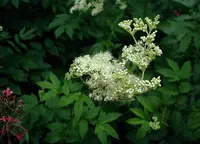
In summer it produces tall sprays of creamy white, fragrant flowers that attract many pollinators. The plant often creates a soft, cloud-like effect when grown in groups.

It naturally occurs across much of Europe and has naturalized in parts of North America, especially in cool, moist regions. Understanding how to care for Meadowsweet starts with providing consistently moist soil and a position in sun to light shade.

Its tolerance of wet ground and general toughness make it relatively easy for gardeners who can offer enough moisture and reasonably fertile soil.

Main Plant Requirements

Care Difficulty

Easy Care

Light Preference

Partial Sun

Water Requirements

Keep Soil Moist

Temperature Preference

Cold Hardy

Hardiness Zone

3–8

Soil Texture

Loamy, Silty, Organic-rich

Soil pH

Acidic (5.5–6.5), Slightly acidic (6.5–7.0)

Soil Drainage

Waterlogged tolerant

Fertilization

Minimal (feed rarely)

Get Personalized Care Plan

Scan your plant to receive care tips personalized for your specific plant

Available on iOS and Android

How to Care for the Meadowsweet

Filipendula ulmaria prefers bright, soft light similar to open woodland edges or moist meadows.

  • Provide 4–6 hours of sun daily, ideally morning or early evening sun with light shade or dappled light during harsh midday hours.
  • Plant in a site with partial shade, especially in hotter regions, to prevent leaf scorch and drying of surface roots.
  • In cooler climates it tolerates more direct sun, but during summer droughts increase shade or mulch to reduce stress on Meadowsweet.

This moisture-loving perennial thrives in consistently damp, not stagnant, soil.

  • Aim for evenly moist soil, allowing only the top 1–2 cm to start drying before the next soaking, especially in active growth.
  • Use deep watering near the root zone, and choose soil that holds moisture yet drains slowly enough to avoid standing water or sour smells.
  • In hot, dry spells increase frequency and watch for wilting or crisp leaf edges, while yellowing, soft stems suggest excess moisture around Filipendula ulmaria roots.

This hardy perennial is adapted to cool, moist climates but copes with a broad temperature range.

  • Optimal growth occurs around 60–75°F (16–24°C), with vigorous foliage and flowering when soil stays cool and moist.
  • Dormant crowns usually tolerate winter cold down to about -20°F (-29°C) if soil drains reasonably and plants are not exposed to standing ice.
  • Heat above 86°F (30°C) increases stress; provide shade, mulch, and extra moisture, as prolonged hot, dry conditions can reduce flowering and scorch foliage.

This species prefers consistently moist air but usually copes with typical outdoor humidity in temperate regions.

  • Aim for 50–70% humidity in sheltered garden spots, such as near ponds or damp borders.
  • In very dry, windy conditions, watch for browned leaf edges and drooping foliage as signs of humidity and moisture stress.
  • Increase local humidity by mulching heavily, grouping moisture-loving plants, and avoiding hot, reflective surfaces nearby.

Filipendula ulmaria performs best in deep, moisture-retentive soil that still has some structure and oxygen around the roots.

  • Use a loamy soil rich in organic matter, such as garden loam mixed with 30–50% compost or well-rotted manure.
  • Ensure soil stays evenly moist but not stagnant; slow-draining, boggy sites increase root rot risk.
  • Target a slightly acidic to neutral pH around 6.0–7.0, avoiding very alkaline ground that can limit nutrient uptake.
  • Improve aeration and drainage by blending in coarse sand or fine grit where clay content is high, avoiding compacted, crusted surfaces.

This species can be grown in containers, but pots must be managed carefully to keep roots consistently moist without waterlogging.

  • Choose a large, deep pot to accommodate its spreading, fibrous root system and prevent rapid drying of the substrate.
  • Select a heavier container material, such as ceramic, to stabilize tall flowering stems against wind and accidental knocks.
  • Use a water-retentive mix and stand the pot in a shallow, periodically filled tray outdoors to buffer against short dry spells.

This moisture-loving perennial needs only modest feeding for healthy growth and flowering.

  • Apply a light layer of garden compost or well-rotted manure around the clump in early spring for Meadowsweet.
  • In average garden soil, skip synthetic fertilizers or use a balanced NPK, such as 10-10-10, at half strength if growth appears weak.
  • Feed once in spring and, if soils are poor, once in midsummer; avoid late-season fertilization to prevent soft growth.
  • Do not fertilize during winter dormancy; nutrients are not taken up and may leach from wet soil.

Thoughtful pruning keeps Filipendula ulmaria flowering well and prevents it from flopping over surrounding plants.

  • In late winter or very early spring, cut back all old, dead stems to just above ground level with clean pruners.
  • During the growing season, remove spent flower stalks to neaten appearance and reduce unwanted seeding.
  • Thin out weak or crowded stems at the base to improve air flow and reduce foliar disease pressure.
  • Disinfect pruning tools before and after use, especially if removing diseased tissue, to limit pathogen spread.

This species is usually grown in the ground, so transplanting established clumps is more common than container repotting.

  • Transplant in early spring or early fall when temperatures are mild and soil is moist but not waterlogged.
  • Look for signs such as slow growth, congested crowns, or roots circling a container if Filipendula ulmaria is potted.
  • Lift the clump with a spade, keep as much root ball intact as possible, and replant at the same soil depth.
  • Water thoroughly after transplanting, then keep soil evenly moist and shade the plant lightly for 7–10 days to reduce stress.

This perennial is commonly propagated by division, with seed used when new genetic lines or larger numbers are desired.

  • Divide mature clumps in early spring or early fall, ensuring each section has several buds and a good root portion.
  • Replant divisions immediately into moist, fertile soil and water well to settle soil around roots.
  • Sow seeds in fall or early spring; light exposure and consistent moisture support germination.
  • For seed trays, use a cool, bright position and a fine, well-drained mix to limit damping-off disease.

This hardy perennial tolerates freezing conditions in most temperate climates and usually needs minimal winter care.

  • Once frosts blacken the foliage, cut stems back to a few cm above soil level to tidy the plant.
  • Apply a 5–8 cm layer of organic mulch around the crown in late fall to buffer soil temperature and moisture.
  • Container-grown plants benefit from moving pots against a sheltered wall or into a cold frame to prevent root freeze–thaw damage.

Care Tips

Moisture mapping

Before planting, observe where spring moisture lingers and summer soil still stays slightly damp, and site the plant in these naturally wetter zones to reduce irrigation needs when growing Meadowsweet.

Rhizome division timing

Divide clumps in early spring just as new shoots emerge, cutting the root mass into 2–4 strong sections with buds and replanting at the same depth to maintain vigorous, flower-heavy stands.

Support against lodging

In windy or very fertile sites, install low, discreet peony-style rings or 45–60 cm canes in spring so stems grow through and remain upright instead of flopping after heavy rain.

Targeted mulch strategy

Apply a 5–7 cm layer of fine bark or composted leaf mold around but not touching the crowns each spring to buffer soil moisture, suppress weeds, and keep the shallow roots cooler in summer.

Flower and seed management

Deadhead spent flower clusters promptly if self-seeding is not desired, but allow a few to ripen if naturalized colonies are welcome, then cut back the whole inflorescence stalks to divert energy to roots.

Everything About Meadowsweet

Common Pests and Diseases

Meadowsweet rust

This disease causes orange to rust-brown pustules on the undersides of leaves, often leading to yellowing and early leaf drop. Symptoms include reduced vigor and patchy, discolored foliage in late spring and summer.

Solution

Remove and discard heavily infected leaves to reduce spore spread and avoid overhead watering to keep foliage as dry as possible. Improve air circulation by thinning crowded stems and, if rust is severe in your area, use a sulfur or copper-based fungicide labeled for rust, applied according to label directions early in the season.

Powdery mildew

This disease produces white, powdery patches on leaves and young shoots, which may curl, distort, or yellow over time. Symptoms include a dusty coating that can spread quickly in warm, dry conditions with poor air movement.

Solution

Cut off and dispose of affected leaves and any heavily infected stems, and space plants to increase airflow. Water at soil level, avoid excess nitrogen fertilizer, and apply a bicarbonate, sulfur, or horticultural oil product labeled for powdery mildew at the first sign of infection as part of Filipendula ulmaria care.

Sawfly larvae

These insects chew irregular holes in leaves, sometimes skeletonizing foliage and giving the plant a tattered appearance. This pest is often found on the undersides of leaves in small groups, resembling caterpillars but with more pairs of prolegs.

Solution

Hand-pick and crush or drop larvae into soapy water as soon as they are noticed and prune off heavily infested leaf clusters. If damage is extensive, use a targeted insecticidal soap or horticultural oil spray, ensuring thorough coverage of leaf undersides while avoiding applications during strong sun to prevent leaf burn.

Aphids

These insects cluster on young stems, leaf undersides, and flower stalks, sucking sap and causing curling, distortion, and sticky honeydew deposits. This pest can attract sooty mold fungi on the honeydew and weaken new growth.

Solution

Spray plants with a strong stream of water to dislodge colonies, repeating every few days during outbreaks, and encourage natural predators such as lady beetles by avoiding broad-spectrum insecticides. For persistent infestations, use insecticidal soap or a light horticultural oil, coating all growing points and leaf undersides.

Interesting Facts

Source of salicylic discovery

Meadowsweet was one of the key plants that led chemists to isolate salicylic acid, which later inspired the development of acetylsalicylic acid, the active ingredient in aspirin.

Distinctive meadow specialist

This species is strongly associated with damp meadows, stream margins, and fens in much of Europe, where its dense stands can help indicate long-established, relatively undisturbed, moist grassland habitats.

Aromatic floral chemistry

Its creamy flower clusters release a sweet, almond-like scent produced by volatile compounds such as salicylaldehyde and methyl salicylate, which attract pollinating insects while also helping deter some herbivores.

Botan icon

Did you know?

In traditional European hay meadows, meadowsweet has been used historically as a natural strewing herb to scent floors and halls, because its fragrance intensifies as the plant material dries.

FAQs about Meadowsweet

Poor flowering usually results from too much shade, dry soil, or nutrient imbalance. Ensure consistent moisture, moderate sunlight, and avoid high-nitrogen fertilizer, which promotes leaves over flowers. Dividing crowded clumps every few years can also restore bloom quality.

Grow Healthy Plants with Botan Care

Keep your plants happy and healthy with plant identification, disease detection, and easy care guidance.

Botan plant care app — identify plants on mobile

Explore More Plants