Trooping Funnel Care (Infundibulicybe geotropa)

Trooping Funnel

About Trooping Funnel

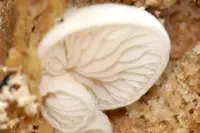
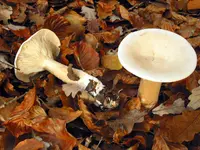
Infundibulicybe geotropa, commonly called trooping funnel, is a large, funnel-shaped mushroom rather than a true plant. It forms tall stems with broad, pale caps that deepen into a central depression as they mature. The mushrooms often appear in arcs or rings, creating dense clusters in leaf litter. This species is native to and widespread across temperate regions of Europe and parts of North America, usually in woodlands and grassy clearings. It is considered an edible fungus for experienced foragers, but accurate identification is essential due to similar toxic species. For anyone wishing to care for Trooping Funnel in cultivation, it is important to know it relies on soil fungi networks and natural leaf litter rather than standard pot culture.

Main Plant Requirements

Care Difficulty

Moderate Care

Light Preference

Partial Shade

Water Requirements

Keep Soil Moist

Temperature Preference

Cool Climate

Hardiness Zone

Unknown

Soil Texture

Loamy, Silty, Organic-rich

Soil pH

Acidic (5.5–6.5), Slightly acidic (6.5–7.0)

Soil Drainage

Moist but well-drained

Fertilization

Minimal (feed rarely)

Get Personalized Care Plan

Scan your plant to receive care tips personalized for your specific plant

Available on iOS and Android

How to Care for the Trooping Funnel

This woodland fungus prefers bright but not intense light that mimics a forest edge or clearing.

  • Provide dappled or filtered light under deciduous trees, with about 2–4 hours of gentle morning sun rather than strong afternoon sun.
  • It tolerates partial shade well, but dense, continuous shade can reduce Trooping Funnel fruiting and lead to smaller, fewer caps.
  • Avoid exposed full sun, which dries leaf litter and soil quickly; fruiting bodies may scorch, crack, or abort during hot, clear days.

This fungus relies on consistently moist, not waterlogged, soil and organic litter.

  • Aim for evenly moist leaf litter and top 2–5 cm of soil, allowing the surface to dry very slightly between natural rains or supplemental watering.
  • In dry spells, mimic light forest rain with gentle soaking, then let excess drain away; avoid standing water, which encourages rot and bacterial growth.
  • Infundibulicybe geotropa shows stress from drought by producing fewer, smaller, brittle caps, while overwatered sites feel soggy and may smell sour.

This species fruits best in cool to mild conditions typical of autumn woodlands.

  • Optimal fruiting temperatures are about 50–64°F (10–18°C), often during fall; steady cool nights with mild days support reliable flushes.
  • Mycelium in the soil tolerates down to around 28–32°F (-2–0°C), but hard freezes can damage exposed fruiting bodies and halt visible growth.
  • Sustained heat above 77–82°F (25–28°C) with dry air suppresses fruiting; shaded, humid microclimates help buffer short warm spells.

Humidity is not a key factor for Infundibulicybe geotropa, which grows in open woodland air.

This fungus needs loose, organic-rich, well-drained soil layers rather than compact mineral ground.

  • Aim for a moist, humus-rich, loamy top layer with leaf litter, small twigs, and decomposed wood fragments.
  • Ensure water drains freely through the upper 5–10 cm; avoid sites where water pools or soil stays soggy after rain.
  • A slightly acidic to neutral pH around 5.5–7.0 supports the woodland organisms that help Infundibulicybe geotropa develop.
  • Improve aeration and drainage by mixing in shredded leaves, fine bark, or coarse compost rather than dense clay or pure sand.

This species is not suitable for container growing, as it depends on complex woodland soil and mycelial networks.

This wild fungus does not need routine fertilization and usually performs best in naturally rich, undisturbed soil.

Pruning is not applicable, as Infundibulicybe geotropa is a fungus that produces temporary fruiting bodies rather than persistent stems or foliage.

This species is not managed like a potted plant; the fungus persists as mycelium in soil or leaf litter rather than as a root-based organism.

  • Transplanting is generally impractical, since the mycelium forms broad, delicate networks through soil and organic debris.
  • Attempts to move colonies often fail because the fungal threads are easily broken and depend on specific microhabitat conditions.
  • If habitat disturbance is unavoidable, leaving surrounding soil and leaf litter intact offers the best chance for mycelium survival.

Propagation of this fungus is complex and not handled like conventional plant propagation methods.

No dedicated winter care is required, as this woodland fungus is adapted to local seasonal conditions and natural temperature fluctuations.

Care Tips

Site hygiene management

Remove and dispose of old, waterlogged caps and decaying organic debris after each flush to reduce mold buildup and bacterial rot in the fruiting zone.

Targeted mulching ring

Maintain a 3–5 cm ring of loose leaf litter, wood chips, or straw above the colonized area to stabilize moisture while still allowing good air exchange for the mycelium.

Moisture scouting pattern

Probe several points in a wide circle around the colony after rain or irrigation to identify dry gaps and hand-water only those spots, helping the ring expand more evenly over time.

Minimal soil disturbance

Avoid digging, tilling, or heavy foot traffic across the fruiting circle so the shallow mycelial network stays intact and can continue to produce reliable crops.

Seasonal mapping notes

Record dates, weather, and fruiting intensity each season in a simple log, then adjust irrigation timing and mulching based on these patterns to refine how to take care of Trooping Funnel in your specific site.

Everything About Trooping Funnel

Common Pests and Diseases

Fungivorous nematodes

These microscopic roundworms feed on fungal hyphae and fruiting bodies, reducing mushroom size and deforming caps and stems. Symptoms include misshapen, stunted mushrooms and poor flushes in otherwise suitable conditions.

Solution

Remove and discard visibly affected fruiting bodies and avoid collecting mushrooms from heavily impacted patches for spore dispersal. Rotate collection areas, maintain good forest-floor hygiene by avoiding compaction, and if cultivating, use clean, pasteurized substrate and tools to limit nematode introduction and buildup.

Sciarid fungus gnats

These insects lay eggs in moist organic matter, and the larvae tunnel through developing fungal tissue. Symptoms include worm-like larvae inside caps and stems, surface pitting, and a higher rate of decay in older mushrooms.

Solution

Harvest mushrooms promptly when mature and remove spent or decaying fruiting bodies to reduce breeding sites. In outdoor or semi-controlled cultivation, reduce standing moisture, improve drainage, and use fine mesh barriers around growing areas to limit adult gnat access to the substrate.

Mycophagous springtails

These small soil arthropods feed on fungal tissue and spores, sometimes grazing gills and cap surfaces. Symptoms include fine surface pitting, scarred gills, and reduced spore production on heavily grazed mushrooms.

Solution

Limit the buildup of thick, decaying leaf litter directly over fruiting zones by gently thinning the surface layer without disturbing mycelium. If growing Trooping Funnel in beds, avoid chronic overwatering, maintain moderate moisture instead of saturation, and remove heavily grazed mushrooms to reduce local springtail food sources.

Parasitic Hypomyces infection

This disease is caused by parasitic fungi such as Hypomyces species that overgrow mushroom fruiting bodies, forming discolored crusts or patches on caps and gills. Symptoms include distorted, thickened, or partially covered caps and loss of normal gill structure.

Solution

Do not harvest or consume distorted or crust-covered mushrooms and avoid spreading spores by leaving infected specimens in place rather than handling them. For semi-managed woodland or garden patches, remove and discard clearly parasitized fruiting bodies along with a small amount of surrounding debris to reduce spore load over time.

Interesting Facts

Distinct funnel shape

Mature fruiting bodies develop a strongly funnel-shaped cap with a pronounced central depression, often with the stem appearing slightly off-center, which helps distinguish it from many similar pale woodland mushrooms.

Huge fairy rings

This species frequently produces very large and long-lived fairy rings in grassland and woodland edges, sometimes many meters across, indicating a wide and persistent underground mycelial network.

Characteristic almond scent

The fresh mushroom often has a mild to distinct almond-like or farinaceous (mealy, flour-like) odor, a sensory clue used by field mycologists to separate it from toxic look-alikes.

Botan icon

Did you know?

Spore studies show that this species typically produces white, inamyloid spores (not staining blue-black in iodine-based reagents), a microscopic trait that places it firmly in its current genus after earlier being shifted between several related genera based on morphology alone.

FAQs about Trooping Funnel

This species is generally regarded as edible when correctly identified and thoroughly cooked, but it is easily confused with toxic lookalikes. Only experienced foragers should collect it, and local expert verification is strongly recommended before consumption.

Grow Healthy Plants with Botan Care

Keep your plants happy and healthy with plant identification, disease detection, and easy care guidance.

Botan plant care app — identify plants on mobile

Explore More Plants