Trunk wind-training
Stake young trees loosely and expose them to moderate airflow so the trunk flexes slightly, which encourages a thicker, more wind-resistant structure before the canopy becomes heavy with fruit.

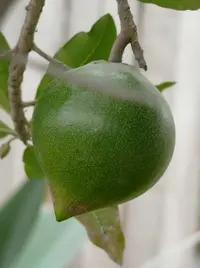
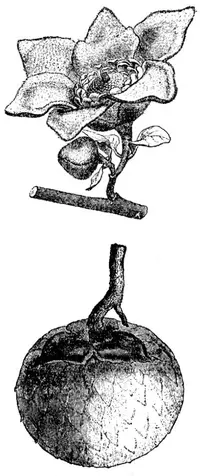
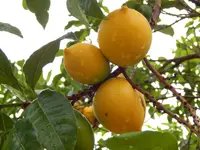
Eggfruit, or lucuma, is an evergreen fruit tree known for its sweet, dry-fleshed yellow fruits that resemble small avocados. It belongs to the Sapotaceae family, which includes several tropical fruit trees.
Pouteria lucuma naturally occurs in the Andean regions of Peru, Chile, and Ecuador, where it grows at higher elevations with mild temperatures. In suitable climates, it develops a dense, rounded crown with glossy green leaves and small, inconspicuous flowers.
It can be moderately challenging to grow outside its preferred climate because it dislikes frost, waterlogging, and very poor drainage. Gardeners learning how to care for Eggfruit benefit from understanding its need for consistent moisture, fertile well-drained soil, and bright light.
In warm, frost-free areas it can be grown in the ground, while in cooler regions it may be maintained in large containers under protected conditions.

Care Difficulty
Moderate Care

Light Preference
Full Sun

Water Requirements
Moderate Water

Temperature Preference
Tropical / Frost Sensitive

Hardiness Zone
10–12

Soil Texture
Sandy, Loamy, Organic-rich

Soil pH
Acidic (5.5–6.5), Slightly acidic (6.5–7.0)

Soil Drainage
Moist but well-drained

Fertilization
Minimal (feed rarely)
Scan your plant to receive care tips personalized for your specific plant
Available on iOS and Android
Pouteria lucuma needs high light levels to flower and fruit well in most warm climates.
This species prefers evenly moist, well-drained soil and does poorly in standing water.
This subtropical tree performs best in warm, frost-free conditions throughout the year.
This species benefits from moderately humid air but usually adapts to typical indoor conditions.
Pouteria lucuma grows best in deep, aerated, well-drained, organic-rich soil.
This species can be grown in containers when given a large, stable, and well-drained setup.
Pouteria lucuma benefits from modest, steady nutrition during active growth rather than heavy feeding.
Pruning Pouteria lucuma helps manage size, improve light penetration, and maintain healthy structure.
This species is usually grown in-ground, so focus on careful transplanting from nursery containers to a permanent site.
Pouteria lucuma is most often propagated from seeds, with grafting used when specific cultivars are desired.
This subtropical tree is frost sensitive and needs protective winter care in regions with cold seasons.

Plant Health Check
Not sure what's wrong with your plant? Check your plant's health inside the app.
This species is native to the cool, high-elevation valleys of the western Andes in Peru, Bolivia, and Chile, where it grows in relatively dry but seasonally cool subtropical conditions rather than in hot lowland rainforest.
The fruit is unusual among tropical species because its flesh is naturally dry, starchy, and mealy, yet strongly sweet, with flavor notes often compared to maple, sweet potato, and caramel, which makes it popular in powdered form for desserts and ice creams.
Archaeobotanical evidence shows that this tree has been cultivated along Peru’s Pacific valleys for at least 2,000 years, and its fruits frequently appear in Moche and other pre-Columbian ceramic art, indicating long-standing cultural and agricultural importance.

In Peru, lucuma is so culturally valued that it consistently ranks among the country’s most popular ice cream flavors, often preferred locally over global standards such as vanilla or chocolate, which highlights its strong national culinary identity.
Growth is moderate under warm, frost‑free conditions. Young trees often add 30–60 cm per year, sometimes more in ideal tropical climates. Cool temperatures, low light, drought, or nutrient-poor soil noticeably slow extension growth and canopy development.
Keep your plants happy and healthy with plant identification, disease detection, and easy care guidance.