Provide sturdy trellis
Install a strong vertical trellis or netting 1.5–2 m high before planting so the vines can climb freely, improving air movement through the foliage and reducing fungal issues as they mature.

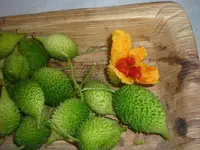
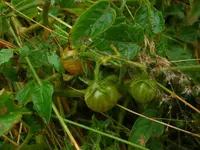
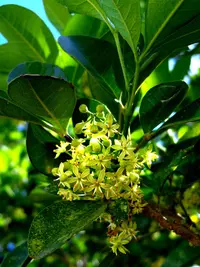
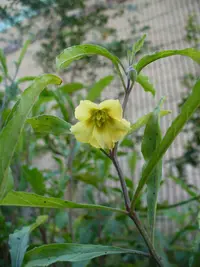
Balsampear, Momordica dioica, is a perennial climbing vine in the cucumber family, grown mainly for its distinctive spiny, oval fruits. It produces slender, branching stems that scramble over supports, with lobed leaves and small yellow flowers. The plant is native to tropical and subtropical regions of India and surrounding areas, where it grows in warm, humid conditions.
It has a vigorous growth habit and can be moderately demanding, needing consistent warmth and support for climbing. Gardeners who understand how to care for balsampear usually find it manageable in suitable climates. It prefers bright light, regular moisture, and well-drained, fertile soil.

Care Difficulty
Moderate Care

Light Preference
Full Sun

Water Requirements
Regular Water

Temperature Preference
Tropical / Frost Sensitive

Hardiness Zone
10–12

Soil Texture
Loamy, Sandy, Organic-rich

Soil pH
Acidic (5.5–6.5), Slightly acidic (6.5–7.0)

Soil Drainage
Moist but well-drained

Fertilization
Moderate (every 2–4 weeks)
Scan your plant to receive care tips personalized for your specific plant
Available on iOS and Android
This vining crop needs strong light to flower and fruit well in most warm climates.
This species prefers consistently moist but not waterlogged soil throughout the growing season.
This tropical vine grows best in warm, stable outdoor conditions without frost exposure.
Humidity plays a minor role for Momordica dioica, which adapts well to typical outdoor levels.
Soil for Momordica dioica should be loose, well-drained, and moderately rich in organic matter.
This climbing species is suitable for container growing when given enough root volume and support.
Momordica dioica responds well to modest, consistent feeding during its active growing season.
Pruning helps manage the vigorous vine growth and fruiting potential of Momordica dioica.
This species is usually grown in the ground, so care focuses more on transplanting than on frequent repotting.
Propagation of this vine is possible but somewhat specialized, so success depends on timing and warm conditions.
Winter care depends strongly on local climate, as this is a warm-season vine with limited frost tolerance.

Plant Health Check
Not sure what's wrong with your plant? Check your plant's health inside the app.
Momordica dioica produces separate male and female flowers on different plants, so both sexes must be present in an area for fruit to set naturally.
This species is a long-lived, tuberous-rooted climber that remains mostly dormant in the dry season and produces vigorous shoots, foliage, and fruits during the monsoon or warm rainy period.
The immature fruits look heavily spined but are actually covered with soft, blunt tubercles, giving them a rough appearance while remaining relatively tender when harvested young for cooking.

In parts of South Asia, selected landraces of Momordica dioica are traditionally maintained and propagated almost entirely through tuber division rather than seed, so local cultivated populations can be made up of long-persisting clonal lines that have been passed down for many years.
This species is a vigorous, twining vine that climbs rather than forming a bush. It uses tendrils to wrap around supports such as trellises, fences, or netting and can form dense vertical cover in one season.
Keep your plants happy and healthy with plant identification, disease detection, and easy care guidance.