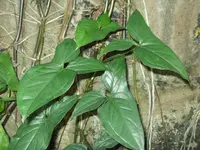
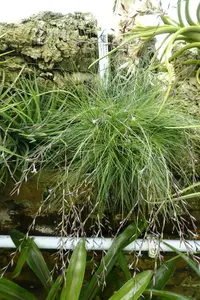
Bomarea distichifolia Care

About Bomarea distichifolia

Bomarea distichifolia is a twining, tuberous perennial vine from montane forests of South America. It produces narrow, paired leaves along slender, climbing stems. In season it forms showy clusters of tubular flowers, often in warm shades, followed by decorative seed pods. The overall effect is delicate and ornamental, suited to trellises or supports.

This species prefers cool to mild conditions, consistent moisture, and fertile, well-drained soil. It is considered more challenging than common garden climbers because it dislikes heat, resents waterlogging, and needs support and space to roam. A sheltered, bright position with protection from harsh extremes helps care for Bomarea distichifolia successfully.

Main Plant Requirements

Care Difficulty

Hard Care

Light Preference

Partial Shade

Water Requirements

Keep Soil Moist

Temperature Preference

Tropical / Frost Sensitive

Hardiness Zone

10–11

Soil Texture

Loamy, Organic-rich

Soil pH

Acidic (5.5–6.5), Slightly acidic (6.5–7.0)

Soil Drainage

Moist but well-drained

Fertilization

Light (every 4–6 weeks)

Get Personalized Care Plan

Scan your plant to receive care tips personalized for your specific plant

Available on iOS and Android

How to Care for the Bomarea distichifolia

This climbing species prefers bright, gentle light similar to a woodland edge.

  • Provide 4–6 hours of bright, indirect light or light dappled shade, with soft morning sun and protection from strong noon to afternoon sun.
  • Outdoors, place where taller plants or light shade cloth filter light; foliage scorches in intense full sun but elongates and flowers less in deep shade.
  • Adjust seasonally: in summer, prioritize shade during the hottest hours; in cooler seasons, allow more direct morning sun for strong flowering.

This plant prefers consistently moist but never waterlogged soil.

  • Water when the top 3–5 cm of soil feel slightly dry, aiming for evenly moist conditions around the tuberous roots without standing water.
  • Use deep watering so moisture reaches 15–20 cm, then let excess drain; yellowing, soft stems suggest overwatering, while limp, crisping leaves suggest underwatering.
  • In active growth and flowering, check moisture more often; during cooler months or partial dormancy, reduce watering frequency while preventing the root zone from fully drying out.

This species grows best in mild, frost-free conditions.

  • Optimal growth occurs around 60–75°F (16–24°C), where steady temperatures support healthy vines and reliable flowering.
  • Protect from cold; growth slows below 50°F (10°C), foliage is damaged near 32°F (0°C), and tubers may be lost with repeated or hard frost.
  • In hot weather above 85°F (29°C), provide extra shade and soil moisture, and use mulch to keep the root zone cooler and more stable through seasonal swings.

This species appreciates moderate to high humidity for steady growth.

  • Aim for 50–70% humidity, as consistently drier air slows growth and can shorten flowering.
  • Watch for curling leaf tips, brown edges, and buds that dry before opening as signs of low humidity stress.
  • Increase humidity with grouped plants, a nearby humidifier, or a wide pebble tray under (not touching) the pot.

Bomarea distichifolia prefers loose, moisture-retentive yet sharply drained soil to protect its tuberous roots.

  • Use a mix of roughly 40% fine bark, 30% compost, and 30% perlite or coarse sand for a light, structured medium.
  • Aim for slightly acidic to neutral pH around 6.0–7.0 to support nutrient uptake and root health.
  • Ensure rapid drainage so water exits the pot within seconds; avoid heavy clay, compacted, or waterlogged conditions.
  • Improve aeration by incorporating chunky bark and perlite, and avoid crushing the mix when filling containers or beds.

This species adapts well to container growing when given a deep, stable pot.

  • Choose a tall container that allows the tuberous root system to grow downward without crowding in the first season.
  • Select a heavier pot material or add weight at the base to counterbalance climbing stems and prevent tipping in wind.
  • Use a container wider than the support structure so stakes or a small trellis can be anchored without stressing the root zone.

Light, balanced feeding supports flowering and vine growth in Bomarea distichifolia grown in containers or lean soils.

  • Use a balanced fertilizer (around 10-10-10 NPK) at half strength every 4–6 weeks during spring and summer growth.
  • Alternatively, apply a thin layer of mature compost over the root zone once in spring.
  • Skip or greatly reduce feeding in late fall and winter when growth slows or foliage dies back.
  • Always water before and after applying fertilizer to limit root burn and salt buildup.

Thoughtful pruning keeps Bomarea distichifolia tidy, supports flowering, and prevents tangling on supports.

  • Cut back dead, diseased, or frost-damaged stems in late winter or early spring using clean, sharp pruners.
  • Thin crowded vines by removing a few older stems at the base to improve air flow and light penetration.
  • After main flowering, lightly shorten excessively long shoots to manage size without removing all flower buds.
  • Disinfect blades between plants to limit spread of fungal and bacterial problems.

Moving Bomarea distichifolia is best done with care, since its tuberous roots dislike disturbance.

  • Check for roots circling the pot, pushing through drainage holes, or noticeably slowed growth as signals to move up a size.
  • Plan repotting or outdoor transplanting for early spring as new growth starts, typically every 2–3 years at most.
  • Lift the plant gently, keeping the tuberous root mass intact, and place it at the same depth in fresh, well-drained soil.
  • Water thoroughly after planting, then keep soil slightly moist and provide shade for 3–5 days to reduce transplant shock.

New plants of Bomarea distichifolia are usually produced by seed or careful division of mature clumps.

  • Sow fresh seed in spring in a well-drained seed mix, keeping temperatures around 65–75°F and moisture consistently light.
  • Lightly cover seeds, as some light exposure supports germination, and be patient since sprouting may be slow and uneven.
  • In late winter or early spring, divide only well-established clumps, separating sections with several tubers and healthy shoots.
  • Replant divisions immediately into similar soil, water gently, and keep them shaded and evenly moist until growth resumes.

Winter care for Bomarea distichifolia depends on local minimum temperatures and whether it grows in the ground or containers.

  • In mild climates above about 25°F, the top may die back while underground tubers survive and resprout in spring.
  • In colder areas, apply a 5–10 cm mulch layer over the root zone after foliage yellows to insulate tubers.
  • Move container plants into a cool, bright, frost-free spot, watering just enough to keep the soil barely moist.
  • Avoid heavy pruning just before hard frosts; wait until late winter to remove dead top growth.

Care Tips

Provide climbing support

Install a sturdy trellis, mesh, or horizontal wires early in the season and gently tie new vines with soft ties so stems can climb without kinking or breaking under their own weight.

Cool root management

In warm climates, mulch the root zone with 5–8 cm of bark or leaf mold and, if in a container, use a light-colored pot to keep the tuberous roots cooler than the air temperature during summer.

Careful pot selection

Choose a deep, heavy container with ample drainage holes, as the weight stabilizes tall, twining growth and the depth accommodates the developing tuberous root system.

Seasonal rest handling

After flowering, allow stems to yellow naturally, then cut them back and keep the soil just lightly moist so the underground structures can rest and recharge for the next growth cycle.

Gentle pest monitoring

Inspect tendrils, young leaves, and the undersides of foliage weekly for aphids or mites, and at the first sign of pests use a strong water spray or a labeled insecticidal soap, which is usually sufficient for caring for Bomarea distichifolia without resorting to harsher chemicals.

Common Pests and Diseases

Spider mites

This pest often appears in warm, dry indoor or greenhouse conditions and can cause stippled, yellowing foliage and fine webbing on the undersides of leaves and on young vines.

Solution

Increase humidity around the plant, hose or shower the foliage thoroughly to remove mites and webs, then apply insecticidal soap or a light horticultural oil to all leaf surfaces, repeating weekly until new growth appears clean; improve air movement and avoid letting the plant dry out excessively to reduce future outbreaks when caring for Bomarea distichifolia.

Aphids

These insects cluster on soft shoot tips, flower buds, and the undersides of young leaves, sucking sap and causing distorted, sticky growth that may attract sooty mold.

Solution

Rinse infested shoots with a firm stream of water, pinch or prune heavily infested tips, and treat remaining colonies with insecticidal soap or neem oil, ensuring good coverage of hidden areas and repeating after 5–7 days if needed.

Botrytis blight

This disease thrives in cool, humid, poorly ventilated conditions and causes water-soaked spots on leaves and flowers that turn brown and develop fuzzy gray mold.

Solution

Remove and discard all affected flowers and foliage, increase airflow and reduce overhead watering, then, if conditions stay cool and damp, use a labeled fungicide as a preventive spray while keeping foliage as dry as possible.

Powdery mildew

This disease produces white, powdery fungal growth on leaves and stems, which can lead to yellowing and premature leaf drop, especially in crowded or shaded plantings.

Solution

Improve light and airflow, avoid wetting the foliage, remove heavily affected leaves, and apply a sulfur-based or potassium bicarbonate fungicide according to label directions to protect new growth.

Leaf spot

Symptoms include small, dark, often circular lesions on leaves that may enlarge, merge, and cause premature leaf drop when the foliage stays wet for extended periods.

Solution

Prune out badly affected leaves, water at the base to keep the canopy dry, space vines to allow air movement, and, if spotting progresses, apply a broad-spectrum fungicide labeled for ornamental vines, rotating products if repeated treatments are needed.

Interesting Facts

Cloud-forest climber

This species is native to Andean cloud forests, where it grows as a twining vine in cool, humid, high-altitude habitats with frequent mist and filtered light.

Two-ranked foliage

The name distichifolia refers to its leaves being arranged in two opposite rows along the stem, a distichous pattern that gives the vines a flattened, fan-like appearance when viewed from the side.

Hummingbird-pollinated flowers

Its tubular, brightly colored bell-shaped flowers are adapted for pollination by hummingbirds, which are attracted by the nectar and transfer pollen as they visit multiple blooms.

FAQs about Bomarea distichifolia

This species is a twining climber with slender, scrambling stems that wind around nearby supports. It does not form dense ground-hugging mats, but it can travel widely over shrubs, trellises, or fences if conditions suit it.

Grow Healthy Plants with Botan Care

Keep your plants happy and healthy with plant identification, disease detection, and easy care guidance.

Botan plant care app — identify plants on mobile

Explore More Plants