Dry rest storage
After foliage fully dies back, lift the tubers, brush off soil, and store them in a dry, breathable paper bag with a label, kept at 50–60°F to ensure a proper dormant period and strong regrowth next season.

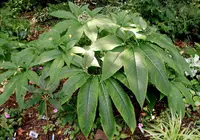
Sauromatum venosum, often called the voodoo lily or stink lily, is a tuberous aroid grown mainly for its unusual flowers and bold foliage. It produces a dramatic, mottled spathe and a tall central spadix, followed by umbrella-like leaves on speckled stems.
This species is native to parts of tropical and subtropical Asia and thrives in warm conditions with a marked dry rest period. It is generally easy to grow if its seasonal cycle is respected, but the flowering phase can produce a strong odor. In mild climates, gardeners can care for Sauromatum venosum in containers that move between outdoor summer growth and indoor winter dormancy.

Care Difficulty
Moderate Care

Light Preference
Partial Shade

Water Requirements
Moderate Water

Temperature Preference
Warm Climate

Hardiness Zone
7–10

Soil Texture
Loamy, Silty, Organic-rich

Soil pH
Acidic (5.5–6.5), Slightly acidic (6.5–7.0)

Soil Drainage
Well-drained

Fertilization
Minimal (feed rarely)
Scan your plant to receive care tips personalized for your specific plant
Available on iOS and Android
This tuberous aroid prefers bright, gentle light that mimics dappled woodland conditions.
Watering should support a moist but not waterlogged root zone during the active growing season.
This species grows best in warm, frost-free conditions with a distinct dormant period in cooler months.
This species is tolerant of a wide humidity range but does best with moderate air moisture.
Sauromatum venosum grows best in loose, organic-rich, sharply draining soil that never stays waterlogged.
This species is very suitable for container growing both outdoors in season and under shelter during dormancy.
This tuberous aroid has modest feeding needs but responds well to light fertilization during active growth.
This species needs minimal pruning, mainly to keep foliage tidy and healthy.
This bulb-like tuber is usually moved infrequently, mainly to manage crowding or improve soil conditions.
This plant is most commonly propagated by tuber division and offsets rather than by seed.
This species is moderately hardy but benefits from some winter protection in colder regions.

Plant Health Check
Not sure what's wrong with your plant? Check your plant's health inside the app.
The inflorescence can produce its own heat during early blooming, raising the spadix temperature above air temperature to help volatilize scent compounds and attract pollinating flies and beetles.
When in flower, it releases a strong smell similar to rotting meat, which deceives saprophagous insects that normally visit carcasses, improving pollination success.
The tuber often sends up the dramatic mottled inflorescence first and only later produces the large umbrella-like leaf, so the plant can flower and set seed even before a full photosynthetic canopy develops.

This species has become naturalized in some temperate regions outside its native range because its tubers survive cold winters underground, allowing it to re-emerge and flower after the aerial parts die back completely each year.
This species usually blooms in late spring to early summer, often before leaves appear. The single inflorescence is short-lived, typically 2–4 days, and produces a strong odor that attracts carrion-associated pollinating insects.
Keep your plants happy and healthy with plant identification, disease detection, and easy care guidance.