Improve Root Aeration
Plant on a low mound or raised bed and lightly loosen the top 2–3 cm of soil each spring to keep the root zone well aerated and reduce the risk of winter wet rot.

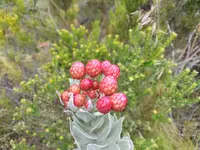
Strawberry sewejaartjie (Syncarpha eximia) is a small, shrubby perennial from the fynbos regions of South Africa. It is known for its papery, everlasting flower heads with soft pink to rose centers surrounded by silvery-white bracts. Plants form compact clumps with narrow, grey-green foliage that helps them tolerate sun, wind, and relatively poor, sandy soils. This adaptation makes the plant sensitive to excess moisture and heavy, rich substrates. In cultivation, it suits dry, bright gardens and containers where drainage is excellent. Those who want to learn how to care for Strawberry Sewejaartjie should focus on providing strong light, low to moderate watering, and very free-draining soil.

Care Difficulty
Hard Care

Light Preference
Full Sun

Water Requirements
Low Water

Temperature Preference
Warm Climate

Hardiness Zone
9–11

Soil Texture
Sandy, Loamy, Rocky

Soil pH
Acidic (5.5–6.5)

Soil Drainage
Well-drained

Fertilization
Minimal (feed rarely)
Scan your plant to receive care tips personalized for your specific plant
Available on iOS and Android
This South African shrub prefers bright, open conditions that mimic its native fynbos habitat.
This species is drought-tolerant and prefers slightly dry, fast-draining conditions once established.
This plant thrives in mild, dry-summer climates with cool, not severe, winters.
This species thrives in dry air and does not need elevated humidity.
Soil for Syncarpha eximia must be very free-draining and low in fertility.
This species can be grown in containers if drainage is excellent and the pot does not hold excess moisture.
This fynbos shrub stays compact and flowers well with only light, targeted feeding.
Pruning Syncarpha eximia is mainly about tidying and maintaining a compact, flowering shape.
This species performs best in the ground or long-term containers that are disturbed as little as possible.
Syncarpha eximia is typically propagated by seed or semi-hardwood cuttings under controlled conditions.
This shrub prefers mild, low-frost climates and needs attention in colder regions.

Plant Health Check
Not sure what's wrong with your plant? Check your plant's health inside the app.
This species occurs naturally only in South Africa’s Western Cape mountains, where it grows in nutrient-poor, acidic sandstone soils within the fynbos shrubland biome.
The showy, strawberry-pink parts of the flower are actually dry, papery bracts that protect the small true florets inside and allow the “flowers” to retain color long after drying.
Like many fynbos plants, it is adapted to periodic wildfires; seeds germinate best after fire, which opens the vegetation, releases nutrients, and reduces competition.
Strawberry sewejaartjie is valued in habitat restoration projects within the Cape Floristic Region because its long-lasting flower heads provide extended visual monitoring markers for post-fire recovery of fynbos vegetation.
This species usually flowers in late spring to midsummer, depending on climate. In suitable conditions it produces many papery flower heads over several weeks, often forming a long, showy display valued for cut and dried arrangements.
Keep your plants happy and healthy with plant identification, disease detection, and easy care guidance.