


Provide climbing support
Offer a small trellis, hoop, or mesh panel in the pot so vines can be loosely tied and trained upward, which reduces tangling and makes it easier to monitor stems for rot or pests.

Wax ivy, Senecio macroglossus 'Variegatus', is a fast-growing evergreen vine from South Africa. It is often grown as a trailing or climbing houseplant. The plant has glossy, ivy-shaped leaves with creamy variegation that stay relatively thick and slightly succulent. Stems are flexible and can be trained on a small trellis or left to cascade from a pot or hanging basket. This species comes from bright, mild coastal areas, which helps explain its preference for strong indirect light and well-drained soil. It is generally easy to care for Wax Ivy if overwatering is avoided and temperature extremes are limited.

Care Difficulty
Easy Care

Light Preference
Partial Sun

Water Requirements
Low Water

Temperature Preference
Warm Climate

Hardiness Zone
9–11

Soil Texture
Sandy, Loamy, Rocky

Soil pH
Acidic (5.5–6.5), Slightly acidic (6.5–7.0)

Soil Drainage
Well-drained

Fertilization
Light (every 4–6 weeks)
Scan your plant to receive care tips personalized for your specific plant
Available on iOS and Android
Senecio macroglossus 'Variegatus' needs bright light to keep its variegation and compact form.
This species prefers slightly dry conditions and is sensitive to excess moisture around its roots.
This plant thrives in mild, frost-free conditions and reacts quickly to temperature extremes.
This species tolerates typical indoor humidity and rarely needs special moisture adjustments.
Use a sharply draining, airy mix that behaves more like succulent soil than standard potting medium.
This species is well suited to container growing both indoors and outdoors in mild climates.
This vining succulent benefits from light, targeted feeding during active growth to support foliage and stems.
Thoughtful pruning keeps Senecio macroglossus 'Variegatus' compact, leafy, and well-shaped.
This plant tolerates slight root binding but benefits from occasional repotting to maintain vigor.
New plants are most commonly produced from stem cuttings taken from healthy, non-flowering shoots.
Cold conditions require some adjustments, especially for container-grown plants in cool climates.

Plant Health Check
Not sure what's wrong with your plant? Check your plant's health inside the app.
This species is a succulent vine from South Africa that closely mimics the leaf shape of true ivies (Hedera) but is not related to them, which is why it is often called wax ivy. The cultivar 'Variegatus' is selected for its stable cream-edged leaves that stay evergreen in mild conditions.
The cream and green marbled pattern in this cultivar comes from sectors of tissue with reduced chlorophyll, so the pale areas photosynthesize less efficiently than the green parts. As a result, this plant typically needs brighter light than the all-green form to maintain strong growth and crisp variegation without reverting.
In habitat and in cultivation, this plant can behave as both a scrambling groundcover and a climbing vine, rooting along stems where they touch a suitable surface. Given support, its wiry, semi-woody stems can form a loose, vertical screen, while without support they trail and cascade, which makes growing Wax Ivy especially versatile indoors and in containers.
Sparse or absent flowering usually comes from insufficient light, lack of seasonal temperature variation, or heavy feeding with high-nitrogen fertilizer. Provide bright conditions, a slight cool period, and balanced fertilizer to encourage more reliable bud and flower formation.
Keep your plants happy and healthy with plant identification, disease detection, and easy care guidance.


Blushing Philodendron
Philodendron erubescens 'Golden Erubescens'
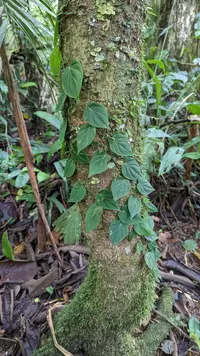
Heartleaf philodendron
Philodendron hederaceum var. oxycardium
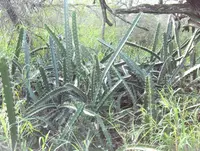
Triangle cactus
Acanthocereus tetragonus
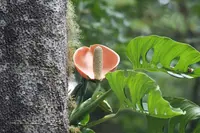
Monstera oreophila
Monstera oreophila
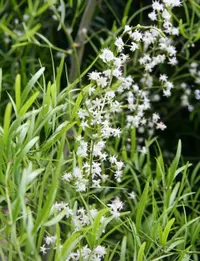
Sicklethorn
Asparagus falcatus
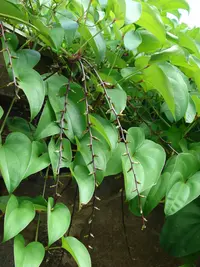
water yam
Dioscorea alata
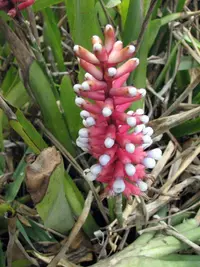
matchstick bromeliad
Aechmea gamosepala
 POPULAR
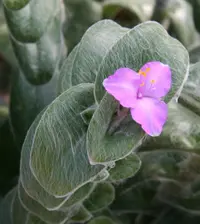
White Velvet
Tradescantia sillamontana