Provide sturdy support
Install a moss pole or rough wooden stake early, then loosely tie new vines as they elongate so large leaves develop with better size and spacing instead of drooping or twisting.

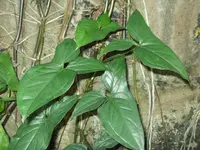
Syngonium macrophyllum is a tropical evergreen vine from Central America, grown mainly as a decorative foliage houseplant. It belongs to the aroid family, known for bold, structured leaves.
Young plants usually form a compact clump with large, simple leaves, then mature into a climbing vine if given support. The foliage is thick, often with a slightly leathery texture that handles indoor conditions better than many delicate arrowheads.
In nature it grows in warm, humid forests, climbing trees or scrambling along the ground in bright shade. Indoors it prefers bright, indirect light, evenly moist but not waterlogged soil, and stable warmth, which makes it moderate in difficulty to care for arrowhead vine when compared with common houseplants.

Care Difficulty
Moderate Care

Light Preference
Bright Indirect Light

Water Requirements
Moderate Water

Temperature Preference
Tropical / Frost Sensitive

Hardiness Zone
10–12

Soil Texture
Loamy, Peaty, Organic-rich

Soil pH
Acidic (5.5–6.5), Slightly acidic (6.5–7.0)

Soil Drainage
Moist but well-drained

Fertilization
Light (every 4–6 weeks)
Scan your plant to receive care tips personalized for your specific plant
Available on iOS and Android
Syngonium macrophyllum prefers bright, indirect light with some protection from intense midday sun.
This aroid prefers evenly moist, not soggy, soil and reacts quickly to extremes in watering.
This species thrives in stable, warm conditions without exposure to cold drafts or frost.
This species prefers moderately high humidity and reacts quickly to very dry air.
This aroid prefers a loose, airy, organic-rich substrate that drains freely but does not dry out instantly.
This species is very suitable for container culture in homes and shaded outdoor patios.
This species responds well to modest, consistent feeding during its active season, supporting steady foliage growth in arrowhead vine indoor care.
Syngonium macrophyllum benefits from light, periodic pruning to control size and encourage bushier growth.
This plant prefers slightly snug pots but grows best when repotted before roots become severely crowded.
New Syngonium macrophyllum plants are most often produced from stem cuttings rather than seed.
This tropical species is frost-sensitive and needs mild, stable conditions during winter in most climates.

Plant Health Check
Not sure what's wrong with your plant? Check your plant's health inside the app.
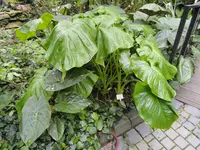
This species develops unusually thick, bullate (bubble-textured) leaves with deep surface grooves, an adaptation that helps manage water on the leaf surface in its humid, lowland forest habitat.
In nature it often grows near streams and wet areas, using its short, stout stems and strong roots to anchor on rocks or trees in periodically wet conditions while climbing toward brighter light.
Compared with many arrowhead vines, it shows a very gradual change from juvenile to more mature foliage, so plants can retain large, simple, heart-shaped leaves for a long time rather than quickly forming highly divided leaves.

Syngonium macrophyllum is native to a relatively restricted area in Central America, mainly Costa Rica and Panama, which contributes to its scarcity in cultivation compared with more widespread Syngonium species.
Yellowing leaves usually result from overwatering, poor drainage, or natural aging of older foliage. Check that the pot drains well, empty saucers, and let the top layer of potting mix dry slightly between thorough waterings.
Keep your plants happy and healthy with plant identification, disease detection, and easy care guidance.