


Rotate For Symmetry
Quarter-turn the pot every 3–4 weeks so new growth receives even light exposure and the upright canes develop straight, balanced clumps instead of leaning to one side.

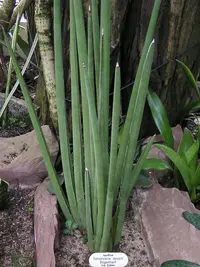
Dracaena pearsonii is a drought-tolerant succulent shrub from arid regions of southwestern Africa. It forms tight, upright clumps of stiff, sword-like leaves with a strong architectural look. Growth is usually slow and compact, which makes it suitable for containers and small indoor spaces.
This species stores water in its thickened stems and leaves, so it copes well with occasional neglect and irregular watering. It prefers bright, indirect light and a very well-draining, gritty soil mix. For those looking to care for Dracaena pearsonii, its main needs are strong light, restraint with water, and protection from prolonged cold.

Care Difficulty
Easy Care

Light Preference
Partial Sun

Water Requirements
Low Water

Temperature Preference
Tropical / Frost Sensitive

Hardiness Zone
10–11

Soil Texture
Sandy, Loamy, Rocky

Soil pH
Slightly acidic (6.5–7.0), Neutral (7.0)

Soil Drainage
Well-drained

Fertilization
Minimal (feed rarely)
Scan your plant to receive care tips personalized for your specific plant
Available on iOS and Android
This succulent prefers bright conditions that mimic open, arid habitats.
Watering should mimic dryland conditions with thorough but infrequent soaking.
This species thrives in warm, dry conditions and dislikes cold, damp weather.
This species handles typical indoor humidity well and rarely needs special adjustments.
This drought-tolerant shrub prefers fast-draining, mineral-based soil that dries quickly between waterings.
This species is well suited to container growing due to its slow, upright, drought-tolerant habit.
This drought-tolerant succulent shrub from arid regions needs only modest feeding in containers.
Pruning is mainly corrective and cosmetic, helping maintain a compact, upright outline for this species.
This slow-growing succulent shrub prefers a slightly snug pot and dislikes frequent disturbance of its root system.
New plants are usually produced from stem cuttings rather than seed, which is less commonly available.
This species is frost sensitive and needs protection in regions with cold winters, especially when grown in containers.

Plant Health Check
Not sure what's wrong with your plant? Check your plant's health inside the app.
This species has thick, upright, pencil-like stems that function as its main water-storage organs, an adaptation to its arid, rocky habitats in southwestern Africa.
As old leaves drop, they leave distinct, closely spaced scars on the stems, which create a banded appearance and can give a rough indication of the plant’s age and growth history.
In its native range, this plant naturally grows in exposed, sunny locations with very low rainfall, which is why successful Dracaena pearsonii indoor care relies on bright light and a gritty, fast-draining substrate.
Brown tips usually come from low humidity, underwatering, or fluoride/salt buildup from tap water and fertilizer. Flush the soil occasionally, discard excess drainage, and, if possible, switch to filtered or rainwater to reduce leaf damage.
Keep your plants happy and healthy with plant identification, disease detection, and easy care guidance.

splendens
Haworthia magnifica
 POPULAR
Moon Cactus
Gymnocalycium mihanovichii

Philodendron
Philodendron 'Bloody Mary'
hardy Taiwan begonia
Begonia chitoensis
fringed star orchid
Epidendrum ciliare
 POPULAR
Droophead Tufted Airplant
Guzmania lingulata
spotted catasetum
Catasetum maculatum
Variegated Kalanchoe
Kalanchoe fedtschenkoi 'Marginata'