Encourage Compact Growth
Rotate the pot 90° every 1–2 weeks during the bright season so the stem develops evenly and stays low, rather than stretching toward one light source.

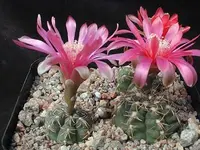
Gymnocalycium baldianum, commonly called dwarf chin cactus, is a small, globular cactus valued for its colorful flowers and compact size. It typically forms low, rounded stems with distinct ribs and short, non-aggressive spines.
This species is native to rocky grasslands and slopes in Argentina, where it grows in well-drained, mineral-rich soils. Its modest size and slow to moderate growth make it suitable for containers and small indoor spaces.
Due to its tolerance of occasional neglect and its preference for bright light and infrequent watering, many growers find it straightforward to care for Dwarf Chin Cactus.

Care Difficulty
Easy Care

Light Preference
Partial Sun

Water Requirements
Low Water

Temperature Preference
Warm Climate

Hardiness Zone
9–11

Soil Texture
Sandy, Loamy, Rocky

Soil pH
Slightly acidic (6.5–7.0), Neutral (7.0)

Soil Drainage
Well-drained

Fertilization
Minimal (feed rarely)
Scan your plant to receive care tips personalized for your specific plant
Available on iOS and Android
This compact cactus prefers bright, indirect light with some direct sun for best flowering.
Watering should mimic brief desert rains followed by dry periods.
This species prefers warm days with cooler, but not freezing, nights.
This cactus prefers dry air and rarely needs humidity adjustment indoors.
Provide a very free-draining, mineral-rich soil to prevent root and stem rot.
This species is well suited to container growing on windowsills, balconies, and patios.
This small cactus benefits from light feeding during active growth, but excessive nutrients harm roots and reduce flowering in Dwarf Chin Cactus.
Gymnocalycium baldianum needs minimal pruning, mainly for hygiene and safety rather than shaping.
This cactus prefers slightly tight pots and infrequent disturbance, so repot only when clear stress or crowding appears.
Gymnocalycium baldianum is mainly propagated from seeds, which keeps natural form and color variation.
This cactus prefers a cool, dry winter rest and is not frost hardy in most climates.

Plant Health Check
Not sure what's wrong with your plant? Check your plant's health inside the app.
Individual flowers can change color slightly as they age, often opening a deeper pink or red and fading toward softer tones over several days, which is relatively distinctive among small South American cacti used as ornamentals.
This species is native to rocky, high-altitude grasslands of northwestern Argentina, where it grows in mineral-rich, fast-draining soils and copes with strong sun, wide daily temperature swings, and episodic rainfall.
In habitat, the squat, flattened stem often sits partly buried among stones, which protects the plant from temperature extremes and reduces water loss while still exposing the spine tips for defense.

This species was first formally described in 1935 by the Italian-Argentinian botanist Carlos A. Spegazzini, and its name baldianum honors B. Baldi, a collector associated with its early study and introduction to cultivation.
Lack of flowers usually comes from insufficient light, no cool winter rest, or excess nitrogen fertilizer. Provide bright light, a cooler, drier winter period, and avoid frequent repotting so the plant can allocate energy to buds.
Keep your plants happy and healthy with plant identification, disease detection, and easy care guidance.