

Encourage Compact Growth
Rotate containers a quarter turn every 1–2 weeks and lightly pinch back the soft tips in spring to keep stems short, dense, and less likely to flop under their own weight.

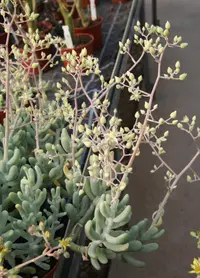
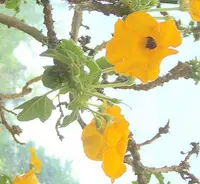
Sedum allantoides is a small, drought-tolerant succulent from arid regions of Mexico. It forms trailing stems lined with plump, bluish green, sausage-shaped leaves. In good light it may produce small, starry yellow flowers that rise above the foliage. The plant stays compact and is often grown in containers or hanging pots for its tidy, architectural look. Sedum allantoides is naturally adapted to strong light, lean, well-drained soil, and infrequent watering, which makes it relatively easy to manage indoors or on a bright balcony. Understanding how to care for Sedum allantoides mainly involves avoiding overwatering and providing enough sun.

Care Difficulty
Easy Care

Light Preference
Full Sun

Water Requirements
Low Water

Temperature Preference
Tropical / Frost Sensitive

Hardiness Zone
10–11

Soil Texture
Sandy, Loamy, Rocky

Soil pH
Slightly acidic (6.5–7.0), Neutral (7.0)

Soil Drainage
Well-drained

Fertilization
Minimal (feed rarely)
Scan your plant to receive care tips personalized for your specific plant
Available on iOS and Android
This drought-tolerant succulent thrives in bright, open positions with strong light for most of the day.
This species prefers infrequent, deep watering and very fast-draining soil.
This succulent prefers warm to hot conditions but is sensitive to hard frost.
This drought-tolerant succulent handles typical indoor humidity well and rarely needs special adjustments.
Sedum allantoides needs a very fast-draining, mineral-rich substrate to prevent root rot.
This species is well suited to container growing when drainage and stability are managed carefully.
This drought-tolerant succulent needs only light feeding to stay healthy in containers.
Pruning is minimal and mainly keeps Sedum allantoides tidy and compact.
Container-grown plants benefit from infrequent, careful repotting into sharply drained soil.
This species is commonly propagated from stem or leaf cuttings under warm, dry-leaning conditions.
Cold sensitivity means Sedum allantoides needs basic winter protection in many climates.

Plant Health Check
Not sure what's wrong with your plant? Check your plant's health inside the app.
This species develops long, cylindrical, somewhat flattened leaves that resemble small sausages or cigars, an adaptation that reduces surface area and helps limit water loss in its arid native habitat in Mexico.
The leaves are often covered by a pale bluish to whitish waxy bloom, called epicuticular wax, which reflects sunlight and further reduces water loss by slowing evaporation from the leaf surface.
Mature plants form trailing, arching stems that can hang over rock faces or pot edges, a growth habit that allows the leaves to avoid direct contact with hot ground surfaces in exposed environments.

Sedum allantoides has been collected from naturally limestone-rich areas in Mexico, and in cultivation it often grows best in slightly alkaline, mineral-heavy substrates that mimic these calcareous rocky habitats.
Yellow leaves usually come from excess moisture, poor drainage, or sudden low temperatures. Check that the potting mix drains quickly, the pot has open holes, and the roots are not sitting in waterlogged soil.
Keep your plants happy and healthy with plant identification, disease detection, and easy care guidance.

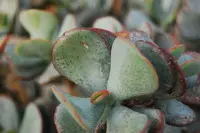
Silver Jade Plant
Crassula arborescens
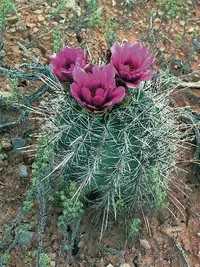
smallflower fishhook cactus
Sclerocactus parviflorus
 POPULAR
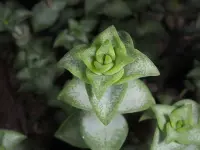
String of Buttons
Crassula perforata
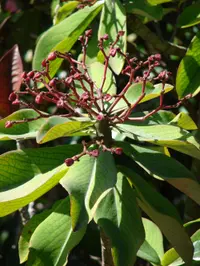
African milkbush
Euphorbia umbellata
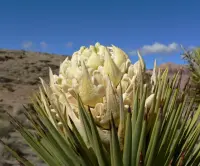
Joshua tree
Yucca brevifolia
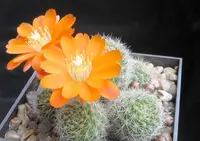
Aylostera fiebrigii
Aylostera fiebrigii
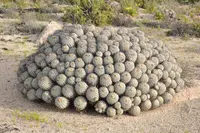
Copiapoa malletiana
Copiapoa malletiana
Succulent Sesame
Uncarina grandidieri