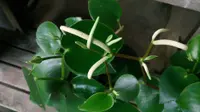
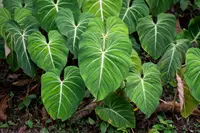
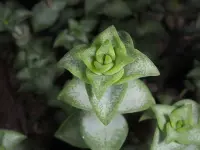
Succulent Sesame Care (Uncarina grandidieri)

Also known as: Mousetrap tree
Succulent Sesame

About Succulent Sesame

Succulent Sesame (Uncarina grandidieri) is a caudiciform shrub, meaning it forms a swollen, water-storing base and branching woody stems. It is native to the dry, rocky regions of Madagascar, where it endures strong sun and long dry periods.

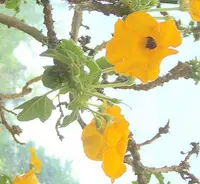
Plants develop sticky, velvety leaves and bright yellow, trumpet-shaped flowers that appear on the ends of the branches. The distinctive clawed seed pods are another key feature.

This species is relatively slow-growing but long-lived when kept in a bright, warm, and dry position with very well-drained soil. Understanding how to care for Succulent Sesame mainly involves avoiding excess moisture and cold conditions.

Main Plant Requirements

Care Difficulty

Moderate Care

Light Preference

Full Sun

Water Requirements

Low Water

Temperature Preference

Tropical / Frost Sensitive

Hardiness Zone

10–11

Soil Texture

Sandy, Loamy, Rocky

Soil pH

Acidic (5.5–6.5), Slightly acidic (6.5–7.0)

Soil Drainage

Well-drained

Fertilization

Minimal (feed rarely)

Get Personalized Care Plan

Scan your plant to receive care tips personalized for your specific plant

Available on iOS and Android

How to Care for the Succulent Sesame

This sun-loving caudiciform shrub needs strong light to flower and stay compact.

  • Provide 6–8 hours of direct sun, ideally morning to early afternoon; in very hot, dry climates, give light shade after 2–3 pm to prevent leaf scorch.
  • Tolerates bright, open partial shade, but flowering and branching decline if daily direct sun drops below about 4 hours.
  • In cool or cloudy seasons move Succulent Sesame to the brightest possible spot and avoid dense shade under trees or structures.

This drought-tolerant shrub stores water in its swollen base and prefers careful, infrequent watering.

  • In active growth, water only when the top 3–5 cm of soil are completely dry; use thorough, deep watering, then let excess drain away fully.
  • Reduce watering sharply in cool seasons or partial dormancy, keeping soil almost dry while preventing total desiccation of fine feeder roots.
  • Watch leaves and caudex: yellow, soft leaves and a mushy base suggest overwatering, while crisp leaf edges and wrinkling indicate it is time to water Uncarina grandidieri.

This species prefers warm, dry conditions and reacts poorly to prolonged cold or frost.

  • Ideal growing temperatures are 70–85°F (21–29°C) by day and 60–70°F (16–21°C) at night, supporting steady foliage and flower production.
  • Protect from cold; growth slows below 55°F (13°C), and tissue damage occurs close to 32°F (0°C), so avoid any frost exposure.
  • It tolerates short heat spikes up to 95–100°F (35–38°C) if soil is well drained and air is moving, but reduce midday sun stress and avoid hot, enclosed spots.

This dryland caudiciform tolerates low humidity but benefits from moderate indoor levels.

  • Aim for 30–50% humidity; standard heated or air-conditioned homes are usually adequate.
  • Dry, curling leaf edges and stalled new growth can indicate air that is too dry or heat stress.
  • If air is very dry, group plants, place the pot near (not on) a pebble tray with water, or run a small room humidifier for nearby plants while caring for Succulent Sesame.

Uncarina grandidieri prefers a very fast-draining, mineral-rich mix that dries quickly between waterings.

  • Use a coarse, sandy mix such as 50–70% mineral components (pumice, perlite, coarse sand, small gravel) with 30–50% lean potting soil or cactus mix.
  • Ensure a gritty texture with visible chunks to keep pore spaces open and maintain strong aeration around the caudex and roots.
  • Keep pH slightly acidic to neutral, about 6.0–7.0, which suits most commercial cactus/succulent mixes without extra adjustment.
  • Avoid heavy peat-based or water-retentive soils that stay wet for more than 2–3 days, as this strongly increases the risk of root and caudex rot.

This species adapts very well to container growing when provided with stable, well-drained conditions.

  • Choose a wide, heavy pot to stabilize the plant’s enlarging caudex and prevent tipping in strong wind or accidental bumps.
  • Use a container material like unglazed clay if extra evaporation is needed, as it helps the mix dry faster after watering.
  • Elevate the pot slightly on feet or pot risers so drainage holes remain clear and excess water can exit quickly from the coarse mix.

Uncarina grandidieri is a light feeder, but thoughtful nutrition supports steady growth and flowering in containers.

  • Use a balanced liquid fertilizer (around 10-10-10 or 20-20-20) at 1/4–1/2 strength every 4–6 weeks during spring–summer while actively growing.
  • Choose either diluted liquid feed or a low-dose slow-release fertilizer; do not combine multiple strong products at once.
  • Reduce or stop feeding in autumn–winter when growth slows and the plant is partially dormant, especially for Succulent Sesame indoor care.
  • In very lean mixes, occasional top-dressing with a thin layer of fine compost can help, but keep it away from the caudex to prevent rot.

Pruning Uncarina grandidieri is mainly useful for shaping and removing weak growth rather than heavy size control.

  • Carry out pruning in late winter or early spring before vigorous new growth starts.
  • Remove dead, damaged, crossing, or very crowded stems with clean, sharp pruners to maintain an open structure.
  • Shorten overly long or leggy shoots to encourage branching and a compact canopy, which can support better flowering.
  • Avoid cutting into the swollen caudex; focus on leafy stems and use clean cuts rather than tearing.

Container-grown plants benefit from infrequent, careful repotting to protect the swollen caudex and fine feeder roots.

  • Check for roots circling the pot, pushing out of drainage holes, or very slow growth as signs it is time to repot Uncarina grandidieri.
  • Repot every 3–4 years in late spring, moving to a only slightly larger pot with a gritty, fast-draining mix.
  • Handle the caudex gently, disturb roots as little as possible, and avoid planting deeper than before to limit stress and rot risk.
  • Water lightly after repotting, then allow the mix to dry moderately between waterings while new roots re-establish.

New plants are most often raised from seed, with cuttings used less frequently due to slower, less reliable rooting.

  • Sow fresh seeds in late spring–summer in a warm spot (75–85°F) using a sterile, very free-draining mix.
  • Lightly cover seeds, keep the medium just barely moist, and provide bright light without direct midday sun for germination.
  • Stem cuttings taken from semi-ripe growth can be rooted in a sandy mix with bottom warmth and high air humidity, but success rates vary.
  • Allow any cut surface to dry and callus briefly before planting to reduce rot risk, and avoid overwatering during early establishment.

This species is frost-sensitive and needs protective winter care in most temperate climates, especially when grown in pots.

  • Keep temperatures above 40–45°F; prolonged exposure near freezing can damage the caudex and stems.
  • Move container plants indoors or into a greenhouse before the first frost, providing bright light and very good air circulation.
  • Reduce watering sharply during the cool dormant period, allowing the mix to dry almost completely between light waterings.
  • In mild climates where it is planted in the ground, use a dry, gritty soil and a light mulch that does not trap moisture around the caudex.

Care Tips

Caudex height control

Periodically remove and replace the top 2–3 cm of potting mix around the swollen base so the caudex remains half exposed, which reduces rot risk and highlights the plant’s natural form.

Targeted branch training

While stems are still flexible, use soft ties to spread branches slightly outward from the caudex, improving light penetration and encouraging a balanced, umbrella-like canopy rather than tall, leggy growth.

Sticky leaf management

Inspect and gently rinse the sticky, glandular leaves under a light stream of lukewarm water every few weeks to remove trapped insects and dust that can attract pests or fungal spots.

Dormancy handling

When leaves yellow and drop in late fall, move the pot to a bright, cool, very dry spot and avoid repotting or root disturbance until new buds appear in spring, as the plant is highly sensitive during dormancy.

Safe handling practices

Use disposable or washable gloves when pruning or handling foliage so sticky secretions do not transfer to skin or tools, and clean blades with alcohol after use to reduce disease spread while caring for Succulent Sesame.

Common Pests and Diseases

Spider mites

This pest thrives on the plant’s finely textured leaves in warm, dry indoor air, causing stippling, dull foliage, and fine webbing between leaves and stems.

Solution

Rinse foliage thoroughly with lukewarm water, including the undersides of leaves, then increase ambient humidity slightly and improve air movement; for persistent infestations, apply a neem oil or insecticidal soap spray every 7–10 days, making sure to coat leaf undersides.

Mealybugs

These insects hide in leaf axils and along the swollen caudex, sucking sap and leaving behind white, cottony clusters and sticky honeydew.

Solution

Remove visible clusters with a cotton swab dipped in isopropyl alcohol, then treat the entire plant with insecticidal soap or neem oil, repeating weekly until no new insects appear; reduce excess nitrogen fertilization to discourage rapid, soft growth that attracts them.

Scale insects

This pest often colonizes the thick stems and caudex, appearing as small brown or gray bumps that cause yellowing, weakened foliage, and sticky residue.

Solution

Gently scrape or wipe adults off with a soft cloth or cotton swab moistened with alcohol, then apply a horticultural oil spray to cover stems and leaf midribs, repeating after 7–14 days while isolating the plant from others during treatment.

Powdery mildew

This disease can appear in humid or poorly ventilated spaces, forming white, powdery patches on the leaves and sometimes causing distortion or early leaf drop.

Solution

Remove the most affected leaves to reduce spore load, then improve airflow, avoid overhead watering, and if needed apply a sulfur-based or potassium bicarbonate fungicide labeled for ornamentals, ensuring good coverage on both leaf surfaces.

Bacterial leaf spot

Symptoms include small, water-soaked spots on leaves that turn dark and may develop a yellow halo, often triggered by warm temperatures combined with persistent leaf wetness.

Solution

Promptly remove and discard affected leaves, avoid splashing water onto the foliage, increase spacing and airflow, and if it recurs despite good cultural conditions, discard severely affected plants to prevent spread to other caudiciform species while adjusting your Uncarina grandidieri care to keep leaves dry.

Interesting Facts

Oil-trapping flower hairs

The bright yellow flowers have sticky, inward-pointing hairs on the inner parts that can trap small insects, a feature thought to help with both pollination and protection from herbivores that might damage the reproductive organs.

Seasonal leaf strategy

This species behaves as a dry-season deciduous shrub, dropping its softly hairy, heart-shaped leaves in the cool dry period to reduce water loss, then rapidly refoliating when warmth and moisture return.

Corky caudex bark

Mature plants develop a swollen, bottle-shaped trunk with a deeply fissured, corky outer layer that helps insulate the water-storing tissues inside from heat and drought.

Botan icon

Did you know?

In its native southern Madagascar, this species often grows in highly eroded, rocky limestone and sandstone soils, using its thickened root–caudex system to anchor itself securely where many other shrubs cannot survive.

FAQs about Succulent Sesame

Growth is slow to moderate. Young plants usually form a noticeable swollen caudex within a few years, then thicken more than they gain height. Expect several years to reach a sculptural, bonsai-like appearance in containers.

Grow Healthy Plants with Botan Care

Keep your plants happy and healthy with plant identification, disease detection, and easy care guidance.

Botan plant care app — identify plants on mobile

Explore More Plants