Rocky surface planting
Tuck plants into crevices between small stones or gravel mulch so the crown sits just above the surrounding surface, which keeps the neck dry and greatly reduces rot in winter and wet springs.

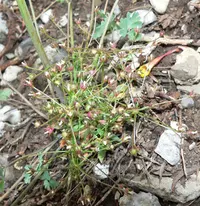
Pygmyflower rockjasmine (Androsace septentrionalis) is a tiny rosette-forming alpine perennial, often grown as a short-lived plant in rock gardens and troughs. It produces delicate clusters of small white to pale pink flowers on thin stems above low, narrow leaves.
This species occurs in cold and temperate regions of the Northern Hemisphere, including parts of North America and Eurasia, typically in open, rocky, or gravelly sites. Its compact growth and preference for cool, well-drained conditions can make it a bit challenging in hot, humid climates.
Gardeners who want to care for pygmyflower rockjasmine should provide bright light, sharp drainage, and moderate, consistent moisture without waterlogging the roots.

Care Difficulty
Moderate Care

Light Preference
Full Sun

Water Requirements
Moderate Water

Temperature Preference
Cold Hardy

Hardiness Zone
3–8

Soil Texture
Sandy, Loamy, Rocky

Soil pH
Acidic (5.5–6.5), Slightly acidic (6.5–7.0)

Soil Drainage
Well-drained

Fertilization
Minimal (feed rarely)
Scan your plant to receive care tips personalized for your specific plant
Available on iOS and Android
This alpine annual prefers bright, cool conditions with protection from harsh midday sun.
This plant prefers slightly moist but fast-draining soil and is sensitive to both drought and constant wetness.
This cold-hardy alpine annual prefers cool conditions and tolerates significant frost once established.
This alpine annual tolerates low humidity and rarely needs special moisture in the air.
This species prefers lean, gritty, sharply drained soil that mimics rocky alpine habitats.
This small alpine is suitable for container growing, especially in shallow troughs or rock-garden pots.
This alpine annual needs only light feeding, as pygmyflower rockjasmine is adapted to low‑nutrient soils.
Androsace septentrionalis needs only minimal pruning to stay tidy and support flowering.
This small alpine annual is more often transplanted than long‑term potted, and dislikes frequent disturbance.
This species is most reliably propagated from seed rather than by division or cuttings.
Androsace septentrionalis is cold hardy in many temperate regions and usually needs little special winter care outdoors.

Plant Health Check
Not sure what's wrong with your plant? Check your plant's health inside the app.
This species occurs across both Arctic and high-mountain regions of the Northern Hemisphere, showing a strong adaptation to cold, short growing seasons and open, often rocky terrain.
It forms very small basal rosettes with delicate, narrow leaves that stay close to the ground, a growth form that helps reduce water loss and damage from wind in exposed habitats.
The plant typically flowers early in spring or soon after snowmelt, producing small white to pinkish flowers on slender stalks during a short window when conditions are favorable.

In parts of its range, this species can complete its entire life cycle in a single season as a short-lived annual, but in harsher sites it may behave more like a short-lived perennial, illustrating significant life-history flexibility in response to local climate conditions.
This species is typically a short-lived perennial or biennial in cooler climates, but it may behave as an annual in hotter, drier areas. It often self-seeds, so new rosettes appear even as older plants die out.
Keep your plants happy and healthy with plant identification, disease detection, and easy care guidance.