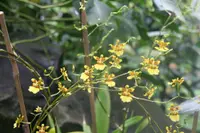
Anemonoides caerulea Care

Anemonoides caerulea

About Anemonoides caerulea

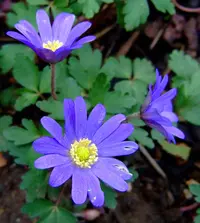
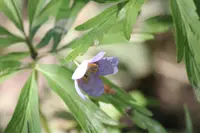
Anemonoides caerulea is a small, rhizomatous woodland perennial grown mainly for its delicate blue to violet spring flowers. It typically forms low clumps of finely divided, soft green leaves that carpet the ground before many trees fully leaf out. Native to cool, temperate forests in parts of Europe and Asia, it thrives in light shade and humus-rich, moist but well-drained soils. The plant is moderately easy to grow where summers are not too hot and soils do not dry out completely. Gardeners who learn how to care for Anemonoides caerulea usually find it reliable once established, although it may dislike frequent disturbance or very compacted soils.

Main Plant Requirements

Care Difficulty

Moderate Care

Light Preference

Partial Shade

Water Requirements

Moderate Water

Temperature Preference

Cool Climate

Hardiness Zone

5–8

Soil Texture

Loamy, Silty, Organic-rich

Soil pH

Acidic (5.5–6.5), Slightly acidic (6.5–7.0)

Soil Drainage

Moist but well-drained

Fertilization

Minimal (feed rarely)

Get Personalized Care Plan

Scan your plant to receive care tips personalized for your specific plant

Available on iOS and Android

How to Care for the Anemonoides caerulea

This woodland perennial prefers bright, gentle light rather than intense, direct sun.

  • Provide 3–5 hours of morning sun with dappled or open shade in the afternoon, similar to a light woodland edge.
  • Anemonoides caerulea tolerates partial shade, but very deep shade reduces flowering and leads to weak, stretched stems.
  • Avoid strong midday sun, which can scorch foliage and dry the soil quickly; give extra shade in summer or in exposed south- and west-facing sites.

This rhizomatous plant prefers consistently moist but not waterlogged soil during active growth.

  • Water when the top 2–3 cm of soil feel slightly dry, aiming for evenly moist conditions through spring flowering.
  • Use humus-rich, well-drained soil so excess water can escape, reducing the risk of root rot and yellow, mushy foliage from overwatering.
  • In summer dormancy, reduce watering once leaves die back, keeping the soil just barely moist to avoid both desiccation and standing water.

This species is a cool-temperate woodland plant with good cold tolerance and modest heat needs.

  • Active growth is best at 50–68°F (10–20°C), with flowering strongest in cool springs rather than in hot conditions.
  • Established plants tolerate winter lows near 0°F (−18°C) under mulch or snow cover, but young plants benefit from protection from repeated freeze–thaw cycles.
  • In hot summers above 80°F (27°C), provide shade and extra mulch to keep the root zone cool and reduce heat stress and premature foliage dieback.

This woodland perennial prefers moderately moist air but usually copes with typical household humidity.

  • Aim for 40–60% humidity, avoiding very dry heated rooms in winter.
  • Crisping leaf edges or drooping foliage during dry spells can indicate humidity stress rather than underwatering.
  • Increase local humidity by grouping pots together on a pebble tray with water, keeping pot bases above the waterline.

This species prefers loose, humus-rich soil that mimics a cool woodland floor.

  • Use a mix of roughly 50% peat-free compost, 30% leaf mold or fine bark, and 20% sharp sand or perlite for structure and drainage.
  • Ensure soil drains freely yet stays evenly moist; water should infiltrate quickly and not pool on the surface.
  • Target a slightly acidic to neutral pH around 6.0–7.0 for stable nutrient availability and healthy root growth in Anemonoides caerulea.
  • Avoid compacted clay, heavy peat-only mixes, or spots where water stands after rain, as low oxygen around roots promotes rot.

This species can be grown in containers if the pot recreates cool, moist, well-drained woodland-like conditions.

  • Select a wide, shallow container that allows the rhizomes to spread horizontally rather than forcing them into deep, compact layers.
  • Choose thicker-walled clay or ceramic pots outdoors to buffer rapid temperature and moisture swings around the root zone.
  • Raise the container slightly on feet so drainage holes stay clear and runoff moves away, preventing prolonged saturation at the base.

This woodland perennial needs only light feeding in typical garden soil.

  • Apply a thin layer of garden compost or leaf mold around plants in early spring to support new growth.
  • If soil is poor, use a balanced, slow-release fertilizer (for example 5-5-5 or 10-10-10) at low label rates in spring.
  • Avoid liquid feeds stronger than 1/2 dilution to prevent soft, weak growth in Anemonoides caerulea.
  • Stop all feeding as foliage begins to yellow and the plant enters dormancy in late summer or autumn.

Pruning needs for Anemonoides caerulea are minimal and mainly hygienic.

  • Cut back spent flower stems after blooming to keep clumps tidy and direct energy to root growth.
  • Remove yellowing or damaged leaves at the base with clean scissors or hand pruners to limit disease spread.
  • In late autumn, shear off collapsed foliage at ground level, leaving the crown undisturbed.
  • Avoid heavy cutting into healthy crowns, as this offers no benefit and may reduce next season’s flowering.

This species is usually grown in the ground and dislikes frequent disturbance.

  • Plan transplanting for early spring or early autumn, when soil is moist and temperatures are mild.
  • Move clumps only when flowering has finished and growth has slowed, watching for crowded plants or bare centers as a sign.
  • Lift the clump carefully with a fork, keeping as much soil around the fibrous roots of Anemonoides caerulea as possible.
  • Replant at the same depth, water gently, and mulch lightly to reduce root stress and maintain even moisture.

Propagation is typically done by division, with seed used mainly for larger, long-term projects.

  • Divide established clumps in early spring just as shoots emerge, or in early autumn while soil remains warm.
  • Lift the plant carefully, then tease apart small sections, each with several buds and healthy roots.
  • Replant divisions immediately at the same depth in moist, humus-rich soil and water thoroughly.
  • For seed, sow fresh in pots outdoors in a shaded, sheltered frame to allow natural cold stratification.

This hardy woodland perennial tolerates typical winters in much of its range with minimal intervention.

  • Once foliage dies back, allow it to lie for a while, then remove and apply a 3–5 cm mulch of leaf mold or compost.
  • Mulching stabilizes soil temperature and moisture around the shallow root system of Anemonoides caerulea.
  • Container-grown plants in colder climates can be moved to a sheltered, unheated but frost-free spot for winter.

Care Tips

Cool-site placement

Choose a planting spot that stays cool in summer, such as the north or east side of shrubs or low trees, to extend the flowering period and reduce stress on the rhizomes.

Leaf-mulch topdressing

Apply a thin 2–3 cm layer of shredded leaf mulch each autumn over the colony to mimic woodland litter, stabilizing soil moisture and gradually improving structure without smothering the crowns.

Gentle colony division

Divide clumps only during full dormancy, lifting small sections with a broad trowel and replanting rhizomes at the same depth and spacing to slowly expand a drift without shocking the plants.

Springtime label marking

Mark emerging clumps with unobtrusive labels in early spring so later border work or mulching does not disturb the shallow rhizomes once foliage has died back and is no longer visible.

Companion canopy planning

Pair this anemone beneath light-canopy shrubs or deciduous perennials that leaf out slightly later, providing bright spring light followed by dappled shade, which is ideal when caring for Anemonoides caerulea in mixed borders.

Common Pests and Diseases

Powdery mildew

This disease causes a white, powdery film on leaves, often in dry air with poor airflow around the clump.

Solution

Remove heavily affected leaves, thin crowded growth to improve air circulation, and avoid overhead watering; if needed, apply a sulfur or potassium bicarbonate fungicide labeled for ornamentals and monitor closely as part of general Anemonoides caerulea care instructions.

Downy mildew

This disease leads to pale or yellow leaf patches with a grayish to purplish fuzz on the undersides in cool, damp conditions.

Solution

Remove and dispose of infected foliage, water at soil level in the morning only, increase spacing for better airflow, and use a phosphonate or copper-based fungicide if the problem recurs in wet seasons.

Leaf spot

Symptoms include small brown, purple, or black spots on leaves that may merge and cause premature yellowing and drop.

Solution

Cut off and discard affected leaves, keep foliage dry by watering at the base, clean up fallen debris around the plant, and in persistent cases use a chlorothalonil or copper fungicide according to label directions.

Aphids

These insects cluster on young stems and buds, sucking sap and causing distortion, sticky honeydew, and sometimes sooty mold on leaves.

Solution

Spray plants with a firm stream of water to dislodge colonies, pinch off heavily infested shoot tips, encourage natural predators like lady beetles, and use insecticidal soap or a light horticultural oil on repeat if populations remain high.

Leaf-mining flies

This pest creates pale, winding tunnels inside the leaves as larvae feed between the upper and lower leaf surfaces.

Solution

Remove and dispose of affected leaves as soon as mines appear to break the life cycle, avoid overhead watering that may favor adult activity, and use yellow sticky traps nearby to monitor and reduce adult fly numbers.

Interesting Facts

Distinct woodland niche

This species is native to cool, montane forests of Central and Eastern Europe, where it often grows in light, humus-rich soils under deciduous or mixed woodland canopies, forming sparse, scattered patches rather than dense carpets like some related wood anemones.

Blue flower pigments

Its pale to mid-blue petals derive their color from anthocyanins, a group of water-soluble pigments that can shift in hue depending on cell sap acidity, which partly explains the observed variation from almost white to lavender-blue flowers within natural populations.

Early spring strategy

The plant functions as a classic spring ephemeral, emerging and flowering early in the season to use high light levels before tree canopies leaf out, then retreating to its underground structures for the rest of the year.

FAQs about Anemonoides caerulea

This species is a herbaceous perennial. The top growth dies back after flowering, then the underground rhizomes rest and resprout the following spring. In suitable climates, clumps can persist and slowly enlarge for many years.

Grow Healthy Plants with Botan Care

Keep your plants happy and healthy with plant identification, disease detection, and easy care guidance.


Botan plant care app — identify plants on mobile

Explore More Plants