


Seedling hardening
Before transplanting outdoor seedlings, harden them off over 7–10 days by gradually increasing sun and wind exposure, which reduces transplant shock and improves survival when growing rose of Plymouth.

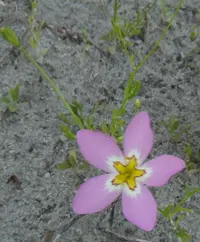
Rose of Plymouth, Sabatia stellaris, is a small annual wildflower native to coastal marshes and wet meadows along the eastern United States. It is valued for its star-shaped pink flowers with a yellow center that appear on slender, upright stems. The plant usually forms airy, open clumps that stand above surrounding grasses. It thrives in sunny, consistently moist, often slightly salty soils, which can make garden cultivation a bit more challenging away from its natural habitat. Understanding these natural conditions helps guide how to care for rose of Plymouth in gardens or restoration plantings.

Care Difficulty
Moderate Care

Light Preference
Full Sun

Water Requirements
Keep Soil Moist

Temperature Preference
Warm Climate

Hardiness Zone
7–10

Soil Texture
Sandy, Loamy, Organic-rich

Soil pH
Acidic (5.5–6.5), Slightly acidic (6.5–7.0)

Soil Drainage
Waterlogged tolerant

Fertilization
Minimal (feed rarely)
Scan your plant to receive care tips personalized for your specific plant
Available on iOS and Android
This coastal annual needs high light to flower well in open, sunny sites.
This species prefers consistently moist conditions, often in sandy, coastal or wet meadow soils.
This coastal annual favors mild to warm conditions during its active growing season.
This coastal wildflower tolerates a broad humidity range but grows best in moderately moist air.
Sabatia stellaris prefers sandy, sharply draining soil that still holds some moisture.
This species can be grown in containers if the pot and drainage are managed carefully to mimic coastal, sandy conditions.
This coastal wildflower needs only light feeding, as excessive nutrients reduce flowering and stress Sabatia stellaris in containers.
Pruning Sabatia stellaris is minimal and mainly supports flowering performance and plant tidiness.
This species is most often grown in the ground, so transplanting young Sabatia stellaris plants is more common than container repotting.
Propagation of Sabatia stellaris is usually done from seed rather than from division or cuttings.
Established Sabatia stellaris in suitable climates is relatively cold tolerant and generally needs only light winter care.

Plant Health Check
Not sure what's wrong with your plant? Check your plant's health inside the app.
This species is naturally restricted to coastal salt marsh edges and brackish wet meadows along the Atlantic seaboard, where it grows in seasonally flooded, sandy or peaty soils that many other wildflowers cannot tolerate.
The plant shows notable physiological tolerance to both saline water and short-term inundation, allowing it to survive regular high-tide flooding that would damage most non-halophytic, or non–salt-adapted, herbs.
Its star-shaped pink flowers with a yellow eye bloom mainly in mid to late summer, providing nectar and pollen for native bees, butterflies, and other pollinators at a time when many other coastal wildflowers have already finished flowering.

Sabatia stellaris has a highly fragmented and regionally rare distribution, and in several US states it is officially listed as threatened or endangered due to coastal habitat loss, shoreline development, and changes in hydrology that alter its specialized salt marsh ecosystems.
This species behaves as a short-lived annual or occasionally biennial in cultivation. It usually completes its life cycle within 1–2 seasons, relying on self-seeding in suitable conditions to maintain a patch over time.
Keep your plants happy and healthy with plant identification, disease detection, and easy care guidance.

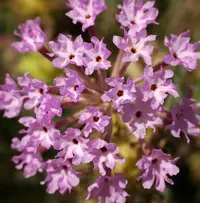
purple sand verbena
Abronia angustifolia
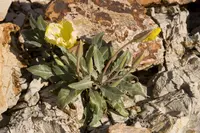
shortfruit evening primrose
Oenothera brachycarpa
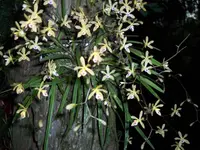
Florida butterfly orchid
Encyclia tampensis
trumpet-flowered sinningia
Sinningia tubiflora
tiger lily
Lilium lancifolium
yellow rock rose
Helianthemum marifolium
Garland Daisy
Glebionis coronaria
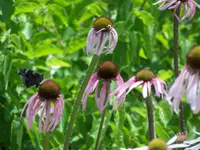
pale purple coneflower
Echinacea pallida