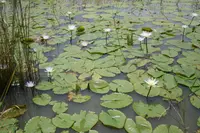
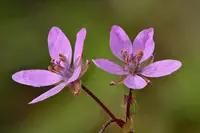
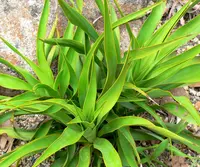
grassy arrowhead Care (Sagittaria graminea)

Also known as: Grass-leaved Arrowhead
grassy arrowhead

About grassy arrowhead

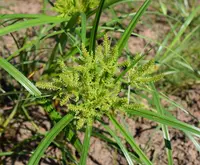
Grassy arrowhead, Sagittaria graminea, is an aquatic perennial often used in ponds, water gardens, and naturalized wetland edges. It forms clumps of narrow, grass-like leaves that emerge from shallow water or saturated soil.

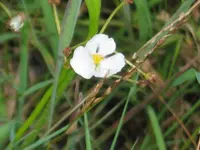
This species is native to North America, where it grows along slow-moving streams, marshes, and ditches. It produces small, simple white flowers on upright stalks.

Sagittaria graminea adapts well to consistently wet or submerged conditions and prefers still or gently moving fresh water. It is generally undemanding once established and competes well with many aquatic weeds.

For those learning how to care for grassy arrowhead, its main requirements are stable moisture, full to partial sun, and a mud or loam substrate rather than gravel alone.

Main Plant Requirements

Care Difficulty

Moderate Care

Light Preference

Full Sun

Water Requirements

Aquatic

Temperature Preference

Cold Hardy

Hardiness Zone

5–10

Soil Texture

Loamy, Silty, Organic-rich

Soil pH

Acidic (5.5–6.5), Slightly acidic (6.5–7.0)

Soil Drainage

Waterlogged tolerant

Fertilization

Minimal (feed rarely)

Get Personalized Care Plan

Scan your plant to receive care tips personalized for your specific plant

Available on iOS and Android

How to Care for the grassy arrowhead

This aquatic plant prefers bright, open conditions with consistent sun exposure for strong growth.

  • Provide 4–8 hours of direct sun daily; full sun promotes dense foliage and flowering in grassy arrowhead.
  • Allow light afternoon shade in very hot climates to reduce leaf scorch and overheating of shallow water or mud.
  • In cooler seasons, favor locations with more direct sun, since low light produces weak, elongated leaves and fewer blooms.

This species is adapted to very wet conditions and performs best with constantly saturated roots.

  • Grow Sagittaria graminea in shallow water or saturated soil; the substrate should never fully dry out to protect roots and leaves.
  • In ponds or water gardens, maintain 5–20 cm of water above the crown, adjusting depth seasonally as water levels shift.
  • Watch for stress signs: yellowing, mushy leaves suggest stagnant, foul water; crisp, browning tips indicate drying or falling water levels.

This aquatic perennial favors mild to warm conditions and copes better with cool water than with extreme heat or hard frost.

  • Optimal growth occurs around 68–82°F (20–28°C), with steady pond or bog temperatures supporting strong leaf and root development.
  • The plant tolerates brief drops near 32°F (0°C) if submerged and crowns are protected, but exposed foliage is easily damaged by frost.
  • In hot summers above 90°F (32°C), ensure sufficient water depth and avoid isolated shallow pools that overheat and stress the roots.

This species prefers consistently moist air but adapts to a fairly wide humidity range.

  • Aim for 50–70% humidity, especially when growing grassy arrowhead in warm indoor or greenhouse conditions.
  • Tolerates brief dips to 30–40% but extended dry air can crisp leaf tips and edges.
  • Increase humidity with nearby water trays, grouped aquatic pots, or a small humidifier rather than misting foliage directly.

This aquatic marginal plant needs saturated, nutrient-rich substrate rather than typical potting soil.

  • Use a heavy loam or clay-loam rich in organic matter, such as garden soil mixed with compost, to anchor roots under water.
  • Provide very slow drainage or a lined container so the soil stays consistently submerged or waterlogged at 2–10 cm depth.
  • A slightly acidic to neutral pH around 6.0–7.2 supports nutrient uptake and stable growth in Sagittaria graminea.
  • Avoid light, fluffy mixes with much perlite or bark, which float, shift under water, and fail to hold the plant in place.

This plant is well suited to container culture in water gardens, tubs, and ponds.

  • Choose a wide, relatively shallow container so rhizomes can spread horizontally without crowding, improving shoot stability.
  • Use a heavy ceramic or thick plastic pot to prevent tipping, since the emersed foliage can become top-heavy in wind.
  • Place a layer of coarse sand or fine gravel over the soil surface to reduce clouding of water and keep the substrate from floating.

This aquatic native grows reasonably well in nutrient-rich substrates but responds to modest, targeted feeding in containers or managed ponds.

  • Use a balanced aquatic fertilizer (for example 10-10-10) in slow-release tablet or liquid form applied near the roots, not into open water.
  • Feed during active growth in spring–summer every 4–6 weeks at half the label strength to limit algae growth.
  • Reduce or stop fertilization in fall and winter when growth slows or foliage dies back to prevent nutrient buildup.
  • In low-nutrient setups, a thin layer of mature compost capped with sand or gravel can support grassy arrowhead without heavy dosing.

Pruning Sagittaria graminea is mainly about hygiene and managing density in planted ponds or containers.

  • Trim yellowing, dead, or damaged leaves at the base with clean aquatic scissors or pruners to limit decay and algae.
  • Thin out crowded shoots in late spring or summer to maintain water flow, reduce shading, and keep clumps compact.
  • Remove spent flower stalks after blooming to tidy appearance and direct energy to root and rhizome growth.
  • Avoid cutting healthy green foliage too hard, as this reduces photosynthesis and can weaken plants under stress.

This marginal aquatic is more often transplanted within ponds than repotted, but container-grown clumps still benefit from periodic division.

  • Look for roots circling baskets, compacted substrate, or declining vigor as signs that Sagittaria graminea needs fresh space.
  • Plan transplanting or dividing in spring when new growth starts and water temperatures begin warming, typically after frost risk passes.
  • Every 2–3 years, lift clumps gently, rinse off excess substrate, and separate healthy sections with several leaves and firm roots.
  • Replant divisions at the same depth in fresh aquatic soil, keep roots submerged, and shade slightly for 1–2 weeks to reduce stress.

Sagittaria graminea is commonly propagated by division and, less often, from seed in managed aquatic setups.

  • Divide mature clumps in spring, lifting plants and separating offsets or side shoots with intact roots and a few leaves each.
  • Replant divisions into baskets or shallow pond margins with aquatic soil, firming gently so roots anchor and remain submerged.
  • For seed, collect after flowering, then sow in shallow trays of wet aquatic mix kept warm and consistently covered by water.
  • Provide bright, indirect light and stable water levels; avoid strong currents until young plants have developed strong root systems.

In much of its hardy range, this aquatic perennial overwinters in situ with minimal intervention once established.

  • In zones with freezing winters, rhizomes usually survive under ice if planted below the typical ice line in ponds.
  • For shallow plantings, sink baskets slightly deeper in fall so crowns remain underwater during hard frosts.
  • Mulch marginal soil edges with 5–8 cm of clean straw or leaves to buffer temperature swings around the root zone.
  • Move container-grown plants in small tubs to a frost-free, cool, bright area, keeping crowns just submerged and soil saturated.

Care Tips

Anchor Rhizomes

Plant the rhizomes in a shallow basket of aquatic substrate and top with a 2–3 cm layer of clean gravel so flowing water or fish do not dislodge new shoots.

Control Spread

Thin out older rosettes every 6–12 months by lifting and dividing clumps, leaving only the strongest plants so the stand does not become overcrowded and light-starved.

Manage Water Depth

Adjust the planting depth seasonally, keeping the crown just below the water surface in cool periods and slightly deeper in hot weather to reduce heat stress and algae smothering the leaves.

Support Nutrient Balance

In fish ponds or lightly stocked water gardens, use slow-release aquatic fertilizer tablets pushed deep into the substrate near the roots rather than broadcasting nutrients into the open water.

Monitor Leaf Morphology

Regularly check for changes between narrow submerged leaves and broader emergent leaves, using these shifts as cues to fine-tune water depth and planting density when caring for grassy arrowhead.

Common Pests and Diseases

Leaf spot

This disease causes small brown to black water-soaked spots on submerged or emergent leaves, which may enlarge and lead to tissue breakdown. Symptoms include ragged, thinning foliage that decomposes quickly in the water.

Solution

Remove and discard affected leaves to reduce the source of infection, then maintain good water quality by reducing excess nutrients and decaying organic matter. Improve water circulation and, in pond or tank culture, consider a partial water change and avoid overhead splashing from contaminated sources to limit further spread.

Aphids

These insects feed on tender emergent leaves and stems, causing distorted, curled growth and sticky honeydew deposits above the waterline. This pest can also encourage sooty mold growth on the honeydew-coated tissue.

Solution

Rinse emergent foliage with a strong but controlled stream of water away from the pond or tank, or gently wipe colonies off by hand. If populations persist, use an insecticidal soap or neem oil spray on emergent parts only, ensuring it does not contaminate the main water body, and repeat as needed while monitoring for beneficial insects.

Aquatic snails

This pest grazes on young leaves and can leave irregular holes, shredded margins, and a skeletonized appearance on submerged foliage. Heavy infestations may slow growth and reduce the plant’s ability to photosynthesize effectively.

Solution

Manually remove snails and visible egg masses from plants and hard surfaces on a regular schedule. In contained ponds or aquaria, reduce overfeeding of fish, introduce compatible snail-eating species if appropriate, and use physical barriers such as fine mesh around young plantings to protect new growth.

Algal overgrowth

This problem occurs when filamentous or slimy algae cover leaves and stems, blocking light and limiting gas exchange at the leaf surface. Symptoms include stunted growth and leaves that appear coated or matted with green or brown strands.

Solution

Reduce light intensity or duration, limit excess nutrients by controlling fish feeding and removing debris, and manually remove algae from leaves and surrounding water using a soft brush or net. In ponds or tanks, improve filtration and circulation and, if needed, use targeted algaecides labeled as safe for aquatic plants, following directions closely to avoid stressing the plant.

Crown rot

This disease affects the base of the rosette where leaves meet the roots, leading to soft, mushy tissue and yellowing, collapsing foliage. Symptoms include a foul smell near the plant base and rapid decline of the whole clump in warm, stagnant conditions.

Solution

Remove and discard affected plants and surrounding decaying tissue to prevent spread through the water. Improve water circulation, avoid burying the crown too deeply in anaerobic (oxygen-poor) substrate, and maintain moderate planting density; when replanting divisions, choose firm, healthy crowns only as part of long-term Sagittaria graminea care.

Interesting Facts

Dimorphic leaf strategy

This species produces both narrow, grass-like submerged leaves and broader emergent leaves on the same plant, an adaptation that lets it photosynthesize efficiently under changing water depths.

Specialized wetland rhizomes

It spreads through stout, creeping rhizomes anchored in soft pond or marsh substrates, helping stabilize sediment and resist being uprooted by fluctuating water levels or slow-moving currents.

Habitat for aquatic fauna

Dense stands provide shelter and feeding surfaces for aquatic invertebrates, juvenile fish, and amphibians, increasing structural complexity in shallow freshwater habitats.

Botan icon

Did you know?

In several North American wetlands, this species is considered an indicator of relatively good water quality, since stable populations tend to decline when shallow freshwater habitats become heavily polluted or are subjected to prolonged drawdowns.

FAQs about grassy arrowhead

This species spreads by both seeds and underground tubers, forming clumps that slowly enlarge. In small ponds it can become dense over time, so periodic thinning and removing extra plants keeps growth under control.

Grow Healthy Plants with Botan Care

Keep your plants happy and healthy with plant identification, disease detection, and easy care guidance.

Botan plant care app — identify plants on mobile

Explore More Plants