robusta coffee Care (Coffea canephora)

Also known as: Nganda Coffee
robusta coffee

About robusta coffee

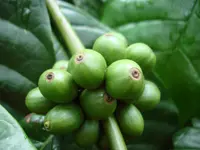
Robusta coffee, Coffea canephora, is a tropical evergreen shrub or small tree grown for its caffeine-rich coffee beans and glossy, deep green foliage. It has an upright, branching habit with simple, opposite leaves and small white flowers that develop into red coffee cherries.

In nature, C. canephora occurs in lowland rainforests of Central and West Africa, where conditions are warm, humid, and shaded by taller trees. It is considered more vigorous and disease-resistant than arabica coffee, but indoors it still needs stable warmth, moderate light, and evenly moist, well-drained soil.

For anyone learning how to care for robusta coffee, its need for consistent moisture, protection from cold drafts, and dislike of very dry air are the main challenges.

Main Plant Requirements

Care Difficulty

Moderate Care

Light Preference

Partial Shade

Water Requirements

Keep Soil Moist

Temperature Preference

Tropical / Frost Sensitive

Hardiness Zone

11–12

Soil Texture

Loamy, Peaty, Organic-rich

Soil pH

Strongly acidic (4.5–5.5), Acidic (5.5–6.5)

Soil Drainage

Moist but well-drained

Fertilization

Moderate (every 2–4 weeks)

Get Personalized Care Plan

Scan your plant to receive care tips personalized for your specific plant

Available on iOS and Android

How to Care for the robusta coffee

Coffea canephora prefers bright, filtered light that mimics understory tropical conditions.

  • Provide 4–6 hours of bright, indirect light daily, such as dappled shade under taller plants or a sheer-curtained east window for robusta coffee.
  • Allow gentle morning sun but protect from strong midday and afternoon sun, which can scorch leaves and cause pale, crispy patches.
  • In winter, move plants to brighter positions or closer to windows to compensate for shorter days and lower light intensity.

Coffea canephora prefers evenly moist, but never waterlogged, soil.

  • Water when the top 2–3 cm of soil feels dry, allowing moisture to reach the root zone without leaving the soil soggy.
  • Use a free-draining mix and ensure excess water can escape; yellowing, soft leaves suggest overwatering, while curling, dry edges indicate underwatering.
  • Reduce watering in cooler months when growth slows, but do not let the root ball dry out completely between waterings.

This species thrives in warm, stable conditions with no exposure to frost.

  • Aim for 70–80°F (21–27°C) for strong growth, with acceptable short-term ranges of 65–85°F (18–29°C).
  • Avoid temperatures below 55°F (13°C); brief dips may cause leaf drop, and frost can kill young shoots and damage roots.
  • In hot periods above 86°F (30°C), provide shade and extra humidity to limit stress and leaf scorch, especially during dry winds.

This species prefers consistently moist air and reacts quickly to very dry indoor conditions.

  • Aim for 50–70% humidity; maintain above 45% for robusta coffee to avoid leaf-edge crisping.
  • Low humidity stress shows as brown, crispy leaf margins and increased leaf drop despite adequate watering.
  • Use grouped plants, pebble trays with water below the pot base, or a room humidifier to raise humidity near the plant.

This species needs loose, well-aerated, slightly acidic soil that holds moisture but drains efficiently.

  • Use a loamy, organic-rich mix with noticeable structure rather than fine, compacted material.
  • Aim for pH 5.5–6.5 to support micronutrient uptake and reduce risk of leaf chlorosis, which is yellowing between veins.
  • Combine roughly 50% peat or coco coir, 25–30% compost, and 20–25% perlite or pumice for drainage and aeration.
  • Avoid heavy clay, waterlogged spots, or pure sand, as these either suffocate roots or dry out too quickly.

This species grows well in containers when given stable support and room for its deepening root system.

  • Choose a pot slightly taller than average for its width so the developing taproot has vertical space without tight coiling.
  • Use a heavier ceramic or clay container in windy or exposed spots to keep the upright plant from tipping over as it gains height.
  • Ensure large, unobstructed drainage holes so water exits within seconds after watering, preventing soggy lower layers that damage roots.

Coffea canephora responds well to modest, consistent feeding during active growth.

  • Use a balanced liquid fertilizer (such as 10-10-10) at 1/2 strength every 4 weeks in spring and summer.
  • For robusta coffee indoor care, a thin top-dressing of mature compost in spring supports steady growth.
  • Pause feeding in late fall and winter when growth slows, especially in cooler rooms.
  • Avoid salt buildup by flushing the pot with plain water every 2–3 months before the next feeding.

Pruning Coffea canephora helps control size and maintain a healthy, bushy structure.

  • Best time is late winter to early spring before vigorous new growth starts.
  • Remove dead, diseased, or rubbing branches first, then thin crowded interior shoots for better light and airflow.
  • Shorten overly tall stems by cutting back to an outward-facing node to encourage branching.
  • Use clean, sharp bypass pruners and make angled cuts just above leaf nodes to reduce disease risk.

Container-grown Coffea canephora benefits from periodic repotting to maintain root health and growth.

  • Check for roots circling the pot, growing through drainage holes, or slowed top growth as signs it needs a larger container.
  • Plan to repot every 2–3 years in late winter or early spring, moving up only 2–5 cm in pot diameter.
  • Gently loosen circling roots, trim any dead or blackened sections, and set the plant in fresh, well-drained peat-based mix.
  • Water thoroughly after repotting, then keep in bright, indirect light and slightly higher humidity for 1–2 weeks to reduce stress.

Coffea canephora is commonly propagated from semi-hardwood cuttings or seeds under warm, humid conditions.

  • Take 8–12 cm semi-hardwood stem cuttings in late spring or early summer, each with 2–3 nodes.
  • Dip cut bases in rooting hormone, then place in a sterile, moist mix of perlite and peat under 70–80% humidity.
  • Maintain bottom heat around 75–80°F and bright, indirect light to encourage rooting within several weeks.
  • For seeds, sow fresh, cleaned coffee seeds shallowly, keep evenly moist, and expect slow, irregular germination.

Coffea canephora is frost-sensitive and needs sheltered, warm conditions during winter in temperate climates.

  • Move container plants indoors before temperatures drop below 50°F, placing them in bright, indirect light.
  • Maintain indoor temperatures around 60–75°F and avoid cold drafts from windows or doors.
  • Reduce watering slightly, allowing the top 2–3 cm of soil to dry, and stop feeding until spring.
  • In mild climates, mulch outdoor root zones with 5–8 cm of organic material to buffer brief cool spells.

Care Tips

Gradual Light Acclimation

When moving a plant from shade to brighter light, increase exposure over 2–3 weeks by shifting it a little closer to the window every few days to prevent leaf scorch and sudden leaf drop.

Encourage Bushy Growth

Pinch or lightly tip-prune soft new shoots above a pair of leaves 1–2 times per year to promote branching, a denser canopy, and stronger structural framework for future flowering.

Salt and Hard Water Management

If using hard tap water or liquid fertilizer often, flush the pot thoroughly with plain, low-mineral water every 6–8 weeks to reduce salt buildup that can cause brown leaf edges and reduced growth.

Support Heavy Branches

As branches lengthen and set clusters of berries, add discreet bamboo stakes or a simple ring support and tie stems with soft plant ties to prevent splitting at the main trunk.

Targeted Pest Monitoring

Inspect the undersides of leaves and along midribs every 1–2 weeks with a hand lens, and at the first signs of scale, mealybugs, or spider mites, isolate the plant and treat with a labeled horticultural soap, which is a key part of caring for robusta coffee indoors long term.

Common Pests and Diseases

Coffee berry disease

This disease causes dark, sunken lesions on developing fruits, which then dry, shrivel, and drop prematurely. Symptoms include reduced yield and poor-quality beans.

Solution

Remove and discard all affected berries and mummified fruits from the plant and soil surface. Improve air circulation, avoid wetting fruits when watering, and in outdoor or greenhouse settings use a copper-based fungicide preventively during prolonged wet, cool periods as part of broader Coffea canephora care instructions.

Coffee leaf rust

This disease produces yellow to orange powdery spots on the underside of leaves, often leading to yellowing and early leaf drop. Severe infections weaken the plant and reduce flowering and fruiting.

Solution

Promptly remove and discard heavily spotted leaves to reduce spore load. Keep foliage dry, space plants for good airflow, and in outdoor or greenhouse conditions apply a labeled sulfur or copper fungicide at the first sign of rust, following local regulations.

Coffee berry borer

This pest is a tiny beetle that bores into coffee cherries, leaving small entry holes and causing beans to be hollow, damaged, or moldy. Infestations dramatically reduce usable yield in fruiting plants.

Solution

Collect and destroy all infested and fallen berries to break the life cycle. For outdoor or farm settings, combine frequent sanitation with traps and, where available, biological controls such as Beauveria bassiana, and avoid leaving ripe berries on the plant for long periods.

Coffee green scale

These insects form small, oval, often green to brown bumps on stems and leaf veins and excrete sticky honeydew. Symptoms include sooty mold growth, yellowing leaves, and stunted shoots.

Solution

Wipe stems and leaf undersides with a cloth or cotton pad dipped in diluted insecticidal soap or horticultural oil, repeating weekly until clear. For heavier infestations, prune the most affected twigs, increase light and airflow, and consider introducing natural predators like lady beetles in greenhouse or outdoor plantings.

Coffee leaf miner

This pest consists of small moth larvae that tunnel within leaves, creating pale, winding mines and blotches. Symptoms include distorted new growth and premature leaf drop when damage is heavy.

Solution

Prune and discard mined leaves as soon as they appear to remove larvae before they mature. Use fine mesh netting on young outdoor plants during peak moth activity, encourage beneficial predators, and, if needed, apply a biological product containing Bacillus thuringiensis (Bt) targeting leaf-mining larvae according to label directions.

Interesting Facts

Source of robusta coffee

This species is the primary source of what the coffee industry calls robusta, valued for its naturally higher caffeine content and strong, bitter profile compared to Coffea arabica.

High caffeine defense

Its seeds and leaves contain more caffeine than most cultivated coffee species, and this caffeine acts as a natural insect deterrent, improving resistance to many herbivorous pests.

Lowland heat tolerance

It naturally occurs in lowland tropical forests of central and western Africa and tolerates higher temperatures and lower elevations than Coffea arabica, which is one reason it is widely used in warm, low-altitude plantations.

Botan icon

Did you know?

Coffea canephora has played a key role in global coffee production stability because its genetic material is widely used in breeding programs to improve disease resistance and climate tolerance in commercial coffee cultivars, including hybrids grown in major producing countries.

FAQs about robusta coffee

Brown leaf edges usually come from low humidity, underwatering, or fertilizer burn. Check that the root ball never fully dries, flush excess salts occasionally, and raise humidity with a pebble tray or humidifier around this plant.

Grow Healthy Plants with Botan Care

Keep your plants happy and healthy with plant identification, disease detection, and easy care guidance.

Botan plant care app — identify plants on mobile

Explore More Plants