Controlled root restriction
Use a slightly undersized, heavy pot to mildly restrict roots, which helps keep growth compact, thickens the caudex, and reduces the risk of lanky, top-heavy stems in windy or exposed positions.

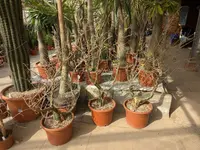
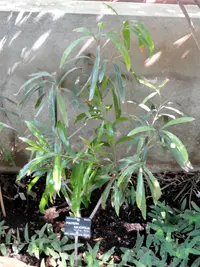
Commiphora dulcis is a small deciduous tree or shrub from dry regions of East Africa, related to myrrh and other resin-producing species. It typically has a swollen, sculptural trunk, sparse branching, and small seasonal leaves that drop in drought or cool conditions. Bark and stems can show attractive textures and color contrasts, giving it a bonsai-like appearance even at a young age.
In cultivation it grows slowly and prefers bright, dry, well-drained conditions similar to a succulent. Understanding how to care for Commiphora dulcis centers on avoiding excess moisture and providing strong light, which makes it manageable but less suitable for very low-light homes.

Care Difficulty
Moderate Care

Light Preference
Full Sun

Water Requirements
Low Water

Temperature Preference
Tropical / Frost Sensitive

Hardiness Zone
Unknown

Soil Texture
Sandy, Loamy, Rocky

Soil pH
Slightly acidic (6.5–7.0), Neutral (7.0)

Soil Drainage
Well-drained

Fertilization
Minimal (feed rarely)
Scan your plant to receive care tips personalized for your specific plant
Available on iOS and Android
This drought-adapted shrub prefers strong light and thrives in open, sunny positions.
This species is highly drought tolerant and prefers infrequent, deep watering to constant moisture.
This plant prefers warm, arid conditions and reacts poorly to prolonged cold or frost.
This dryland shrub prefers relatively low room humidity and generally tolerates indoor air well.
Commiphora dulcis needs very fast-draining, mineral-rich soil to prevent root and stem rot.
This species adapts well to container growing when the pot and substrate limit moisture retention.
This drought-adapted shrub needs only light feeding to support slow, steady growth.
Pruning is mainly needed to maintain structure and remove damaged wood.
This species is usually field-grown; any container plants or young transplants prefer minimal disturbance.
Propagation is possible but slow, and often done by seed or semi-ripe cuttings for this species.
This plant prefers warm, frost-free conditions and benefits from basic winter protection in cooler climates.

Plant Health Check
Not sure what's wrong with your plant? Check your plant's health inside the app.
This species is native to arid regions of southern Africa, where it grows in dry woodland and bushland and is adapted to high light and seasonal drought.
The plant produces a naturally sweet, aromatic resin that is eaten locally in its native range, which is why it is sometimes associated with the idea of a sweet myrrh-type tree.
It typically grows as a small shrub or low tree with a thickened woody framework, an architecture that helps it store resources and survive long dry periods in its native climate.
Yes, this species adapts well to container culture because of its slow, compact growth and drought tolerance. Use a deep, very free-draining gritty mix and a pot with large drainage holes to prevent root rot problems.
Keep your plants happy and healthy with plant identification, disease detection, and easy care guidance.