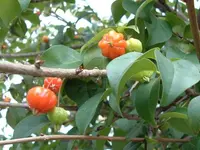
Thorn‑aware placement
Site young plants where access for pruning and harvest is easy, and use thick gloves and long sleeves when working around the dense thorns to avoid injury and accidental branch breakage.

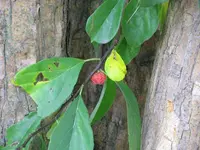
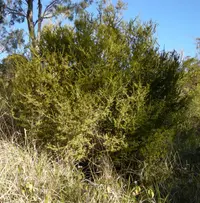
Silkworm thorn (Maclura tricuspidata) is a deciduous, thorny shrub or small tree known for its dense branching and small, often clustered fruits. It is traditionally used in parts of East Asia for fruit, fodder, and as a living fence due to its strong spines.
The plant naturally occurs in China, Korea, and Japan, often on hillsides and field margins, and adapts to a range of temperate climates. It is generally hardy and tolerant of pruning, but the thorns and vigorous growth can make maintenance more demanding.
Those who want to care for silkworm thorn should note that it prefers full sun, moderately moist but well-drained soil, and benefits from space to develop its natural, spreading form.

Care Difficulty
Easy Care

Light Preference
Full Sun

Water Requirements
Moderate Water

Temperature Preference
Cold Hardy

Hardiness Zone
5–9

Soil Texture
Sandy, Loamy, Clay

Soil pH
Acidic (5.5–6.5), Slightly acidic (6.5–7.0)

Soil Drainage
Well-drained

Fertilization
Minimal (feed rarely)
Scan your plant to receive care tips personalized for your specific plant
Available on iOS and Android
This sun-loving fruit tree thrives in open, bright conditions when grown outdoors.
This species prefers moderately moist, well-drained soil and shows good drought tolerance once established.
This hardy tree adapts to a wide range of outdoor temperatures once established.
This species tolerates a wide humidity range and usually needs no special humidity control.
This species prefers moderately fertile, well-drained mineral soil with stable structure.
This species can be grown in containers, mainly for young plants or compact forms, with careful attention to stability and root volume.
Maclura tricuspidata grows acceptably in average soil but benefits from light, controlled feeding in cultivation.
Maclura tricuspidata responds well to thoughtful structural pruning that manages size and thorny growth.
This species is usually grown in the ground, so management focuses on careful transplanting rather than frequent repotting.
Maclura tricuspidata is commonly propagated from seed and semi-hardwood cuttings under controlled conditions.
This hardy deciduous tree tolerates typical temperate winters and usually needs minimal special care outdoors.

Plant Health Check
Not sure what's wrong with your plant? Check your plant's health inside the app.
This species is a traditional host plant for domesticated silkworms in parts of China and Korea, where its leaves are used as an alternative to mulberry for feeding Bombyx mori larvae.
The plant forms very dense, intricately branched growth with sharp thorns, which has long been used to create living fences and impenetrable field boundaries in rural landscapes.
Its orange-red, compound fruits are technically multiple drupes fused together, and in East Asia the ripe fruit is used in processed foods such as jams and alcoholic infusions rather than eaten fresh in large quantities.

In traditional sericulture regions, it has been valued not only as a silkworm food source but also as a long-lived field tree that stabilizes slopes and field edges, helping to reduce erosion in hilly agricultural terrain.
Growth is moderate. Young plants can extend 20–40 cm per year under good conditions, then slow as they mature. Pruning, soil fertility, and water availability strongly influence overall vigor and final size.
Keep your plants happy and healthy with plant identification, disease detection, and easy care guidance.