Hall crab apple Care (Malus halliana)

Also known as: Adirondack Crabapple, Hall's crabapple, Hall's Crab
Hall crab apple

About Hall crab apple

Hall crab apple (Malus halliana) is a small deciduous flowering tree valued for its abundant spring blossom and compact habit. It is often used as an ornamental feature in gardens and streetscapes.

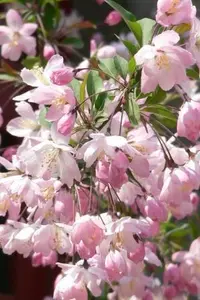
The tree typically develops a rounded crown, with arching branches covered in pink to rose-colored flowers that may fade paler as they age. Small ornamental fruits can follow, adding seasonal interest.

Malus halliana originates from East Asia and adapts well to many temperate regions when planted in full sun and reasonably moist, well-drained soil. It is generally considered manageable for home gardeners, though disease resistance and site choice strongly influence how to care for Hall crab apple.

Main Plant Requirements

Care Difficulty

Moderate Care

Light Preference

Full Sun

Water Requirements

Moderate Water

Temperature Preference

Cold Hardy

Hardiness Zone

5–8

Soil Texture

Loamy, Sandy, Clay

Soil pH

Acidic (5.5–6.5), Slightly acidic (6.5–7.0)

Soil Drainage

Moist but well-drained

Fertilization

Minimal (feed rarely)

Get Personalized Care Plan

Scan your plant to receive care tips personalized for your specific plant

Available on iOS and Android

How to Care for the Hall crab apple

This small ornamental crabapple needs strong outdoor light to flower and fruit well.

  • Provide full sun for 6–8 hours daily; morning sun with some light afternoon shade helps protect blossom color in hotter regions.
  • Hall crab apple tolerates light partial shade (3–4 hours direct sun), but flowering and fruit set decline as shade increases.
  • Avoid dense shade, which leads to leggy shoots and poor blooms, and monitor young trees for leaf scorch in very exposed, reflective sites during midsummer.

This crabapple prefers steadily moist but not saturated soil, especially in the first 2–3 years after planting.

  • Water when the top 3–5 cm of soil feels dry, giving a slow, deep soak so moisture reaches the full root zone rather than frequent light sprinklings.
  • In spring and early summer, monitor closely during dry spells; in fall and winter, water much less unless conditions are unusually dry and unfrozen.
  • Watch for overwatering signs such as yellowing leaves and soft new growth, and underwatering signs such as limp, browning leaf edges on Malus halliana.

This species is a hardy temperate tree adapted to cold winters and mild to warm summers.

  • Active growth and flowering are strongest in spring where average temperatures stay near 55–70°F (13–21°C).
  • Established trees tolerate winter lows near -20°F (-29°C), but late spring frosts can damage new buds and reduce bloom and fruit set.
  • In hot regions, the plant handles brief periods up to about 95°F (35°C) if soil moisture is maintained; prolonged extreme heat may cause leaf scorch and stress.

This species tolerates a wide humidity range and usually does not need special humidity control outdoors.

Malus halliana prefers moderately fertile, moisture-retentive but well-drained soil to support steady growth and flowering.

  • Use a loamy soil structure that combines mineral particles with organic matter so roots anchor well and access stable moisture.
  • Aim for slightly acidic to neutral pH, around 6.0–7.0, which supports nutrient availability and healthy microbial activity.
  • In planting areas with heavy clay, incorporate coarse sand and compost to improve drainage and root aeration.
  • Avoid compacted or waterlogged spots where standing water persists after rain, as this encourages root rot and weak growth.

This species can be grown in large containers for several years if the pot provides enough volume and stability.

  • Choose a wide, heavy container to counterbalance the branching canopy and reduce the risk of wind tipping.
  • Select a pot deep enough to accommodate a developing woody root system, not just a shallow surface layer.
  • Use a slightly porous material like terra cotta or thick-walled concrete to moderate moisture swings and keep roots cooler.

Malus halliana benefits from light, targeted feeding rather than heavy fertilization.

  • Apply a balanced slow-release NPK fertilizer (e.g., 10-10-10) at half strength once in early spring as growth begins.
  • In mid-summer, top-dress with compost around the drip line to support soil structure and microbial life.
  • Avoid fertilizing in late summer and winter to prevent tender growth that may be damaged by cold.
  • On poor soils, a light granular feed every 12 months is usually sufficient for caring for Hall crab apple.

Malus halliana responds well to thoughtful structural pruning that maintains health and flowering.

  • Carry out main pruning in late winter to very early spring before bud break, in dry weather if possible.
  • Use clean, sharp bypass pruners or loppers to remove dead, diseased, or crossing branches back to healthy wood.
  • Thin crowded interior shoots to improve light penetration and airflow, which supports better flowering and reduces disease.
  • Shorten overly long branches selectively to refine shape while preserving the natural, arching habit.

This crab apple is usually grown in the ground, so focus on careful transplanting rather than frequent repotting.

  • Transplant young trees in late fall or early spring while dormant to limit transplant shock and water stress.
  • Look for signs like circling roots, slow growth, or water running off quickly if Malus halliana is grown in a container.
  • Move to a wider, not excessively deeper, site or pot, keeping the graft union above soil level and the root flare visible.
  • Water deeply after planting, mulch 5–8 cm around (not touching the trunk), and keep soil evenly moist until re-established.

Malus halliana is commonly propagated by grafting onto crab apple rootstocks, with seed and cutting methods also used.

  • Sow seeds outdoors in fall or cold-stratify for 2–3 months at 34–41°F, then germinate in a free-draining mix.
  • Take semi-hardwood cuttings in midsummer, use rooting hormone, and provide high humidity with bright, indirect light.
  • Graft named forms onto compatible Malus rootstocks in late winter using whip-and-tongue or similar techniques.
  • Grow seedlings and rooted plants in nursery beds for 1–2 years before permanent planting to build strong root systems.

Malus halliana is generally cold hardy in temperate climates and needs only modest winter attention once established.

  • Apply a 5–8 cm mulch layer over the root zone in late fall, keeping it slightly away from the trunk to prevent rot.
  • Young or newly transplanted trees benefit from a breathable trunk wrap or guards to limit sunscald and rodent damage.
  • Container-grown specimens should be placed in a sheltered, unheated but frost-free area or heeled into the ground for insulation.

Care Tips

Graft Compatibility Check

Use Malus or other compatible rootstocks with proven disease resistance and vigor, and avoid mixing unknown ornamental crab apple seedlings as rootstocks to keep growth uniform and predictable.

Early Scaffold Selection

In the first 2–3 years, choose 3–5 well-spaced lateral branches to become main scaffolds and remove steep, crossing, or clustered shoots to build a stable flowering framework that needs less corrective pruning later.

Blossom Thinning Practice

On young or weak trees, pinch off a portion of flower clusters shortly after bloom so the plant invests more energy into wood, roots, and future flowering instead of exhausting itself in one heavy season.

Preventive Disease Hygiene

Collect and remove fallen leaves, petals, and mummified fruits after flowering and again in autumn to reduce overwintering inoculum of scab and other fungal diseases that commonly affect Hall crab apple.

Wind and Structure Support

In exposed sites, stake young trees with two opposing stakes and soft, flexible ties set just below the lowest scaffold branches, then remove the stakes after 2–3 years once the trunk can support itself to encourage strong, wind-firm growth when growing Hall crab apple.

Common Pests and Diseases

Apple scab

This disease causes dull, olive-brown to black, velvety spots on young leaves, blossoms, and fruit, which may later crack and deform. Symptoms include early leaf drop and blemished, misshapen crab apples.

Solution

Remove and discard fallen leaves and infected fruit to reduce the source of spores, and prune the canopy to improve air movement and faster drying. In areas with a history of scab, use a preventive fungicide labeled for crab apples at bud break and repeat as directed during wet spring weather as part of broader Malus halliana care.

Fire blight

This disease leads to sudden blackening and wilting of blossoms, shoots, and small branches, giving them a scorched or burnt appearance. Symptoms include characteristic shepherd’s crook tips and oozing, amber-colored bacterial exudate from infected tissue in humid conditions.

Solution

Prune out infected shoots at least 20–30 cm below visible symptoms, disinfecting tools between each cut with 70% alcohol or a 10% bleach solution, and remove all infected material from the site. Avoid high-nitrogen fertilization and heavy pruning in spring, and in high-risk areas consider applying a bloom-time bactericide according to local extension guidance.

Cedar-apple rust

This disease produces bright yellow to orange leaf spots that later develop red borders and tiny black dots, and can cause leaf yellowing and premature drop. Fruit may show small, corky lesions, especially when eastern red cedar or juniper species are nearby.

Solution

Rake and remove fallen leaves and infected fruit, and if possible increase distance between crab apples and nearby junipers or red cedars that host the fungus. Where rust is chronic and severe, apply a protective fungicide labeled for rust on crab apples starting at tight cluster to pink bud stage and repeat during wet spring periods.

Aphids

These insects cluster on tender shoots and the undersides of leaves, sucking sap and causing curling, distortion, and sticky honeydew that can lead to sooty mold. This pest is most noticeable on soft new growth in spring and early summer.

Solution

Spray infested shoots with a strong stream of water to dislodge colonies, and encourage natural predators such as lady beetles by minimizing broad-spectrum insecticides. For persistent infestations, use insecticidal soap or a light horticultural oil, making sure to thoroughly coat leaf undersides and repeat as needed according to the product label.

Codling moth

This pest lays eggs on or near young fruit, and the hatching larvae tunnel into crab apples, leaving small entry holes, frass, and premature fruit drop. Symptoms include internal browning and breakdown of the flesh around the larval tunnels.

Solution

Collect and destroy fallen fruit throughout the season to reduce developing larvae and future populations, and use trunk bands of corrugated cardboard as traps that can be removed and discarded. In high-pressure areas, consider timed applications of a targeted product such as Bacillus thuringiensis (Bt) or other codling moth-specific controls following local extension timing recommendations based on degree-day models.

Interesting Facts

Early spring blossom

This species typically flowers very early in spring, often before many other crabapples, covering bare branches with abundant pink blossoms before leaves fully unfold.

Distinct drooping habit

Branches often form a slightly pendulous, fountain-like canopy, giving the tree a graceful outline that is especially noticeable when in bloom or when fruits are hanging.

Small persistent fruits

It produces small, reddish to purplish crabapples that can persist on the tree into winter, providing visual interest and food for birds long after leaf fall.

Botan icon

Did you know?

In its native range in China and Japan, this species has been valued as an ornamental for centuries and used extensively in breeding programs to introduce abundant pink blossom and attractive form into modern crabapple cultivars.

FAQs about Hall crab apple

Poor flowering often relates to insufficient sunlight, heavy pruning at the wrong time, or nutrient imbalance from excess nitrogen. Late frosts can also damage flower buds. Prune right after flowering and avoid overfertilizing to support future blooms.

Grow Healthy Plants with Botan Care

Keep your plants happy and healthy with plant identification, disease detection, and easy care guidance.

Botan plant care app — identify plants on mobile

Explore More Plants