Stabilize Container
Use a wide, heavy pond basket or tub and add a top layer of washed gravel to keep the rhizomes anchored in place as stems grow tall and catch wind.

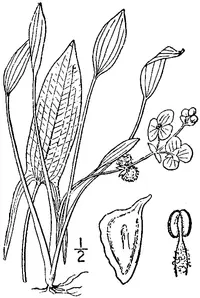
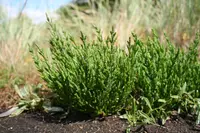
Sessile-fruited arrowhead (Sagittaria rigida) is an aquatic perennial native to shallow waters and marshy edges across parts of North America. It typically grows in clumps with upright, arrow-shaped leaves emerging from rhizomes. The plant produces white, three-petaled flowers held above the foliage, followed by distinctive sessile fruits that sit close to the stem. Its preference for consistently wet or shallowly flooded conditions makes it best for ponds, water gardens, or very wet soil, not for standard indoor pots. Once established in suitable water depth and light, it is generally low-maintenance and resilient, but can struggle in dry or highly shaded spots. Understanding how to care for Sessile-fruited Arrowhead mainly involves meeting its need for stable moisture and rooting space under water or in saturated soil.

Care Difficulty
Moderate Care

Light Preference
Full Sun

Water Requirements
Aquatic

Temperature Preference
Cold Hardy

Hardiness Zone
4–9

Soil Texture
Loamy, Silty, Organic-rich

Soil pH
Slightly acidic (6.5–7.0), Neutral (7.0)

Soil Drainage
Waterlogged tolerant

Fertilization
Minimal (feed rarely)
Scan your plant to receive care tips personalized for your specific plant
Available on iOS and Android
This aquatic species thrives in full sun but accepts some light shade depending on climate and water depth.
This emergent aquatic plant is adapted to consistently wet or shallowly submerged conditions rather than fluctuating soil moisture.
This hardy aquatic perennial tolerates a wide temperature range but grows fastest in mild to warm conditions.
Sagittaria rigida prefers consistently moist air around leaves but mainly relies on high water availability at the roots.
Sagittaria rigida grows best in saturated, heavy, organic-rich substrates that mimic pond or marsh edges.
This species is suitable for container growing when the container can hold permanently saturated or shallowly flooded substrate.
This aquatic native needs only light feeding, as Sessile-fruited Arrowhead is adapted to nutrient-poor, muddy substrates.
Sagittaria rigida benefits from modest pruning to keep clumps healthy and to prevent excessive self-seeding.
This species is more often transplanted within ponds or bogs than repotted as a typical container plant.
Sagittaria rigida is commonly propagated by division and, less often, by seed in managed water gardens.
This hardy aquatic tolerates typical cold winters in much of the US with minimal intervention once established.

Plant Health Check
Not sure what's wrong with your plant? Check your plant's health inside the app.
This species has stiff, lance-shaped leaves on triangular petioles that often stand well above the water surface, which makes it easy to distinguish from other arrowheads with softer, more flexible foliage.
Its female flowers are sessile, meaning they lack stalks and sit directly on the inflorescence axis, a key trait that differentiates it from many related Sagittaria species with stalked flowers.
It forms tough, flattened fruit clusters that often remain on the plant into winter, providing structure and sometimes limited food resources in northern wetland habitats after other vegetation has decayed.

The thick, starchy tubers of this species have been documented as part of traditional wild food use by some Indigenous peoples in North America, who harvested them from shallow waters in late season when above-ground parts began to die back.
This species spreads by rhizomes and seed in shallow water, forming dense clumps over time. In small ponds it can become crowded, so dividing and thinning plants every few years helps keep growth in check.
Keep your plants happy and healthy with plant identification, disease detection, and easy care guidance.