Use wide trays
Grow this fern in a wide, shallow pot or tray so the creeping rhizomes can spread horizontally, and top-dress annually with a thin layer of fresh mix instead of disturbing the root ball.

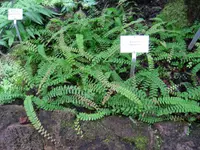
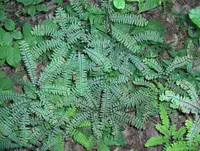
Adiantum edgeworthii is a delicate fern species known for its fine, fan-shaped leaf segments carried on thin, dark, wiry stems. It forms loose, graceful clumps rather than tight, compact rosettes.
This fern is native to parts of the Himalayas and adjacent regions, where it often grows on moist, shaded rock faces and forest banks. Its need for consistent moisture, humidity, and stable shade makes it moderately challenging for beginners.
Those who want to learn how to care for Adiantum edgeworthii should know it prefers soft, indirect light, evenly moist but well-drained substrate, and protection from drying air or sudden temperature swings.

Care Difficulty
Hard Care

Light Preference
Partial Shade

Water Requirements
Keep Soil Moist

Temperature Preference
Cool Climate

Hardiness Zone
7–10

Soil Texture
Loamy, Silty, Organic-rich

Soil pH
Acidic (5.5–6.5)

Soil Drainage
Moist but well-drained

Fertilization
Light (every 4–6 weeks)
Scan your plant to receive care tips personalized for your specific plant
Available on iOS and Android
This fern prefers soft, filtered light similar to a bright forest floor.
This species needs steadily moist but never waterlogged soil.
This fern favors mild, stable temperatures without extremes.
This fern demands consistently high humidity to maintain healthy, delicate fronds.
Adiantum edgeworthii prefers a light, humus-rich substrate that stays evenly moist yet never stagnant.
This species adapts well to container culture when moisture and root aeration are carefully managed.
This fern benefits from light, consistent nutrition rather than heavy feeding.
Thoughtful pruning keeps Adiantum edgeworthii tidy and maintains healthy new fronds.
Careful repotting or transplanting avoids root shock and supports steady fern growth.
Division is the most practical method for increasing Adiantum edgeworthii in home settings.
This fern is sensitive to hard frost and usually benefits from sheltered winter conditions.

Plant Health Check
Not sure what's wrong with your plant? Check your plant's health inside the app.
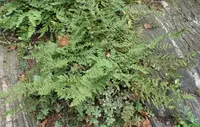
This species is naturally found on shaded, moist rock faces in the Himalayas and adjoining mountain ranges, often clinging to vertical or steep slopes where water seeps through the rock.
Its tiny, bead-shaped leaf segments are more rounded and glossy than those of many other maidenhair ferns, giving fronds a distinctive, delicate texture when viewed up close.
The rhizomes and roots are adapted to anchor tightly in narrow rock crevices, taking advantage of constant moisture and fine mineral particles rather than deep soil.
Brown, crisp leaf tips usually result from low humidity, dry soil, or excess fertilizer salts. Increase ambient humidity, keep the root zone evenly moist but not soggy, and flush the pot occasionally to remove built-up salts.
Keep your plants happy and healthy with plant identification, disease detection, and easy care guidance.